


search
date/time

Tue, 9:00AM
light rain
12.0°C
SW 20mph
light rain
12.0°C
SW 20mph
 | Sunrise | 7:02AM |
| Sunset | 4:47PM |  |
Jonathan Humble
Features Writer
P.ublished 27th October 2026
arts
Book Review: Tipping Point By Jane Lovell
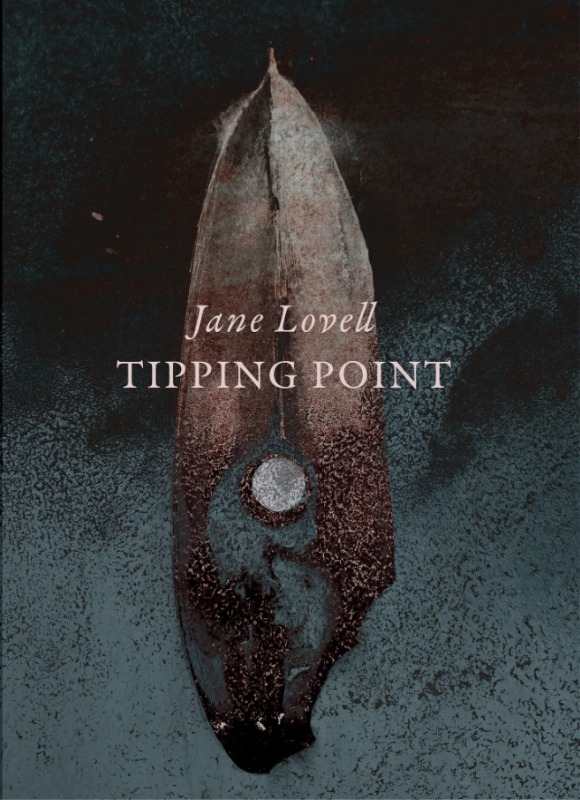
On the desk by my coffee, sits Tipping Point, a collection of poems by Jane Lovell exploring the increasingly precarious environmental, ecological and cultural situation in the Arctic, caused by rapidly unfolding climate change after years of unchecked global industrialisation.
Initially, the wonderful front cover artwork created by James Roberts reminded me of a textured leaf or feather. On closer inspection it developed into the upturned hull of a damaged boat (an image later confirmed in the words of Jane’s poem in the last part of the collection: ‘Crucifix Found in the Thawing Arctic’). To me, the prominent, pale circular shape near its centre resembles a full moon or maybe the dilated pupil of an eye peering back at the viewer.
James’ cover image is revisited in three iterations within the collection whereby details are revealed (LANDMARKS; GALLERY OF THE SEA; FIVE WAYS TO LOOK AT A LANDSCAPE), with the first of these suggesting a closer connection to traditional Inuit hunting tools crafted from Arctic materials like bone, ivory, antler or stone. Further research pointed to it being part of the detachable harpoon system designed for hunting seals, walruses and whales. To indigenous Arctic people, the tuukkaq not only has a deadly practical aspect but also holds symbolic cultural weight, representing strength and resilience within the Arctic environment; a culture and environment now under considerable stress
The importance and relevance of Jane Lovell’s poetry in Tipping Point is reflected through its shortlisting for this year’s Laurel Prize. Alongside four other wonderful collections, including the eventual winner (Midden Witch by Fiona Benson), Jane’s work is recognised for its quality in response to the impact on nature of ecological issues.
The Laurel judging committee tells us Jane writes to inform, engage and deepen our relationship with the living world. Tipping Point is “astounding in its precision. In just a handful of lines entire landscapes, futures, histories, experiences unfold” with poems that are “finely crafted, almost surgical and yet they carry enormous emotional weight.” We are invited “to look closely revealing both the extraordinary beauty of the world and its profound vulnerability.”
Tipping Point “lands with extraordinary force …”
With that invitation in mind, and a personal expectation of deepening my knowledge and understanding of the Arctic, its history, people, fauna and flora, I read the book.
In the first section, LANDMARKS, the poems look at Inuit lore in respect of survival, wayfinding and how in these endeavours the indigenous people’s lives are totally in tune with their environment. I am drawn in by ‘Amulet’: an angakkuq or Inuit spiritual leader placing a small ivory carving of a whale into the mouth of a newborn child. In seven brief lines, cultural heritage and stark survival in a challenging environment are laid out: the significance and purpose of the ceremony set alongside the raw reality of hunting and killing a narwhal:
‘Into your mouth
I press a tiny whale;
its curves oblivious
to the stillness of the narwhal
beheaded on the ice,
the rolling seas that hold
its absence.’
I am enticed into the poem by the mystery of the first lines (Jane has a gift for excellent openings) to be brought up short by the imagery that follows. The meanings swirl and eddy in my mind like the refreshed coffee on my desk, before I eventually refer to Jane’s helpful notes at the back on the book, explaining the cultural aspects of the Inuit ceremony.
We move on with stories of the sea and snow and stars. The next poem touches on vital components of traditional Inuit navigational knowledge, markers used on hunting journeys to ensure a safe passage home: sea currents traced on a palm, snow ridges sculpted by wind betraying the path of the dead, caribou star clusters and the celestial seal hunter. We’re reminded that we’re smaller than a pebble in the sea’s roar and must look to the winds:
‘the slant of frozen grass, melt-water
brimming at the far call of a lake, black straggles of wind-
rushed trees, nubs of foliage sheltering in their lee.’
The winds of Storm Boelo outside my window are picking up, the birches, oaks and sycamores sway rhythmically and the rooks gripping the occasional branch, ride the strengthening breeze.
The red sky has vanished.
I turn the page.
In ‘Driftwood’, East Greenland Inuit pass on wayfinding knowledge through relief maps carved from wood, limbs of larch whittled to represent the sea and coastline:’
‘A memory of coastline carved in wood,
tracts and inlets of the driven deep,
its jagged spine the salt bone sea.
The wind in trouble, his boat a reed,
each ridge and notch, each pitted scar
a lapping shore, a reef.
A memory of his father’s hands,
the whittling knife, its oil-lamp gleam;
the weight of silence, grief.’
A poignant memory surfaces for me with these first three stanzas: my own father, a skilled carpenter, maker of furniture, clocks, rocking horses, his creations passing to me upon his death … the link and meaning still raw after twenty-five years.
In the middle section, GALLERY OF THE SEA, the collection reflects on the increase in external exploitation of the Arctic, which started in the 1600s and accelerated during the 18th and 19th centuries. In this section of the poems, the second iteration of the cover image has a distinctly metallic, manufactured feel to the harpoon head as opposed to the bone/stone version of LANDMARKS.
We learn a little about the results of ill-fated explorations to discover and map the Northwest Passage: the frozen remains of John Torrington, a young stoker on the ill-fated Franklin Expedition of 1845, exhumed after 140 years in an ice grave; evidence of slow death and cannibalism in the remains of other members of the expedition found along the coast of King Edward Island
From my own research, prompted by Jane’s writing, I find disturbing background information related to whaling enterprises that set sail from Scotland. In 1897, Arthur Conan Doyle wrote enthusiastically about his experiences as a young surgeon working aboard a whaling ship in an article for The Strand Magazine entitled ‘Life on a Greenland Whaler’. During a seven-month period in 1880, by his own account, and amongst other activities, he engaged in seal clubbing, whaling and butchering. In his writing, he states that whales have little sensibility to pain and that “the lancing, when the weary fish is killed with the cold steel, is more exciting because it is a more prolonged experience” asking the question “Who would swap that moment for any other triumph that sport can give?”
In Jane’s poem ‘The Unanswerable Question’ we consider a different enquiry, one unspoken by the whale at the other end of Conan Doyle’s flensing spade (and which might have crossed the mind of anyone with an ounce of humanity or empathy). Why?
‘They make no sound, you said of the whales.
No indication of pain from hooks, harpoons or pikes.
Just the slow eye that turned
and fixed you with its unanswerable question
as you took your flensing spade
and climbed down.’
The theme is revisited at the end of the middle section in ‘Vocabulary of a Slow Eye’. A child holding an ivory amulet of the little sea raven Tulugaq is told that when the time is right, they will learn about the ancient folklore of the Inuit people, their traditions and way of life. At some point, the education will also include the history of industrial whaling, its processes, products, motivations built on profit and its inherent cruelties.
‘When you are older, I shall tell you
of the slow eye.
I shall explain flensing
and how, in the olden days, they made
lamp oil from blubber
and ribs for corsets from baleen, plates sliced
from monstrous mouths;
how cosmetics and candles
came from spermaceti, candles that burned
with a bright, clear flame
like those last, urgent thoughts fluorescing,
how hunters were swept overboard –
the shock of those drenching waves
slapped into towers!’
In the last section, FIVE WAYS TO LOOK AT A LANDSCAPE, Jane examines the environmental damage happening in the present era through the race for profitable resources such as oil, where the Arctic is seen...
‘as Artefact, as Wealth, as Problem:
To exploit, employ, utilise
pits of saturated peat, deposits of pitch
and petroleum, oil-seeps,
to construct a thousand miles of pipeline
across the frozen ground from Prudhoe Bay
all the way to Valdez, crossing paths
where the caribou tread,
where the ghosts of caribou tread.
To extract the hot oil, draw it out below
the perma-frost, to gush through feeder lines,
to chug from pumping stations to terminals’
Within the work, Jane sets out the facts and evidence of exploitation starkly before the poetry kicks in …
‘Watch the ice darken and pool, your footprints
and tracks become ruts and gullies.
Put your black prints all over the map, wonder
at these fleeting summers, the feeble light
unable to restore the land,
ponder the ancient plants
releasing their long-held breath across the Earth.'
In the final poem of the collection, Jane strikes a note of hope in ‘Reasons for Sanderlings.’
After an honest and close inspection of the extraordinary beauty and richness of the environment and heritage of the Arctic, alongside its profound vulnerability and the undoubted consequences of the abuse it has endured, the book finishes with the possibility of a more positive future.
Sanderlings are long-distance migratory shorebirds that travel up to 20,000 miles on annual round trips between their breeding grounds in High Arctic tundra and global wintering coasts including almost all of the British Isles.
The poem links with the first section of the book in that it considers a people in tune with their environment, observant and respectful of nature, but in this case we’re in a post-apocalyptic world where combustion engines are rare, commercial flying has ended, the skies are clean and the wind is worshipped.
Outside my window, having finished reading the poems and getting close to the end of my review, I notice an increase in the movement of the trees. I am lucky that I live in rural Cumbria and have good access to fields, woods and hills. I ought to get outside in the garden soon and check the greenhouse, sheds, bird and bat boxes for damage caused by Boelo before the light fades …
I reproduce Jane’s final poem here in full:
‘Their presence in winter
defines land that Sea will claim.
Imagine its rising swell submerging
banks of shingle,
swilling through marram grass and samphire,
bursts of stone crop and campion,
and you gliding like a seal below the surface
past looming ghosts of groynes and jetties,
sunken harbours.
The water will be clear
and tinted with a curious green light.
Make your shelter on high ground.
Take note of the movement of stars,
the distance and position of the moon.
Take note of the tides.
Find sustenance in sea kale and buckthorn,
dulse and kelp.
In the scurry of waves across grassland,
the sanderlings will guide you, show you
how to hunt for burrowing crustacean,
isopods and plankton.
Their plumage will remind you of snow.
You won’t be able to explain snow
to your children, that silence on waking,
the crump under your feet on a blue day.
Or frost on a window.
Or flying above cloud.
Their skies will be clean. Flight, to them,
will mean only bird or blown seed,
the hum of dredgers along the coast
their only knowledge of engines.
From cliff tops, they will worship the wind.
We hold their future like a sphere
of thinnest glass.
Tilt and hold; watch how the sanderlings
sweep in to land, the long dark stored
in the beads of their eyes,
their curves stolen from shadowed moons,
their spirit from the spume of tides.
They have learned to skip aside from the debris
clinging to the beaches.
They are here to remind us we cannot fly.’
Tipping Point is an excellent and important collection. Jane Lovell’s passion and concern for the natural world permeate the poetry, highlighting its undoubted beauty while drawing attention to the crisis in the Arctic and the urgency with which it needs to be addressed. Through a powerful yet lyrical navigation of the landscape, cultural traditions, history and ecosystem of the region, Jane underlines what humanity and the natural world stand to lose.
I thoroughly recommend this book.
More information here: https://nightriverwood.com/
Also by Jonathan Humble...
Political Cartoonist And Former Children's Laureate Chris Riddell OBE Joins The Crew Of Dirigible Balloon!Children's Poem Of The Week: Suitcase Poem By Michael RosenA View From The BalloonHello Balloonists!Brilliant Adventures In A Poetry Balloon: Second Anniversary!The shortened address for this article is: newspub.uk/221g7