



search
date/time

Mon, 12:00AM
light rain
7.0°C
ESE 5mph
light rain
7.0°C
ESE 5mph
 | Sunrise | 7:46AM |
| Sunset | 5:03PM |  |
P.ublished 7th February 2026
nature
British Garden Centres’ Expert Guide To Growing Seed Potatoes At Home
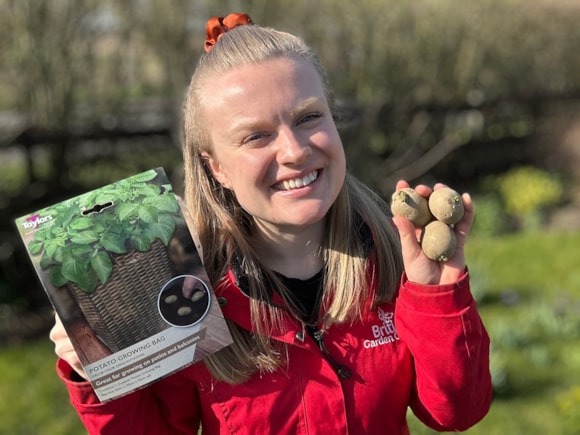
Eve with potatoes
Potatoes are an excellent crop for both beginner gardeners and experienced vegetable growers, as they're easy to grow and produce a bumper harvest every time. They can be grown in allotments, home gardens, and even small containers, buckets, or bags on balconies and on patios if you are short of space.
There are four types of seed potatoes: first and second earlies, main crop, and autumn second crop, so called due to the time they are harvested.
First Early: First earlies can be planted around late March or early April and are ready to harvest 10 to 12 weeks after planting in May or June. Popular first early varieties include Arran Pilot, Orla, Red Duke of York, Pentland Javelin, Rocket, and Swift.
Second Early: Second earlies can be planted in mid-April for harvests 14 to 16 weeks later from July onwards. Common second early varieties include Charlotte, Maris Peer, Nicola, Kestrel, and Estima. These varieties produce small, flavoursome new potatoes that are ideal for boiling, steaming, and salads, and are best eaten soon after harvest.
Maincrop: Maincrop potatoes should be planted from mid-April and harvested after 15 to 20 weeks, from late August to October. Popular maincrop varieties include Maris Piper, King Edward, Desiree, and Cara.
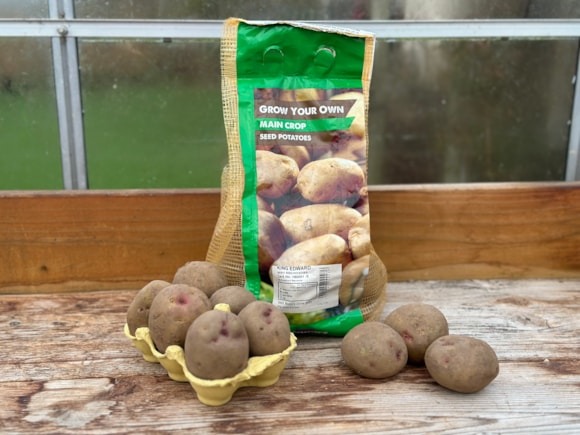
Chit potatoes
Chitting: Seed potatoes will need to be prepared and chitted before they go in the ground. Stand them in an eggbox with the end with the most eyes pointing up so they will sprout naturally. The tubers are ready to plant in the ground, container or potato bag when the sprouts are a couple of centimetres long.
Planting: Potatoes thrive in nutrient-rich soil, so the growing media is best treated with a high potash fertiliser before planting. It's important to make sure the soil is not too wet or frozen, so plant after the last frost around Easter. If planting in the ground, place the tubers approximately 15cm and 30cm apart with the eyes facing upwards. For container planting, we recommend you use a bag or pot that is at least 18in wide to provide the tubers with the space to grow. When shoots start to appear, and they are about 6in tall, begin earthing up your potatoes and keep covering the new shoots with compost as they grow. This will reduce the risk of light exposure, which turns potatoes green.
Harvesting: Harvesting potatoes depends on their planting time and the varieties you have bought. First and second earlies are usually ready for harvest from May to July when the flowers are open, whilst the main crop can be harvested from September, once the leaves have yellowed. Cut the foliage to the ground, then gently lift the potatoes out of the ground with a fork. Dig up the potatoes as and when you need them to provide an all-year-round supply for cooking and salads.
Growing your own potatoes is rewarding, as you get something that is fresh, flavoursome, more nutritious, and satisfying to put on your plate at the end of the process. And with the cost of living continuing to rise, one of the biggest advantages of growing your food is that it can save you money. With our expert advice, you can grow your own potatoes, which are both healthy and wholesome and ideal for beginners taking their first step into the world of GYO.