



search
date/time

Mon, 12:00AM
light rain
7.0°C
ESE 5mph
light rain
7.0°C
ESE 5mph
 | Sunrise | 7:46AM |
| Sunset | 5:03PM |  |

Allison Lee
Smallholding Correspondent
P.ublished 7th February 2026
lifestyle
Caring For Pigs In Winter
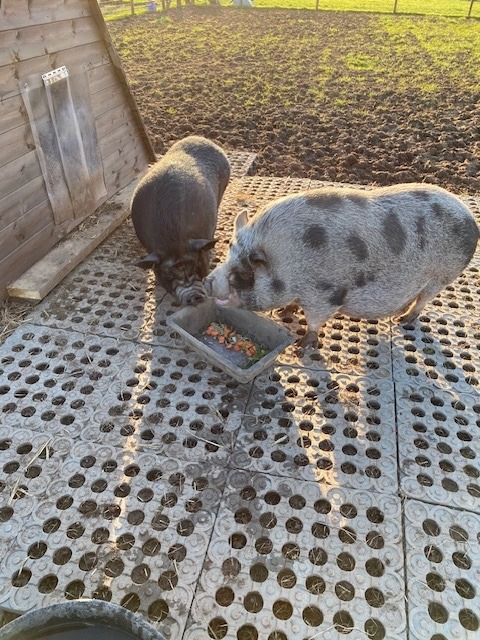
Enjoying tea on the hardstanding
Although pigs can keep themselves warm by huddling together to share body heat and by burrowing in deep bedding, they do need a little help to be able to do this.
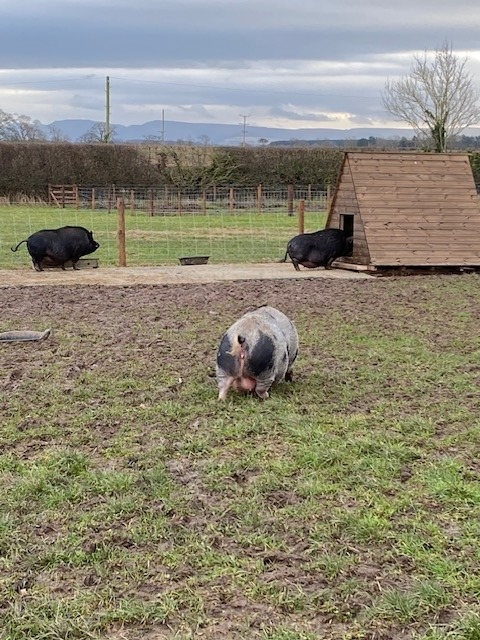
Exploring the paddock
Fleece is particularly warm and comfortable; however, it is important to ensure that your pigs don’t eat any additional bedding you provide, so take care when introducing blankets and fleece and make sure you are on hand to watch how they utilise it. Be prepared to remove it should they decide it makes a tasty treat instead of a warm bed!
Whatever bedding you choose to use, I use a mixture of straw, fleece and blankets; it is crucial that it is kept dry and this means checking it regularly and replacing any wet bedding as soon as possible to ensure the pigs remain comfortable. Although pigs rarely soil their bedding, they will drag mud into their shelters on their feet, and this in turn will contaminate the bedding. Additional consideration should be given to young or very old pigs that might be more susceptible to the cold and therefore more vulnerable, and additional bedding will be needed to keep them warm.
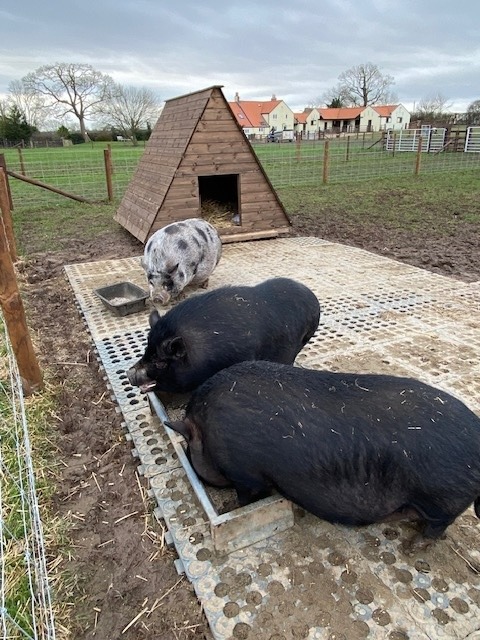
The pigs on the hardstanding
Although they were only indoors for a couple of weeks whilst we had two new pig arks made, they became bored very quickly. They were extremely territorial, and every time I went into the stable to muck out or feed them, they turned aggressive towards each other and, once or twice, towards me. It was upsetting for all of us. My normally calm pigs that appreciated ear tickles and belly rubs had changed before my eyes. Of course, some of what they were feeling may have been a result of the storm. I am sure they would have been terrified having their shelters ripped away by the wind. However, I vowed to get them back outside as soon as possible so they could enjoy the fresh air and root about in the paddock that they knew and loved.
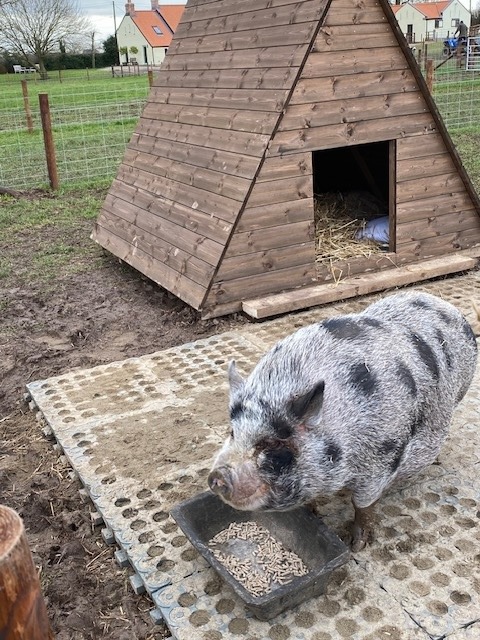
Dotty eating from a trough
Another consideration to take into account is the pigs’ diet. In winter, when they spend less time rooting around, or indeed if they are housed indoors, food will be more scarce. In the cold months pigs need more calories in order to create energy to stay warm, and therefore providing high-energy food and good-quality snacks is vital. My pigs are fed seasonal fruit and vegetables, and they particularly enjoy carrots, turnips, apples, pears and grapes. In addition, I feed them a quality-grade feed formulated for pot-bellied pigs. It is important to remember that it is illegal to feed kitchen waste to your pigs, and therefore nothing that has been through the kitchen should end up in the pigs’ bowls. Clean, fresh water should also be provided at all times, and it is particularly important to check that water bowls haven’t frozen over during the winter months.
When the weather is fine and the ground dry, I like to spread the pigs’ feed on the floor so that they can root and forage for it as they would naturally; however, after days of endless rain when the paddocks are muddy, this is not an option, and therefore I have laid a hardstanding between the two pigs’ arks that enables the pigs to stand comfortably whilst they eat from a trough. The hardstanding also ensures that the pigs don’t drag mud back into their arks, and ultimately their bedding stays drier.