



search
date/time

Tue, 9:00PM
few clouds
9.8°C
S 4mph
few clouds
9.8°C
S 4mph
 | Sunrise | 6:21AM |
| Sunset | 6:17PM |  |
P.ublished 9th March 2026
frontpage
Celebrating 250 Years Of The Wealth Of Nations
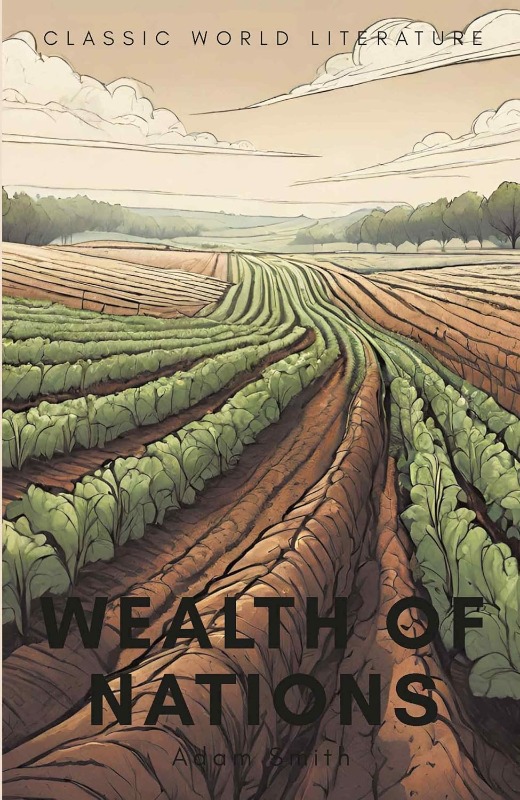
A new IEA paper argues that The Wealth of Nations remains one of the most important guides to prosperity ever written, and that Smith's core model has been vindicated by modern evidence.
Governments today, with their high taxes, sprawling regulation and pandering to special interests, would have horrified Smith as a return to the mercantilism he spent his career dismantling.
To mark the 250th anniversary of the publication of Adam Smith's The Wealth of Nations, the Institute of Economic Affairs today publishes a new discussion paper, The Genius of Adam Smith, by Mark Skousen, presidential fellow at Chapman University and author of The Making of Modern Economics.
In The Wealth of Nations, Adam Smith argues that individuals pursuing their own self-interest can promote the public good when channelled through his “system of natural liberty”.
This is built on three pillars: the rule of law and justice; individual freedom to pursue one's own interests; and robust competition to moderate greed and channel self-interest into socially beneficial outcomes. The paper argues this three-pronged model, buried on page 651 of The Wealth of Nations, remains the clearest blueprint for a prosperous society ever devised.
Far from being a defender of business interests, Smith was deeply suspicious of merchants and corporations who sought favours from the state. He warned that tradespeople seldom gather without conspiring to raise prices, and that proposals from commercial interests should be treated with the "most suspicious attention." His real target was mercantilism: the system of government-granted monopolies, tariffs and top-down economic management that stifled growth and enriched the few at the expense of the many.
The paper shows that Smith's prediction, that natural liberty would produce prosperity extending to the lowest ranks of society, proved prophetic. World GDP per capita was essentially flat for millennia before 1776 and then exploded upward. Modern evidence from the Economic Freedom Index confirms that countries with greater economic freedom consistently achieve higher living standards and faster growth, particularly for the poorest.
Skousen argues that Smith, were he alive today, would be struck by the dramatic improvement in living standards that his ideas helped produce. He would also, however, be deeply troubled by the expansion of state intervention, complex and punishing tax systems, and the return of crony capitalism, and would recognise them as variations of the very mercantilist thinking he devoted his life to combating. His policies for the "highest degree of opulence" - "peace, easy taxes, and a tolerable administration of justice" are being challenged once again, by global wars and an attack on free trade and globalisation.
"Adam Smith’s unique achievement in perfecting this ‘invisible hand’ doctrine must be considered one of the greatest triumphs in modern history. It recognises that self interest forces the butcher and the baker not just to serve themselves, but to serve you. Two hundred and fifty years on, every government that hands out monopoly privileges, piles on regulation, and taxes enterprise into submission is repeating precisely the errors Smith dismantled. The Wealth of Nations is not a historical curiosity. It is a standing indictment of what governments keep doing wrong."
Many dodgy economic ideas have been and gone in the 250 years since Adam Smith wrote The Wealth of Nations, but his principles remain, and have stood the test of time. He would have been horrified by the size of modern government and would surely have predicted that today's intrusive state and super-high tax and regulatory burdens would do nothing to create wealth or spread prosperity. Smith showed us the way forward 250 years ago: keep the rules straightforward, hold the burden of the state down, and trust people to make their own decisions. Much of modern politics consists of avoiding the obvious truth that Smith's ideas constitute the only proven programme that reliably delivers growth and allows every person to flourish.