



search
date/time

Sat, 7:00PM
light rain
17.6°C
SW 8mph
light rain
17.6°C
SW 8mph
 | Sunrise | 3:46AM |
| Sunset | 8:31PM |  |

Andrew Palmer
Group Editor
P.ublished 30th May 2026
arts
Review
Classical Music: Barber's Vanessa
A Pulitzer-winning rarity restored to its full splendour
Nicole Heaston soprano, J’Nai Bridges Mezzo-soprano; Susan Graham Mezzo-soprano, Matthew Polenzani tenor, Thomas Hampson tenor,
Jonathan Bryan tenor, Samuel Weiser bass baritone
Gianandrea Noseda
National Symphony Orchestra
University of Maryland Concert Choir (Jason Max Ferdinand, director)
NSO00023
https://www.kennedy-center.org/nso/home/nso-label/vanessa/
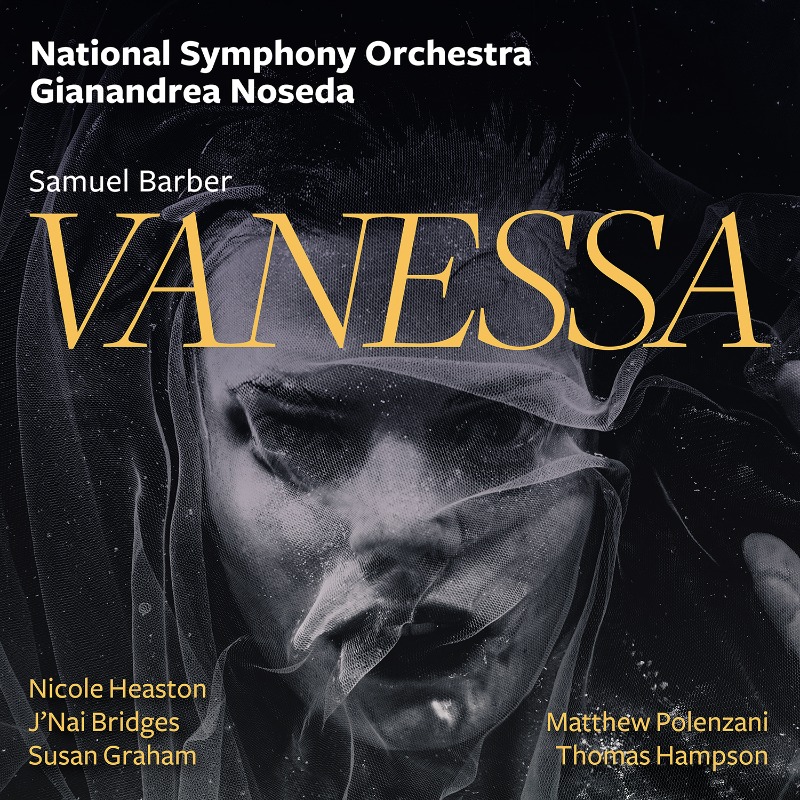
Pulitzer Prize-winning on its 1958 premiere, Vanessa sits within the twentieth-century lineage of Puccini and Strauss while speaking in a voice that is unmistakably its own. Barber's score draws together the European operatic inheritance and a distinctly American sensibility, with echoes of Verdi, Puccini and the lush orchestral palette of Hitchcock-era Hollywood interlacing throughout. Menotti's libretto — a haunting tale of love, longing and illusion across the generations — turns on the eternal themes of waiting, loneliness and the refusal to face reality, and Barber's response is a score of remarkable refinement and emotional force.
Noseda shapes the dramatic arc with a broad view that pays handsome dividends, and the orchestral playing is superbly balanced from first bar to last. The wonderful orchestral introduction sets the tone, and every section is in excellent form, with the brass and woodwind especially fine. Throughout, the NSO colours the text beautifully; the crescendos and diminuendos are finely judged.
The cast is stellar, with diction that does full justice to Menotti's text. Soprano Nicole Heaston in the title role—a woman of great beauty in her late thirties—captures the spirit of the part superbly, her tone glowing and her phrasing alive to every shift of feeling. As her young niece Erika, mezzo-soprano J'Nai Bridges is a revelation: her top register is excellent, and she paints the character with terrific energy. Her "Must the winter come so soon?" is sung with plush sincerity; the aria's melancholy is beautifully drawn. Matthew Polenzani's Anatol, the handsome young man at the centre of the drama, is delivered with terrific dynamics and tenderness, while Susan Graham's The Old Baroness—Vanessa's mother and Erika's grandmother—is quite simply fabulous, her glorious voice undimmed. Baritone Thomas Hampson brings veteran authority to the Old Doctor, and Jonathan Bryan's Nicholas, the Major-Domo, is a model of vocal dexterity in a smaller role.
The set piece of the recording is the great quintet from Act III, "To leave, to break, to find, to keep", in which all five principals sing delectably before leading us into the opera's final moments. The emotional peak of the score is delivered here with a poise and concentration that leaves one breathless. The University of Maryland Concert Choir, directed by Jason Max Ferdinand, brings considerable presence to the two brief choral sections; "In Morning Light, Let Us Rejoice", with its delicious orchestration, shows the chorus off particularly well.
The excellently produced booklet contains an insightful synopsis by Hilary Poriss and the libretto.
Barber's writing for orchestra is consistently lovely, never more so than in the celebrated Intermezzo, where oboe, woodwind and harp combine to ravishing effect. Noseda has created a gem of a recording, and if Vanessa is unfamiliar territory, this is a disc that will not disappoint. It may well prove a discovery.
Also by Andrew Palmer...
La Dolce Strada: Memories Of Italy In A Vintage RollsHow One North Yorkshire Mum Is Helping Women Take Control Of Their BirthsSpinning Plates: Tommy Banks On Hospitality, Influencers And The Village That Built HimClassical Music: CoplandBook Review: The Walking Cure By Annabel Streets