



search
date/time

Sat, 10:00AM
light rain
15.9°C
WSW 18mph
light rain
15.9°C
WSW 18mph
 | Sunrise | 5:50AM |
| Sunset | 6:19PM |  |

Andrew Palmer
Group Editor
P.ublished 19th September 2026
arts
Review
Classical Music: For Cello, By Cellists
Six views of one instrument
Jakob Kullberg: Single the Sky - A Fever Dream; Moody: Mandala; Witter-Johnson: Amethyst Sings Martlew: Inila; Downes: Kasei Valles; Colin Alexander: Towards the Flame
Delphian DCD34371
https://www.delphianrecords.com/
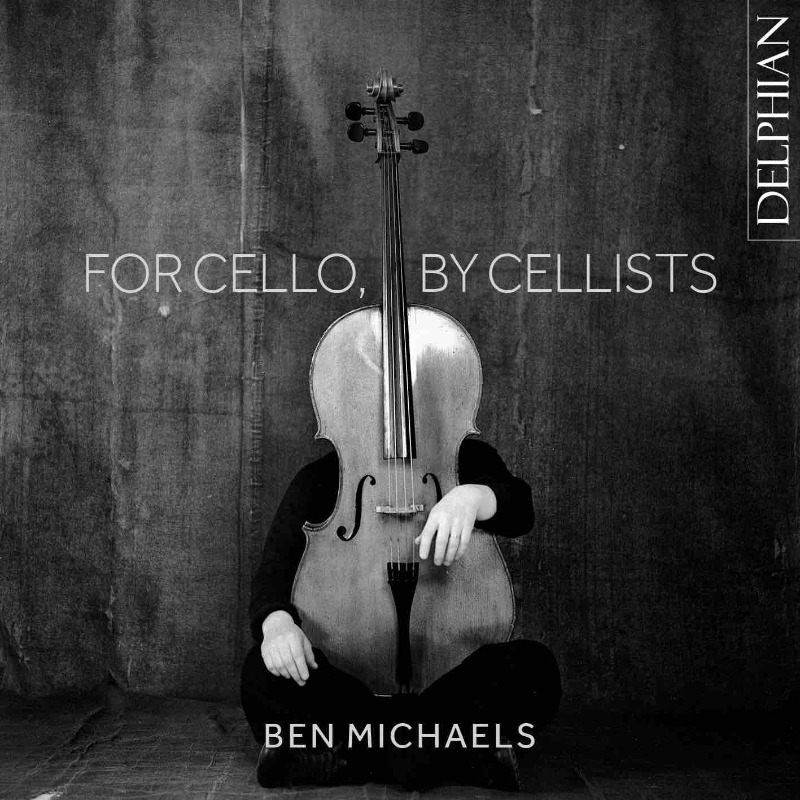
Laura Moody's contribution, Mandala, began life not at a writing desk but in a concert hall, where she watched Michaels perform and decided he looked entirely at ease with himself — composed, unhurried, serene. He told her afterwards that none of it was true: inside, he had felt nothing of the sort. That gap between what a performer projects and what a performer feels was enough to send Moody down an unusual path. Her own background is as much in theatre as concert music, and it shows: she doesn't write from the page outward but from the physical act of playing, watching what a body does to make a sound before she ever considers what note it should be. Long before she wrote a note, she was slapping the body of the cello with the bow and testing what else the instrument might yield. The result sounds like invention piled on invention, though the bones of the piece are disarmingly simple — a verse and chorus structure with a cadenza at its centre. The title comes from the mandala, the circular meditative pattern Moody drew by letting her pencil move instinctively across the page; those drawn shapes became gestures on the cello, each phrase tracing the same path an eye might take around the pattern itself. Arm movements are choreographed too, which live audiences will see and recorded ones will simply have to imagine. By the end, Mandala barely resembles a piece of cello writing at all — closer to choreography that happens to leave a trail of sound behind it.
Witter-Johnson herself has described the cello to Michaels as an instrument that "can do almost anything" — and it's that same elasticity of texture, rather than any single extended technique, which every composer here seems to have latched onto.
Zoë Martlew goes furthest of all in Inila, a piece that pushes the cello about as far from its familiar self as it can travel. Clothes pegs clipped to the strings produce a swirling, whistling sound close to the noise of bow hair itself. From there the piece opens out in fragments — a note breathed rather than bowed, an overtone caught almost by accident, a fingertip circling the wood of the instrument, a single plucked note dropped in like punctuation. It is an intensely quiet, intensely physical piece, and one that rewards close, patient listening.
Kit Downes, better known as a jazz musician, supplies the disc's most understated moment. It's a modest piece by the standards of this disc, unshowy almost to the point of stubbornness, with Bach and jazz harmony sitting so naturally together you stop noticing which is which — and a quiet subversiveness running underneath that only reveals itself on a second or third hearing. There's an unease to it, too, reinforced once you learn the title refers to a system of valleys on Mars, vast enough to dwarf anything on Earth yet recognisable all the same.
The album closes with something genuinely beautiful: Colin Alexander's Towards the Flame. It ranges across long stretches of time, yet each of its four movements sounds worked and unworried at once — nothing rushed, nothing forced, one movement simply growing out of where the last one left off, on into new territory. Alexander has described the four movements in his own terms — "a slow explosion, the burning embers, a private prayer and a fire dance" — and that sequence gives the piece its shape: violence cooling into stillness, stillness deepening into ritual. The score, tellingly, is handwritten, and Alexander talks of composing not by invention but discovery — writing from the top of the page and, in his words, "uncovering it along the way", as though the piece already existed somewhere and merely needed to be found.
This is a label with previous form. Delphian has built a reputation on recordings that unsettle expectation rather than confirm it, and this disc does exactly that from its opening bars, where Michaels conjures sounds both atmospheric and haunting, testing a technique that turns out to be entirely equal to the demands made of it. There is a melancholy thread running through every piece here, and a textural intensity that never lets up.
It will not be an album for anyone wanting an easy hour of cello music, and I will admit I needed more than one listen before it began to make sense to me. But persistence pays off: this disc asks you to hear the cello differently, and by the end, you do.
Waley-Cohen makes an interesting point in her closing notes for the booklet: spend enough time inside a piece of music and you start to notice not just what a composer writes but what they leave out — their habits, their instincts, something closer to their temperament than their technique. She illustrates it with a memory of her own: a cellist she once knew, working through a PhD on the fingerings left in Alfredo Piatti's manuscripts, who found that copying those fingerings by hand, physically, taught him more about the nineteenth-century cellist than any amount of reading had. A disc of cello music commissioned entirely from cellists works on something like that same principle — composer, performer and listener all closer to one another than a conventional recital would allow.
What Michaels has built here is plainly more than a technical exercise for cellists of the future: in commissioning these six pieces and then playing every one of them himself, he has tied the physical and the artistic together so tightly that it's hard to say where one ends and the other begins.
That, in the end, is the real achievement of this disc: not the strangeness of the sounds Michaels draws from his instrument, but the sense that six composers, one performer and, eventually, the listener too have all been let in on the same secret.
Also by Andrew Palmer...
Bach: The Complete Keyboard ConcertosClassical Music: Guys And DollsWild Pages Turn: Nature Writing's Biggest Night Crowns Birds And Lost WorldsClassical Music: Notes From The Living RoomClassical Music: Beethoven For Three Series Symphony No. 3 ‘Eroica'The shortened address for this article is: newspub.uk/220ya
Search Results