



search
date/time

Sun, 1:00AM
scattered clouds
12.2°C
S 7mph
scattered clouds
12.2°C
S 7mph
 | Sunrise | 6:03AM |
| Sunset | 6:01PM |  |

Andrew Palmer
Group Editor
P.ublished 26th September 2026
arts
Review
Classical Music: Kin
Folksong as family heirloom: Lotte Betts-Dean and Joseph Havlat come home to KIN
Josephine Stephenson *~Rosemary Lane; Ernest J. Moeran Parson and Clerk; The Shooting of his Dear; Percy Grainger from British Folk-Music Settings The British Waterside; The Pretty Maid Milkin’ Her Cow; Died for Love; The Twa Corbies; Scotch Strathspey and Reel#; Benjamin Britten Sally in our Alley; Louise Drewett *~The Lambs on the Hillside;Joseph Canteloube from Chants d’Auvergne;Malurous qu’o uno fenno 2 La delaïssádo; Béla Bartók Eight Hungarian FolksongsJoseph Havlat* Interlude-Premonition (Bystrá voda vylívá) Isabella Gellis*~ Montreal Songs Doreen H. Senior The Broken Ring; Ralph Vaughan Williams The Maiden’s Lament Michael Finnissy How dear to me#; Ruth Wall* My Lagan Lovearr. Joseph Havlat;
* premiere recording
~ commissioned for this project
Lotte Betts-Dean mezzo-soprano
Joseph Havlat piano #
Delphian DCD34362
https://www.delphianrecords.com/
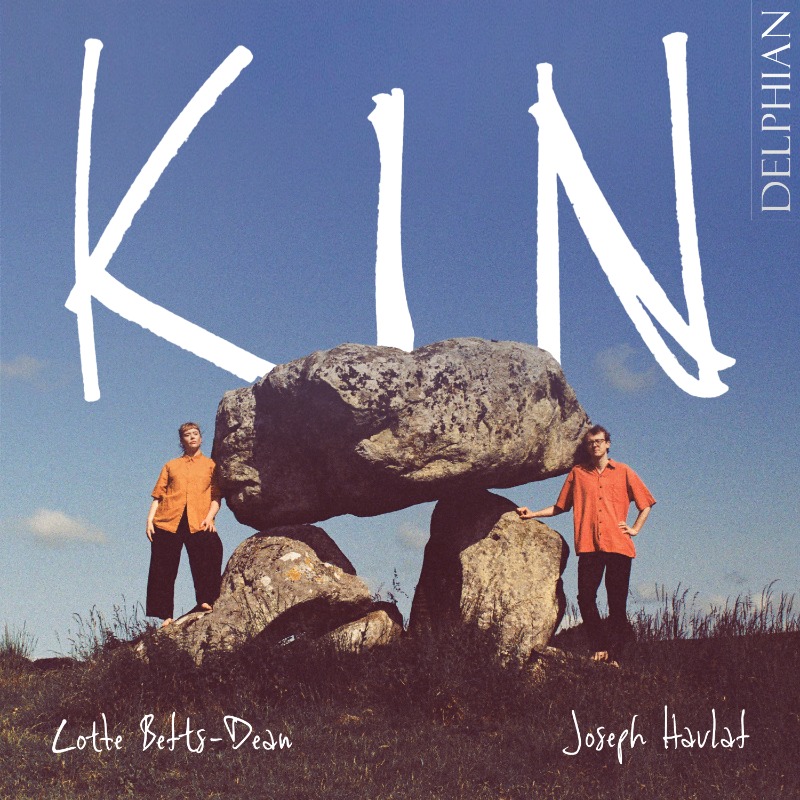
In a fascinating booklet note, Betts-Dean explains how the interest took root and how she goes about shaping a programme. Folk music, she reflects, is bound up with place and people, with community, family and inheritance, and she wonders whether their shared devotion to it is, at heart, a search for belonging. Hence the title. KIN reflects the duo's own mixed roots, stretching from Australia to Europe and beyond, and treats folksong not as a museum piece but as something that changes a little every time it is passed on. It is about family in the widest sense too: grandparents and ancestors handing songs down the generations, but also the family we choose. Betts-Dean speaks of Havlat, with obvious affection, as family in all but name.
That closeness is audible throughout. The singing is evocative and beautiful, Betts-Dean's voice adapting effortlessly to each change of style, and her diction is immaculate. Havlat's accompaniments are simply divine, superbly controlled yet never cautious, and together they bring sensitivity, expressive range and a wonderful rhythmic energy to every track.
Old favourites sit happily beside forgotten gems. Britten, Bartók and Grainger rub shoulders with the too-rarely heard E.J. Moeran and Doreen Senior, while Josephine Stephenson, Isabella Gellis and Louise Drewett contribute newly commissioned settings that prove the well is far from dry.
Havlat gets the stage to himself for Percy Grainger's Scotch Strathspey and Reel, a foot-tapping romp that smuggles in What Shall We Do with the Drunken Sailor and signs off with a flourish of glissandi. He clearly has enormous fun with it. The penultimate track, How Dear to Me, could hardly be more different. Here he draws deeply on the folksong heritage, evoking a melody long associated with the Irish text Casadh an tSúgáin (The Twisting of the Rope); his piano sings while the voice seems carried on the wind. His own Interlude – Premonition takes a Czech folksong about a meadow spring and half-dissolves it into what he calls 'a blurred dream scene, or perhaps a mirage'. It is a haunting miniature.
Bartók's Eight Hungarian Folksongs are fabulous. Bartók found the melodies for the first five songs on collecting trips to Csík, in Transylvania, in the years before the Great War. They are ancient pentatonic tunes, entirely free of semitones. The final three are Székely soldiers' songs, modal in flavour and occasionally spiced with an added semitone, and the duo relish the change of colour.
The Montreal Songs are every bit as fine, celebrating the city's meeting point of French, English and Jewish identities. The final song shows off the pair's technical assurance, and its ending is handled with the most exquisite sensitivity.
Two musicians best known for the cutting edge have gone back to the oldest songs of all, and have made them sound newly minted.
A totally delightful disc, and one I shall be returning to for a long time.
Also by Andrew Palmer...
North Basks In 'Painted Lady Summer' – But Butterfly Experts Fear A Crash Next YearClassical Music: Bruch Violin Concerto No 1Classical Music: Neeme Järvi Conducts ShostakovichClassical Music: Mentor And Muse: Songs By Vaughan Williams And The Women Around HimA Watch Ticks Towards Dawn In A Devastating One-Man War StoryThe shortened address for this article is: newspub.uk/22115