


search
date/time

Sat, 10:00AM
light rain
8.1°C
S 11mph
light rain
8.1°C
S 11mph
 | Sunrise | 6:56AM |
| Sunset | 4:53PM |  |

Allison Lee
Smallholding Correspondent
P.ublished 24th October 2026
lifestyle
Clicker Training Donkeys
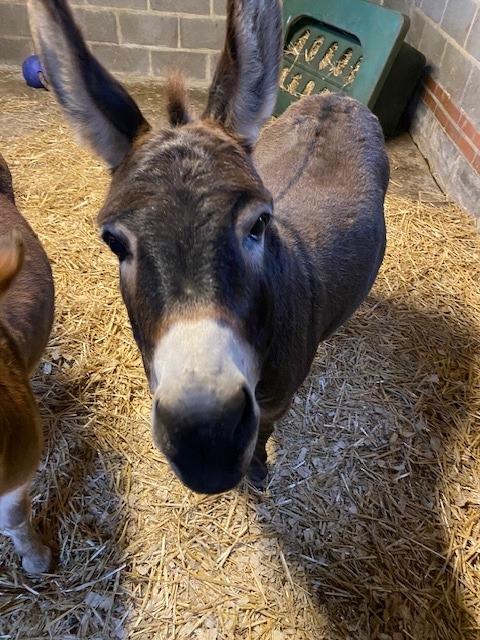
George the miniature Mediterranean donkey
All owners should want their animals to be happy, and none should put them through stress. However, a fine line separates dominating an animal from asserting authority, and we aim for the latter when teaching the basics of training.
In this article, I'll focus on training miniature Mediterranean donkeys, the breed I own. My three donkeys are all seven years old and have not been ridden. They are fine when the farrier visits every six weeks, although they can occasionally strop if they aren’t feeling very co-operative; overall, the experience is usually fine. However, due to a couple of very traumatic routine vet visits, they have become wary of strangers recently, and it is vital that I help them regain trust in the vet.
Donkeys are highly intelligent animals, and training allows you to harness that intelligence. Therefore, gentle, patient training can be a positive experience for both the owner and the animal.
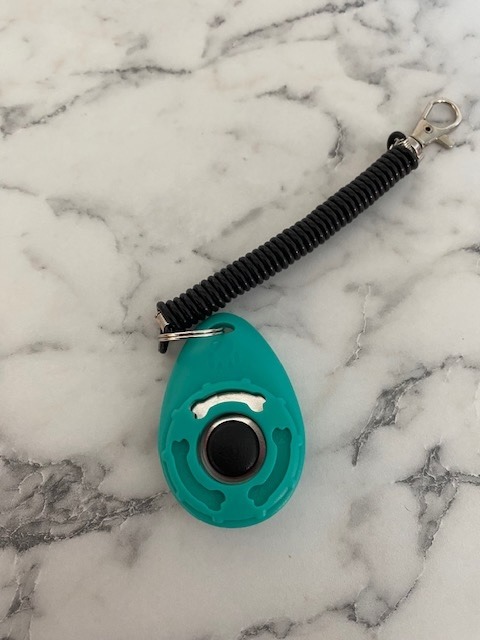
The clicker
I recently introduced clicker training for my donkeys to reinforce positive behaviour, as they are, on the whole, well-behaved; however, I would like them to be more amenable to routine vet procedures. I am trying to fine-tune certain aspects of their behaviour to prepare them for future vet visits, which is why I have introduced the clicker.
At present, the donkeys are very wary of the head collars because they signal that someone other than me is coming to see them, which causes stress. So I am slowly introducing the head collars, letting them sniff them, and immediately rewarding the donkey when it responds well. I click and reward with a treat.
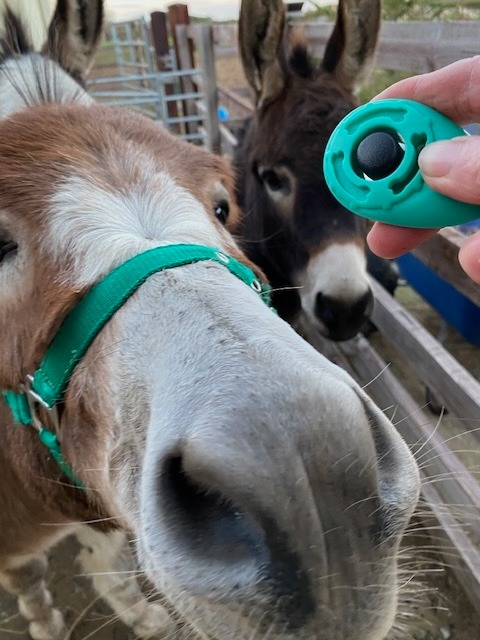
Clicker training
Over time, as soon as my donkey behaves as I want him to, I click and reward him with a small treat so he associates the clicker sound with a treat, rewarding good behaviour and helping him quickly link the click to a positive outcome. Clicker training is relatively fast and encourages the donkey to think through tasks calmly and methodically. It can be very beneficial for shy or skittish donkeys, especially those that have been abused or experienced trauma of any kind, as it helps to build trust and replace fear and force with choice.
Once the donkeys understand how the clicker works, I can start a vet desensitisation plan. I will follow up in a few weeks to let you all know how things are going!
Also by Allison Lee...
Brown Eggs Or White - Which Is Better?Feeding The BirdsPlanning AheadHeading Into AutumnThe Importance Of Community Hubs In Rural AreasThe shortened address for this article is: newspub.uk/221do