



search
date/time

Thu, 10:00AM
clear sky
3.7°C
ESE 2mph
clear sky
3.7°C
ESE 2mph
 | Sunrise | 5:41AM |
| Sunset | 6:47PM |  |

Jeremy Williams-Chalmers
Arts Correspondent
@jeremydwilliams
P.ublished 30th March 2026
arts
Interview
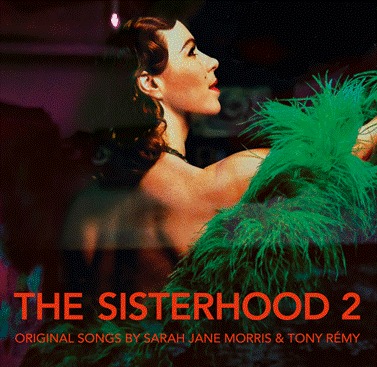
In Conversation: Sarah Jane Morris
We caught up with Morris as she briefly paused at home between performances to talk about the new album, the extraordinary journey behind it, and what comes next.
I’m okay, thank you. Just home for a few days, so I’m catching up with everything.
It’s an exciting time because Sisterhood 2 is out. The response to the first album was really warm—did you expect that when you started?
When I first began, it was really just a research project to get me through COVID. I don’t have a television, so my husband and I read to each other. I said, “Let’s find out about all these women who paved the way for me.”
We bought autobiographies and biographies and completely immersed ourselves—not just in the music but also in their lives. After a couple of books, we realised this could be an album. Their journeys were so compelling.
At first I had a list of 50 women. Cutting it down to 10 for the first record was incredibly difficult because everyone deserved to be included. But I started to see it as a kind of passing of the torch—from Bessie Smith through to Kate Bush, who, in my mind, passes it on to me.
And the musical approach—writing in each artist’s style—was that always the plan?
That came when my guitarist Tony Remy came down. Once I read him the lyrics, we thought, wouldn't it be exciting to write each song in the genre of the artist? It would really stretch us creatively—and it did.
It sounds like a huge undertaking, especially independently. How did you fund it?
I had no money at all. I’m the record label, the manager, the agent—everything. Brexit had already affected my career in Europe, and then COVID hit. So I had to think completely differently.
I started doing masterclasses, which terrified me because I’ve never had a singing lesson myself. But I advertised one, and it sold out immediately. People hadn’t been close to each other during lockdown—it became this emotional, communal experience.
From there, we did everything: Airbnb’d rooms, sold handmade items, ran songwriting weekends, even upcycled furniture. It took years, but we raised enough to record, including going to South Africa to work with the Soweto Gospel Choir on a song about Miriam Makeba.
That’s incredible. And the response from the artists themselves has been amazing too?
Yes! We had Rickie Lee Jones write to us saying her song moved her to tears. And then recently, something extraordinary happened—Janis Ian bought the album.
I couldn’t believe it. I sent her the track we wrote about her, and she replied saying not only was the research accurate, but that the song reminded her of her own work. That’s the feedback you dream of.
How did you choose which artists to include on Sisterhood 2?
They’re all part of the backdrop to my life. Some I knew, like Sinéad O'Connor, and some I didn’t, like Amy Winehouse—but they all touched me deeply.
Amy’s honesty in her songwriting really moved me. With Sinéad, I had a personal memory—she once held my baby at a press event, and the papers ran with “Sinéad’s new baby”!
Her story is incredibly emotional. We wrote her song almost like a myth, inspired by Ovid—transforming her and her mother into birds who meet and hear each other but can’t heal each other. It’s very moving.
And with someone like Kate Bush, who is famously private?
That was difficult. I couldn’t find anything beyond what she’d already said publicly. So I had to go into her lyrics.
When I discovered she wrote The Man with the Child in His Eyes at 12, I thought—this is a prodigy. My husband suggested comparing her to the poet Rimbaud, so I called her “the Rimbaud of suburbia.” That became the entry point.
You’ve already performed the new material live. What are your plans for touring?
We launched it with a 12-piece band and a 35-piece choir, which was incredible—but not financially sustainable on tour! So we’ve created a more intimate version: two acoustic guitars, bass, and voice.
In that setting, I tell the stories behind each woman. It becomes very personal, and the audience really listens to the lyrics. Both versions have their own power.
We’re taking it to Berlin, and then to Rome—where I’ve booked a huge venue again, which is terrifying! But I believe in thinking big.
You’ve mentioned reaching out to some of the artists you’ve written about—what would that mean to you?
It would mean everything. I’d love to connect with people like Dolly Parton, Joan Armatrading, Tracy Chapman, and Bonnie Raitt.
We’ve approached their stories with such care and respect—it would be wonderful for them to hear that.
Finally, you started with 50 artists and now you’ve covered 21. Is there going to be a third volume?
We’re already writing. I’d love there to be a third. It depends on whether I can keep the project going through touring.
We’re also planning an acoustic album, a book with all the lyrics and artwork, and even an album of cover versions of the artists we’ve written about.
So yes—it’s far from over.
“It’s got a long way to go,” she smiles. And given the passion behind Sisterhood 2, it’s hard to imagine it stopping anytime soon.