



search
date/time

Tue, 7:00AM
overcast clouds
16.4°C
WSW 7mph
overcast clouds
16.4°C
WSW 7mph
 | Sunrise | 3:46AM |
| Sunset | 8:45PM |  |
Jeremy Williams
Arts Correspondent
@jeremydwilliams
P.ublished 7th July 2026
arts
Interview
In Conversation With American-Armenian Art-rap Collective Samuum
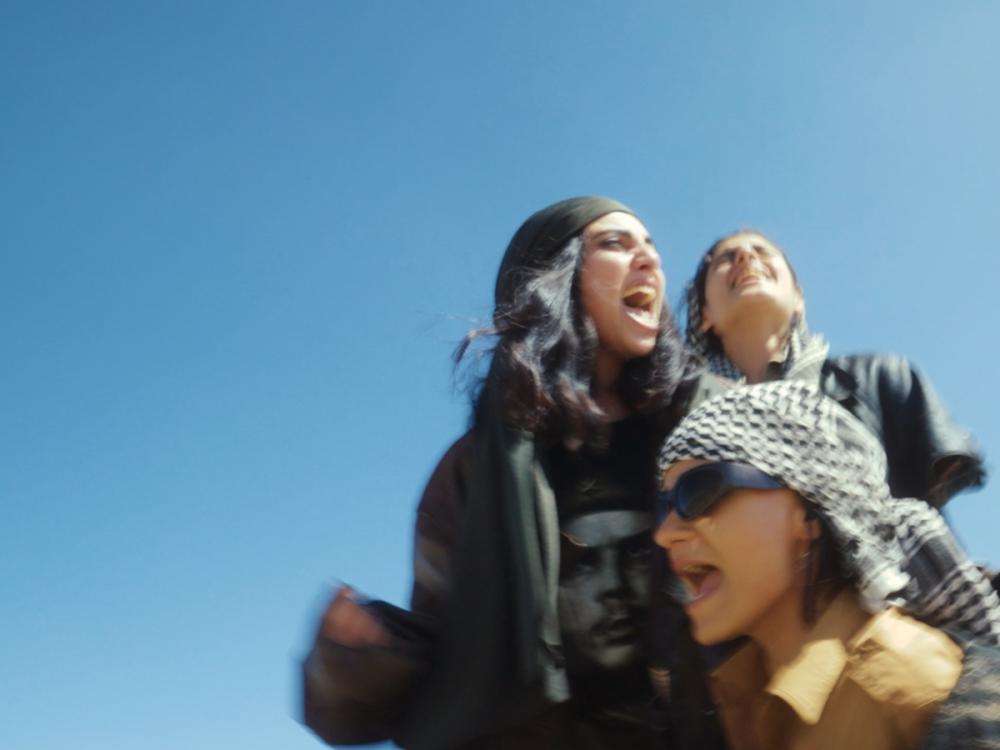
Pictures courtesy of Samuum
Ando: First of all, we would love to spark interest in listeners.
From the opening chords, the song sounds like an indie track that could turn into a breakup song or even a late-summer chill piece. But then the lyrics come in, and that’s where the clash appears: a joyful melody paired with serious lyrics, also delivered in a playful rhyme form.
We designed this contrast with a very specific purpose — to keep the listener hooked, but also to create a sense that there is something beneath the surface. That curiosity should lead you toward the music video, where the song’s topic — with all its Mid-Eastern political, emotional, and layered context — is fully revealed.
The song blends ritual, spirituality, and survival. How important are everyday traditions like coffee cup reading in preserving emotional resilience across the Middle East?
Lusine: It basically means everything here. Generations of people got used to the idea that even the smallest sense of stability can disappear at any moment, so they needed to create something they could rely on — even if it was something small, like an everyday ritual. Coffee cup reading became one of those things: a simple act that keeps you grounded and emotionally balanced amid constant uncertainty.
Ando: When I first traveled across Armenia and the Middle East for music and production work, I noticed that while closing deals, people would often say things like “May God bless our will”. It reflects how deeply unpredictability is woven into everyday life here — as if every initiative still needs a final approval from above. At first, it felt unusual to me, but later I understood the logic and even the comfort behind it.
People here rarely get overly frustrated if someone is late or a deal suddenly falls apart. There’s an understanding that life itself is unpredictable, and plans are always temporary.
At the same time, people can be unexpectedly generous and supportive. Warmth and understanding often appear exactly when you least expect them. That’s what makes life here feel so intimate and communal despite all the instability. And the coffee ritual is another important, almost immortal tradition that makes this sense of community even stronger.
Your music fuses rap, rave, punk, and Middle Eastern melodies in a way that feels both chaotic and intentional. How did Samuum develop this sonic identity?
Ando: First of all, thanks for mentioning that! The whole sound developed pretty naturally, although looking back, there’s definitely a certain logic and progression behind it.
I grew up in the 90s, during the grunge era, punk revival and the formation of the nu-metal scene. Bands like Linkin Park, SOAD, NIN and Blink-182 were coming from every speaker around me, so I absorbed a very specific understanding of emotional song dynamics rooted in that era of rock. The guitar tone itself felt extremely expressive — overdistorted, fuzzy and almost physically aggressive.
Later, I discovered artists like The Prodigy and Massive Attack, and realized that the combination of sub bass, live bass, texture and noise could hit emotionally just as hard as the classic guitar-and-drums energy of nu-metal bands. That was probably my first real “composer’s enlightenment” moment, which pushed me toward experimentation and hybrid forms.
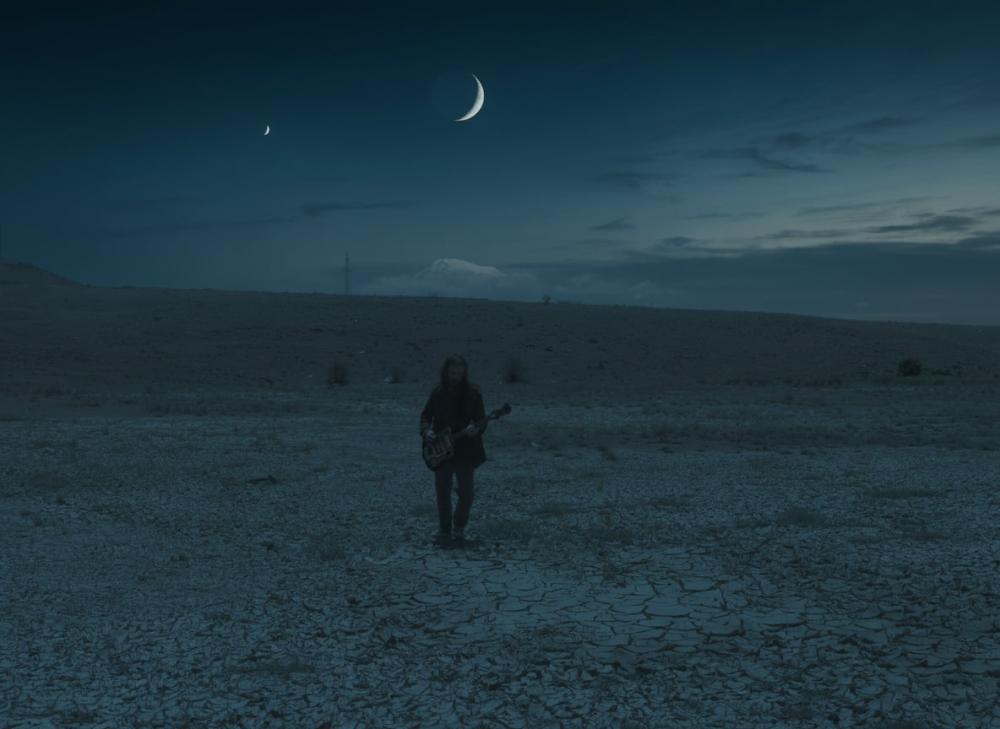
So years later, when we reunited creatively, we had this instinctive idea of building something that would combine: the direct, hook-driven structure of 90s rock + contemporary electronic and sub-oriented production closer to Massive Attack than guitar music + Armenian melodic language + and traditional Armenian percussion instead of a classic drum kit
That’s how this pretty wild blend appeared. The funniest part is that none of it was overly calculated. Most elements came together accidentally during studio experiments, shaped by all the music, films, culture and experiences we absorbed over the years. In many ways, we only fully understood what Samuum’s sound actually was after we had already created it.
Yeah, we understand that a lot of amazing bands like Young Fathers or Yemen Blues have experimented in that sonic field, but no one has really established a solid, signature sound from these layers, and no one has yet combined it into an album that fully represents this Mid-Eastern rave-punk aesthetic. So we’re here to be the first!
The line 'Sipping bitterness in silence, watching coffee cups for guidance' is incredibly striking. Was that lyric inspired by a personal memory or broader cultural observation?
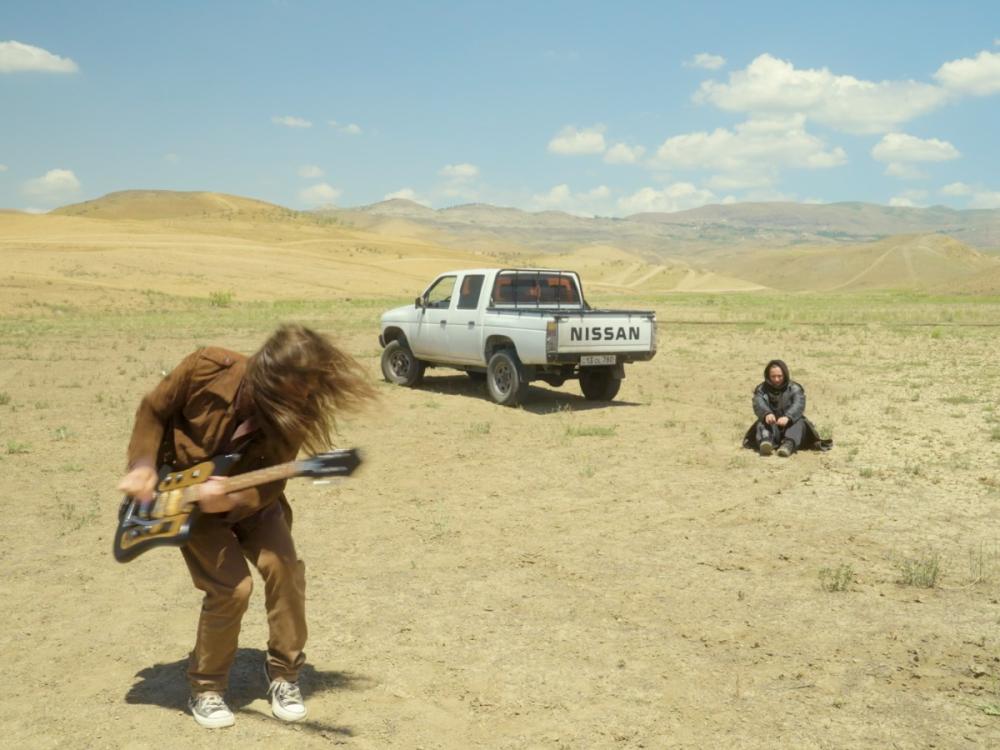
Ando: It’s kind of a mix. Since my childhood, I remember a very strong image of Armenian women in my head — beautiful but very sad. And there was a reason for that collective sense of bitterness, because the 90s in Armenia were heavily influenced by the collapse of the Soviet Union, poverty, and the three-year war in Nagorno-Karabakh, which brought the Armenian economy to collapse.
But in parallel with that, these women always became happier when they had coffee rituals or coffee cup readings. It was always done just for fun, but it was what made these women happier. It made them feel uplifted and smiley. During these rituals, their beauty would fully blossom, they became relaxed and radiated warmth.
There’s a recurring tension in your work between celebration and collapse. Why is that contrast so central to Samuum’s storytelling?
Ando: It’s very natural, I think, isn’t it? In general, for human beings, like “life and death come together.” Same with all these clichés like love and hate, day and night, etc. Everything that inspires us deeply — up to the point where we feel a creative impulse — is rooted in this duality.
And I think, since Ancient Greek times, the blend between a dramatic end and happiness has been a perfect formula for creating long-lasting art. Just look at Achilles — we remember his greatness partly because of his tragic but extra-dumb death.
So, yeah, I think the perfect formula is around 0.5 kg of dopamine + 0.5 kg of cortisol, spiced with good humor. At least, when you are speaking about the Middle Eastern context, there are no other recipes. Maybe just a spoon of coffee as an addition.
The music video immediately creates a sense of surveillance and danger through the thermal camera perspective. What inspired that visual concept?
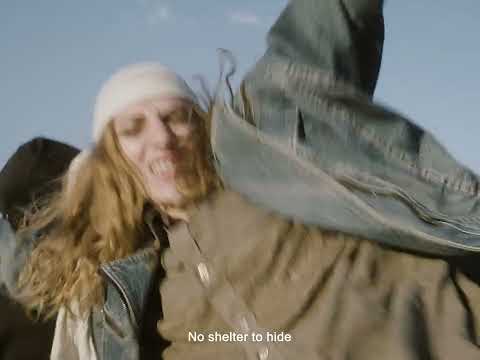
Ando: Literally, we wanted viewers to understand that these girls are being chased and watched by a drone. That detail was added to the plot to reflect how hundreds of thousands of young people across the Middle East have effectively become living targets due to the recent conflicts in Iran, Palestine/Israel and beyond.
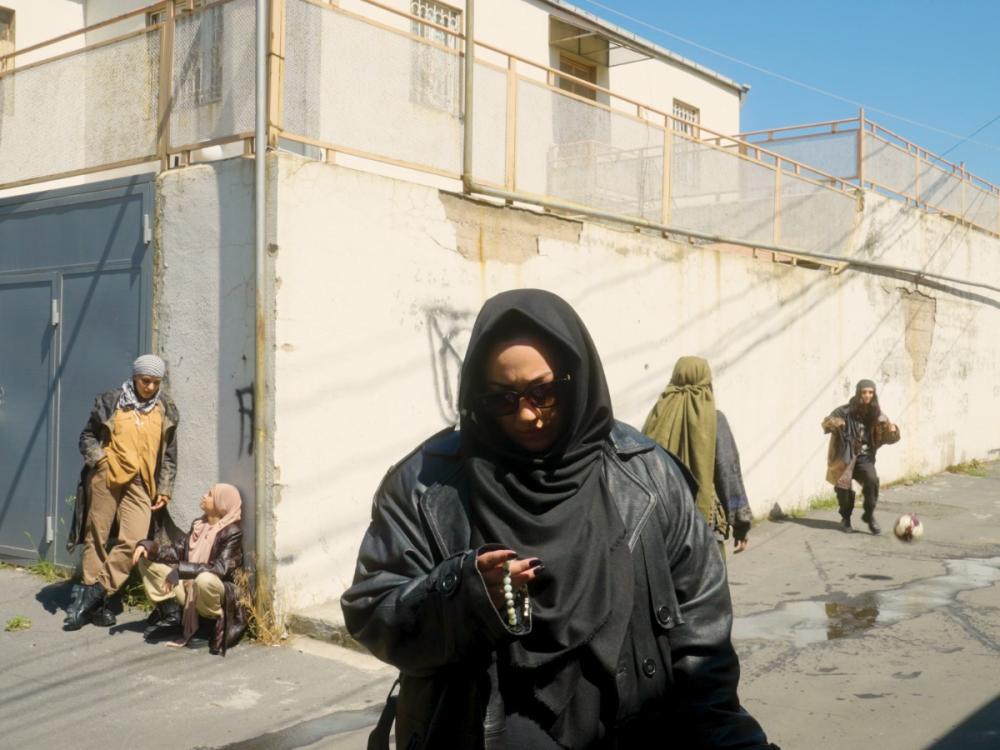
Lusine: And that’s exactly what we meant when speaking about the blend of drama and happiness. We see a generation of restless young people who simply want to dance, have fun and feel alive, while constantly being observed by an invisible menace. We placed this element at the very beginning of the video so the viewer immediately feels both the danger and the contrast from the first seconds.
The girls in the video continue dancing, wandering, and living despite the threat hanging over them. What does youth represent to Samuum politically and emotionally?
Lusine: It’s basically about understanding that you can’t stop living, even when tomorrow is not guaranteed. It’s about celebration and hope despite instability, fear and the constant possibility of death.
Ando: I remember a video that recently went viral — it showed a saxophone player performing near a pool party while missiles were visible behind him, about to hit his district. If I’m not mistaken, it was filmed in Lebanon. That image describes a lot of what I’m talking about.
Sometimes people simply choose to continue living while fully understanding that death is constantly present nearby
Your visuals have become a huge part of the Samuum universe, especially through your collaboration with Alisa Zolonz. How do the music and visuals evolve together during the creative process?
Ando: You won’t believe it, but sometimes it becomes absolutely experimental. Videos often become the priority. I mean, sometimes we have very exact and strict scenarios or moodboards for each video, but sometimes it happens that we shoot a video for one song and then later change the track to another one because it fits the visuals better.
Alisa is an amazing film and animation director and my long-time creative partner since the time we were both involved in the advertising industry in Ukraine. She has a unique visual instinct, so we sit together during pre-production, crafting every detail. But if during the final cut we feel that the sound should change, we do it.
We treat our music videos like short films, which is why we are so picky about every sound detail. So sometimes we are basically scoring our videos with our own songs, reshaping the tracks according to the final cut.
You’ll notice this a lot once the album is released: many songs will sound very different in their album versions compared to the versions used in the music videos.
Ando: I wouldn’t say that exactly. I think the situation is a bit more complicated and has a lot to do with the cultural optics through which we observe the world. To me, Western culture tends — in a good way — to analyze and structure things very directly, while Middle Eastern culture is often much more internally reflective and emotionally layered — sometimes even overly self-observant. I think many misunderstandings come from that difference in perception and communication style.
When it comes to political or cultural narratives, I actually think Middle Eastern artists sometimes need to be more precise and confident in how they formulate their ideas. That helps avoid misinterpretation and allows the message to come across more clearly.
Lusine: I truly believe most misunderstandings come from a lack of clarity and communication. That’s why, whenever we touch political or cultural subjects in Samuum, we try to express our ideas in a way that remains emotionally deep but still easy to grasp — not for the sake of hype, but simply to make sure the message is understood the way we intend it.
Lusine, your career first reached a huge audience through The Voice of Ukraine. How has that experience shaped the artist and activist you are today?
Lusine: That show gave me an enormous level of self-confidence, as I realised that millions of Middle Eastern people, especially women, want to hear my voice. Almost nine years have passed since that performance, but it is still getting more and more comments, with new ones appearing there almost every hour even now.
You’ve spoken openly about women’s rights and cultural restrictions in the Middle East. How do you balance criticism of cultural failings while still protecting and celebrating your heritage?
Lusine: I think it’s important to say that we genuinely love the society and Middle Eastern culture we come from. Truly. And when you love someone — whether it’s a friend, a relative or a society — you also have to be honest enough to speak about the things that are not working in your relationship. First of all, for the sake of the relationship itself and for the sake of love.
Ando: I believe healthy and intelligent doubt is one of the only ways to keep both relationships and societies evolving in a meaningful direction. That’s why we raise difficult topics in Samuum — to highlight them, provoke reflection and hopefully give an impulse toward future change. So yeah, we’re kind of “trouble seekers.” Nobody really asked us to become societal therapists, but somehow we already started.
There’s a raw punk energy in Samuum, but also something cinematic and poetic. Which artists, filmmakers, or movements have most influenced your creative direction?
Ando: Oh, there are so many! In terms of directors, we’re deeply inspired by Abbas Kiarostami, Roy Andersson, Sergei Parajanov and Pier Paolo Pasolini. Among painters — Hakob Hakobyan, Samuel Bak, Arcimboldo, El Greco, Caravaggio, David Hockney… really too many to list. And musically, some of the biggest inspirations for us are The Mars Volta, Damon Albarn, Robert Del Naja, Jack Antonoff, James Blake and Rosalía.
Lusine: I think all the people Ando just mentioned were punks in their own way. I mean in terms of courage and being completely out of the box for their time. Maybe that’s exactly why we resonate with them so much.
Your music feels incredibly timely given the current global atmosphere of instability and uncertainty. Do you think audiences outside the Middle East connect differently to these themes now?
Lusine: I think that people in the Middle East are simply in the epicenter of many of these troubles. But overall insecurity is something people feel almost everywhere now. And it’s not only political — for example, nobody really knows the scale of changes AI might bring to our world in the near future. All of this can easily push people into a constant state of stress or despair.
From that point of view, what we feel and reflect through the Samuum can resonate equally in very different parts of the world. Our Middle Eastern anxiety is unfortunately becoming more and more international.
Ando: I would add that we started collecting the first ideas for Samuum around 2016, and even back then there was already this feeling of instability “in the air.” I had a Syrian friend who lived with me in Ukraine during that period, and for people like him the collapse had started much earlier, with the beginning of the Syrian war. Through conversations with him, I realized that after the Arab Spring, the Middle East would never be the same again — it would be painfully reshaped. I felt that Samuum should somehow capture that zeitgeist, to “document that time” in an artistic form.
And one more thing. I think it’s very important that through its activity Samuum shows the world that even during the most difficult times — or even in the most troubled regions — people can still remain alive, creative and emotionally vibrant. That’s probably one of the essential messages of the band, and something we hope can be understood internationally. It’s about vitality no matter what.
You’ve already earned recognition from the Berlin Music Video Awards and major publications worldwide. Has growing international attention changed the way you approach the project creatively?
Ando: It gave us some additional confidence, I won’t lie. Let’s not pretend it doesn’t matter — of course it does. It’s a bit like “parental validation.”
Lusine: See, he is turning every topic into psychotherapy today.
Ando: At the same time, we started to calmly take the results of awards or press reviews and focus more on the purity of the creative message we’re trying to deliver. Some songs or music videos we deeply believe in get awards, some don’t — so it’s better for us now to move away from chasing extra attention and concentrate on what we do.
Lusine: That doesn’t make us any less ambitious. We still believe in a Best Global Music Album for our upcoming record, and we’ll do everything for it — just in a calmer way.
Coffee Cup Reading (Yaman, Pt.2) is teasing more music arriving in 2026 — what can listeners expect from the next chapter of Samuum?
Ando: Three singles and three music videos are already on their way!
Lusine: And an album, of course! Everything we’ve dropped so far is just 2% of the main material we’ll release within the album. We can’t wait to drop it. If not for the marketing strategy, I would attach the link to it right here, honestly!