



search
date/time

Tue, 9:00PM
few clouds
9.8°C
S 4mph
few clouds
9.8°C
S 4mph
 | Sunrise | 6:21AM |
| Sunset | 6:17PM |  |
P.ublished 3rd March 2026
frontpage
LGIU Response: Spring Statement 2026
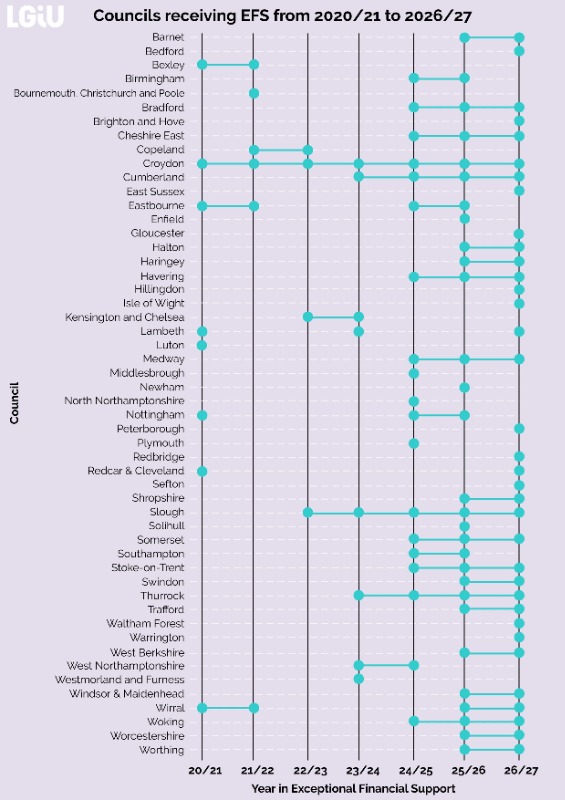
Over the last few weeks, we have seen a dizzying array of policy announcements on local government finance – from the final settlement and the outcome of the fair funding review to the takeover of SEND deficits and the new councils receiving Exceptional Financial Support (EFS).
For many councils across England, it will come as a welcome relief that today’s Spring Statement contained no new changes. However, today’s OBR forecast warns of trouble ahead.
For many of the reasons raised in our 13th annual State of Local Government Finance report (released yesterday), local government finances are becoming more of a risk to the overall financial health of the UK.
Today’s OBR forecast points to the SEND deficits councils will accrue over the next few years, the unstable financial positions of Housing Revenue Accounts, and the ongoing cost pressures resulting from increased demand across temporary accommodation and social care as serious risks.
Most importantly, the EFS scheme, announced annually and with limited transparency, is causing issues with their forecasting. They have formally assumed that there will be no EFS in years to come, but just under two-fifths of councils in our recent survey thought it was likely they would need to access the scheme in the next five years.
EFS doesn’t mean more money for councils; it just means they can take on more debt to balance their budgets. And although EFS can help stave off effective bankruptcy for a year, councils usually need to access the scheme for years at a time, which can result in unsustainable debt as outlined in our recent research.
The government needs to consider the long-term plan for how councils can be supported to leave the EFS scheme, and avoid this becoming a major risk to local and central government finances in the years to come.
Equally, local government finance is being dealt with as a series of small crises - the crisis in SEND spending, the crisis in EFS, or the crisis in adult social care. What we still lack is a comprehensive vision for what we expect local government to do, how much that will cost, and how we think it should be funded. That is what the next major steps in local government reform should be focused on.