



search
date/time
Sun, 4:00PM
light rain
13.1°C
NNE 9mph
light rain
13.1°C
NNE 9mph
 | Sunrise | 4:29AM |
| Sunset | 7:46PM |  |

Andrew Liddle
Guest Writer
P.ublished 4th March 2026
frontpage
Opinion
Last Orders for the British Pub?
Andrew Liddle deplores the lack of help for the licensed trade in today’s Spring Statement
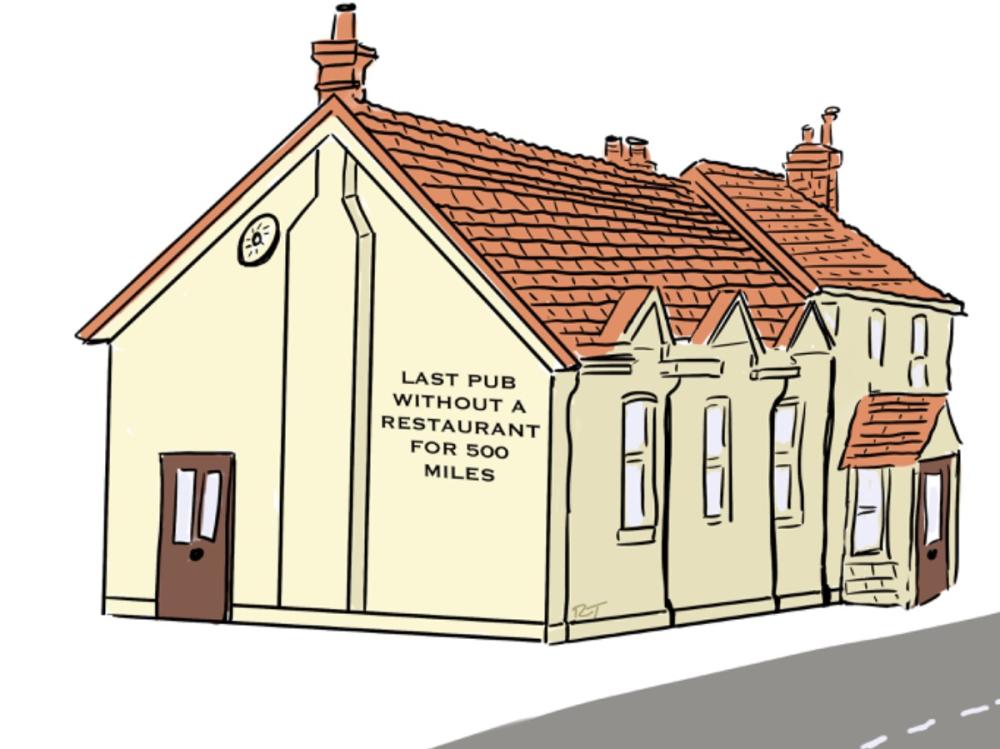
In an interim statement in January 2026, eligible pubs and live music venues received 15% business rates relief for 2026/27, followed by a real-terms freeze for two further years. The Treasury estimated this could save the average pub around £1,650 next year, with roughly three-quarters of premises seeing their bills fall or remain flat. There was also the promise of a review of how pubs are valued for business rates ahead of the 2029 revaluation, responding to longstanding concerns within the sector. It was also announced that Licensing rules were to be relaxed temporarily during this summer’s World Cup, allowing later opening for home nations matches.
These measures followed industry backlash against the 2025 Autumn Budget, which had projected sharp increases in business rates for hospitality. They were welcome, especially after the 3.66% hike in prices which became effective at the beginning of last month. But the trade did not consider them anywhere near enough to alter the pub’s long-term downward trajectory, hence today’s widespread disappointment in the trade.
I cannot remember the last time I properly enjoyed a visit to a pub. To my shame, I never resumed the habit after the Covid lockdowns. Once broken, the routine slipped away, replaced by beer ordered online from a local supplier of fine English ales alongside imports from Germany, the Czech Republic and Belgium, whose brewing traditions I particularly admire.
George Orwell’s 1946 essay The Moon Under Water remains the touchstone for descriptions of the ideal British pub: Victorian fittings, a blazing fire, the absence of intrusive noise, space for unhurried conversation and plain, satisfying food. In some respects, that vision is not far removed from the model that has proved commercially successful for the JD Wetherspoon chain - which even boasts four London outlets bearing the name ‘Moon Under Water’. Yet, popular though such chains are, their corporate scale sits uneasily with the nostalgia Orwell’s essay evokes.
When I came of age, some twenty years after Orwell was writing, the pub was still far more than a place to drink. It was where friendships were forged, football and politics debated, informal business conducted, racing form studied, romances kindled and loneliness eased in the company of familiar faces. The pub was the glow at the end of a dark street, the murmur behind opaque windows, the reassuring clink of glasses and the sudden roar of laughter. It was, in every sense, a public house.
To grasp the scale of change, I think of Manchester Road in Bradford. Walking little more than a mile from the city centre to Odsal Stadium, home to the famous Bradford Northern Rugby League side, you would pass around a hundred pubs. Today, beyond the centre itself, there are none. Those that survive in city centres are different: louder, more screen-dominated, more transient. Yet paradoxically they often feel subdued, even faintly melancholy.
It is tempting to speak of sudden collapse. In fact, the decline has been long and gradual. Though one pub a day closed in 2025 - the peak year of recent losses - the number of pubs in England and Wales has been falling for more than a century. In the early 1900s there were close to 100,000. Today there are fewer than half that number. The decline did not begin with Brexit, Covid or the smoking ban. It reflects social reform, redevelopment, industrial change and shifting patterns of leisure.
That perspective does not make each closure less painful — and every local I once frequented has gone. The question is whether the pub can continue to adapt in a world where high streets empty early, entertainment is streamed at home and people are tethered to their phones.
What distinguishes the present moment is the cumulative pressure on landlords. Energy bills have soared. Pubs are heavy energy users: they heat large rooms, power cellars and kitchens, and keep lights glowing through long winter afternoons. Staffing costs have risen sharply. Profit margins, never generous, have tightened further. In a labour-intensive trade, small percentage changes can have disproportionate consequences.
When Labour returned to government promising to revitalise high streets and support working communities, many publicans hoped relief was imminent. Instead, increases in employer National Insurance contributions raised staffing costs just as businesses were attempting to rebuild after the pandemic. Even modest rises translate into substantial annual bills when a business depends on cooks, servers, cleaners and managers.
Alcohol duty reform has offered limited comfort. Ministers speak of supporting the ‘on-trade’, yet the gulf between supermarket and pub prices remains vast. Supermarkets can sell alcohol at prices with which publicans cannot compete, while pubs shoulder higher overheads and property costs.
During the pandemic, temporary VAT reductions provided genuine breathing space. Many hoped a lower hospitality rate might be retained, reflecting the sector’s importance to employment and community life. Instead, VAT returned to its standard level just as accumulated debts were falling due.
Business rates have long been a particular grievance. Today’s Spring Statement’s new relief and subsequent freeze temper projected increases, and the forthcoming valuation review suggests government has heard the industry’s complaints. But the underlying property-based system remains. A small independent pub occupying a prominent building can face a substantial rates bill regardless of profitability, while large supermarket chains spread costs across diversified operations.
Energy support schemes prevented immediate collapse during wholesale price spikes, yet once withdrawn many pubs were left with punishing contracts. Operators either absorbed costs or passed them on to customers already watching every pound.
None of this suggests that government alone determines the pub’s fate. Public finances are constrained, and broader social trends would challenge the sector under any administration. Yet there is a persistent sense within the trade that pubs are praised as cultural treasures while taxed as commercial conveniences.
Alongside political pressures, drinking habits have changed profoundly. When I began drinking in the late 1960s, home drinking was rare and faintly frowned upon. My father and grandfather were enthusiastic pub-goers, but I never saw them drink at home. Bottled beer was often dearer by volume than a pint in the pub.
Twenty-five years ago, consumption in pubs and at home was roughly balanced. Today most drinking takes place in living rooms, gardens and patios, often in front of a screen. Supermarkets sell beer and wine at prices pubs cannot match. Convenience, home delivery and streaming services have reshaped leisure. For many households, a six-pack of cut-price lager and an evening in front of Netflix is far more economical than several rounds at the bar.
Younger generations, on average, drink less than their parents did. Health consciousness has grown; work patterns are less predictable; fewer people leave factories and offices together at half-past five with a clear end to the day. The pub is now more often reserved for special occasions than for nightly routine.
Yet the picture is not uniformly bleak. On Friday evenings and Saturday afternoons many pubs still hum with life. Some small locals struggle badly, especially in areas of limited disposable income, while others have reinvented themselves. The rise of the ‘gastropub’ has altered expectations; many establishments now rely as much on kitchens as on pumps. Sunday roasts, themed suppers and quiz nights blur the boundary between pub and restaurant.
Larger chains often weather storms better than independents, benefiting from economies of scale and purchasing power. City-centre bars cultivate atmosphere and ‘experience’. Meanwhile, the archetypal beer-only local sustained by nightly regulars has become rare.
When a pub closes, something more than a business disappears. In many rural areas it is the last communal space, the village shop, bank and post office long gone. The loss is social as well as economic.
The pandemic made this starkly visible. When pubs shut, streets were lifeless at night. Landlords improvised with takeaway meals and deliveries; communities rallied with vouchers and fundraisers. Some villages and neighbourhoods have since bought their locals, running them as co-operatives and diversifying into cafés, small shops or multi-purpose hubs. Others have broadened their offer with low- and non-alcohol drinks, book clubs and live music.
The anxiety surrounding pubs stems from what they represent. They remain among the few places where generations and backgrounds mix freely. In an increasingly fragmented society, the pub retains a democratic quality. One may find oneself in conversation with someone one would otherwise never meet.
Is the public house on the verge of extinction? I doubt it. There will continue to be places where beer is drawn and strangers become acquaintances before the evening ends. But the overall number is likely to continue edging downwards, particularly among smaller venues unable to absorb rising costs or adapt to changing habits.
Ultimately, the pub’s survival depends on more than fiscal policy. Governments can tilt the playing field; they can ease or increase burdens. But communities can rally, and customers decide where to spend their money.
Use them or lose them.
Cheers.