



search
date/time

Thu, 1:00AM
light rain
14.2°C
SSW 16mph
light rain
14.2°C
SSW 16mph
 | Sunrise | 6:36AM |
| Sunset | 5:16PM |  |
P.ublished 14th October 2026
frontpage
Manchester Leads The Charge Into The ‘Escapism Economy’
Shared adventures worth £303m to the North West
There was a time when a night out in Manchester meant a gig, a match or a few drinks. Increasingly, it means being locked inside a giant crystal dome with your friends, chasing gold tokens against the clock.
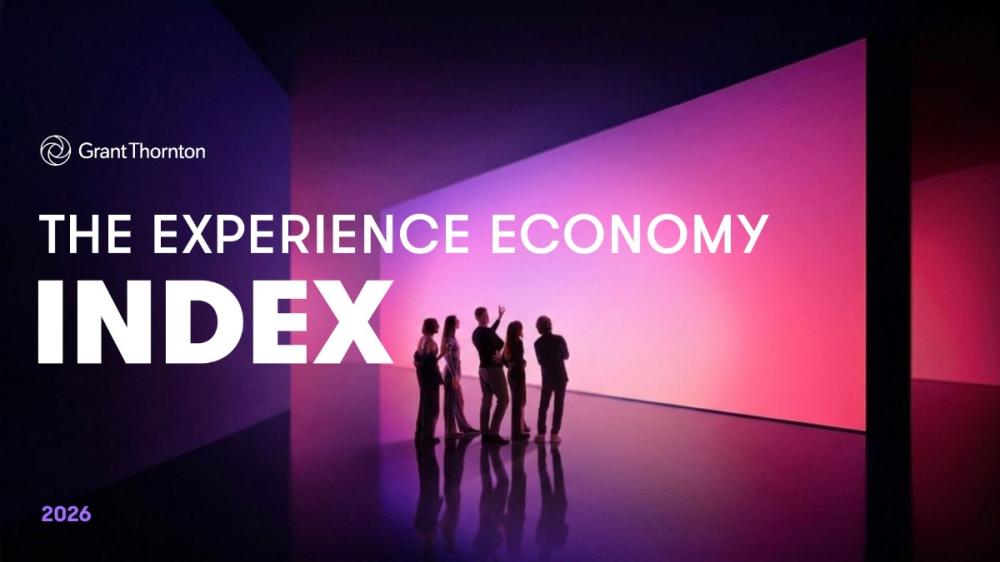
An estimated 1.3 million people in and around the city attended an immersive experience during the last 12 months, according to the latest Experience Economy Index from Grant Thornton UK. The report was produced with Experience UK and researchers at King’s College London. It points to a growing hunger for events in which audiences take part rather than simply watch.
Manchester has embraced the trend with gusto. Among its attractions are The Crystal Maze LIVE Experience, which drops teams into a real-life version of the cult television game show; Chaos Karts; and LUMINISCENCE, a 360-degree concert of light, music and storytelling staged within historic cathedrals.
For Tom Lionetti-Maguire, founder and chief executive of Little Lion Entertainment, the company behind The Crystal Maze LIVE Experience, the appeal is simple. “You’re not watching somebody else have the adventure – you’re actually inside it, competing with your friends and creating a memory together,” he said. With so much entertainment now available at home, he added, a night out “has to offer something they simply can’t replicate on a sofa or through a screen.”
The national figures bear him out. Consumer research for the report found that 38 per cent of UK adults are choosing experiences in order to make lasting memories, while 36 per cent want quality time with family and friends and a quarter simply want a break from routine. Two in five said digital overload was nudging them towards activities that help them feel more present.
Perhaps most telling is the shift away from possessions. Some 40 per cent of Britons say they are increasingly spending on experiences rather than things, a figure that rises to 54 per cent among 18- to 34-year-olds.
Paradoxically, the march of artificial intelligence may be fuelling the trend. Dr Hang-Yee Chan and Dr Ozlem Tetik of King’s College London believe the gap will widen as younger generations gain spending power, and that AI could increase demand for human-led experiences, “as live and shared moments gain relative value precisely because they cannot be automated.”
The economic benefits are considerable. Grant Thornton’s modelling estimates that immersive experiences generated £303m of spending across the North West over the past year once supply chains and staff spending are included. That added £154m in gross value added to the regional economy and supported around 2,078 full-time equivalent jobs.
The spending does not stop at the box office either. A survey of 4,000 consumers found that 38 per cent of North West attendees ate or drank at a local business during their visit, and 32 per cent went shopping nearby.
According to Tom Middleton, economic consulting partner at Grant Thornton UK, the ripple effect reaches far beyond the entertainment sector, touching hospitality, retail, travel, technology and even financial services. Businesses, he suggested, could learn from the sector by making every customer interaction more memorable.
Manchester-based Matt Foulger, a specialist services partner at the firm, believes the city is naturally suited to the trend. Its music heritage, football culture and nightlife, he said, have “taught the city how to turn people into crowds and ultimately, memories,” while one of the country’s largest student populations places Manchester right alongside the audience driving the change.
His advice to local businesses is to think about the whole evening rather than simply the ticket, from dinner beforehand to the welcome at the door, and to work with neighbouring venues so that visitors linger longer.
Escapism, it seems, has never been more grounded in the real world.
The shortened address for this article is: newspub.uk/221ai