



search
date/time

Thu, 4:00PM
clear sky
15.3°C
SSE 5mph
clear sky
15.3°C
SSE 5mph
 | Sunrise | 4:50AM |
| Sunset | 7:27PM |  |
P.ublished 23rd April 2026
business
North East Leads Autonomous Logistics Trial At Port Of Tyne
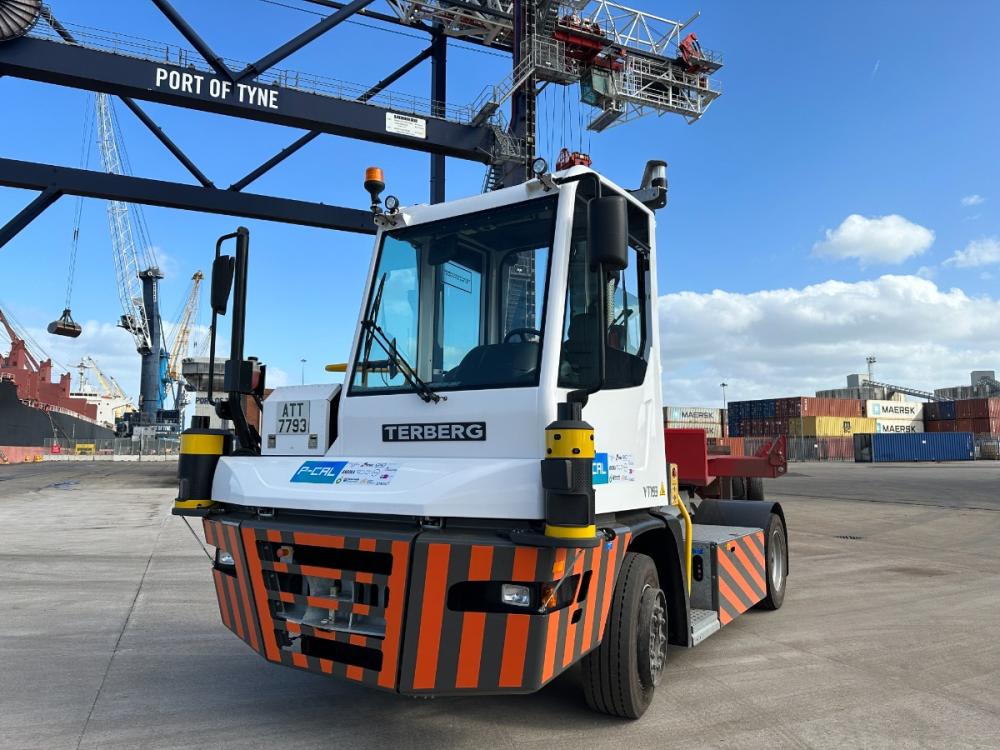
The initiative, part of the UK Government’s CAM Pathfinder programme, involved a consortium led by the North East Automotive Alliance (NEAA). Partners included autonomous software specialist Oxa, Nissan, Newcastle University, and ANGOKA, who provided the cybersecurity framework essential for protecting machine-to-machine communications in critical infrastructure.
During the trial, an autonomous terminal tractor—a vehicle used to move shipping containers—was integrated with the port’s existing operating systems. The system demonstrated real-time coordination with live crane movements and utilised a secure mesh communication network to manage the complexities of traffic density and variable quayside conditions.
Graeme Hardie, Operations Director at the Port of Tyne, said: “Delivering autonomous logistics in a live port environment has been a major step forward for the sector. P-CAL has shown what’s possible when innovation is applied to real operational challenges, improving safety, efficiency and sustainability”.
The project follows earlier successful trials in the region, including the 5G CAL and V-CAL initiatives.
By moving from proof-of-concept into a "real-world" operational setting, the North East has reinforced its position as a national hub for connected and automated mobility (CAM).
Paul Newman, Founder and CEO at Oxa, said: “The success of P-CAL proves how autonomy will enable the future of resilient logistics operations. Through the project, we’ve demonstrated that existing work vehicles can be turned into a digital workforce - successfully completing autonomous container movements in a dynamic quayside environment, while proving worksite intelligence necessary for real-time industrial optimisation”.
While the trial was conducted in a controlled area, it has provided the technical and regulatory framework for larger-scale deployments. Experts suggest that augmenting the workforce with autonomous systems can allow skilled employees to move into higher-value roles by automating repetitive or hazardous tasks.