


search
date/time

Sat, 10:00AM
light rain
8.1°C
S 11mph
light rain
8.1°C
S 11mph
 | Sunrise | 6:56AM |
| Sunset | 4:53PM |  |

Andy Harris
Motoring and Property Editor
@ytimesmotoring
P.ublished 24th October 2026
cars
Polestar 5 UK Launch Review
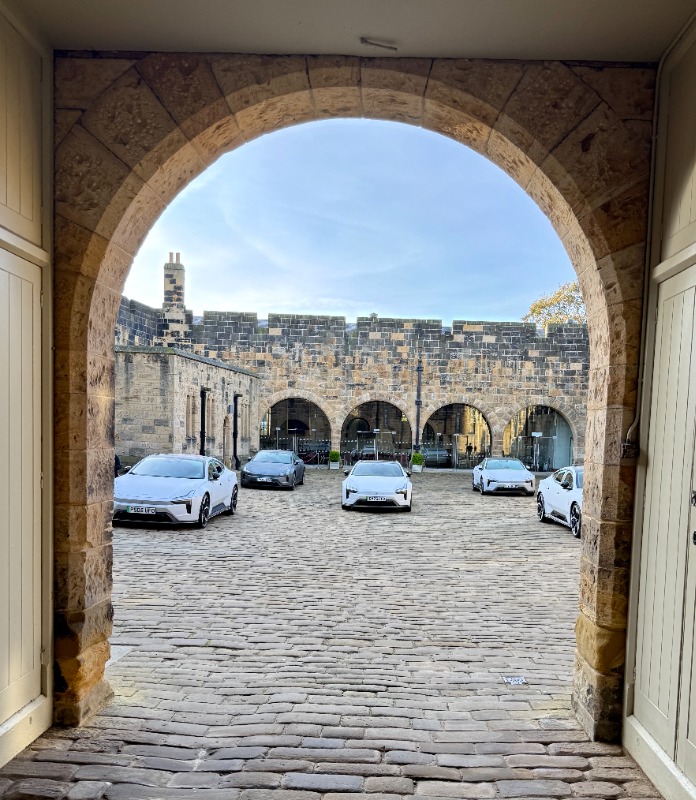
The Polestar 5 is the Swedish manufacturer’s flagship model, and I suppose can accurately be described as a four-door GT, with the Porsche Taycan an obvious rival. The market is not the largest and Polestar, whilst hoping for volume sales, are realistic in their expectations. Jaguar’s much talked about Type O1 is also due to enter this class, so Polestar has some lofty company in this sector.
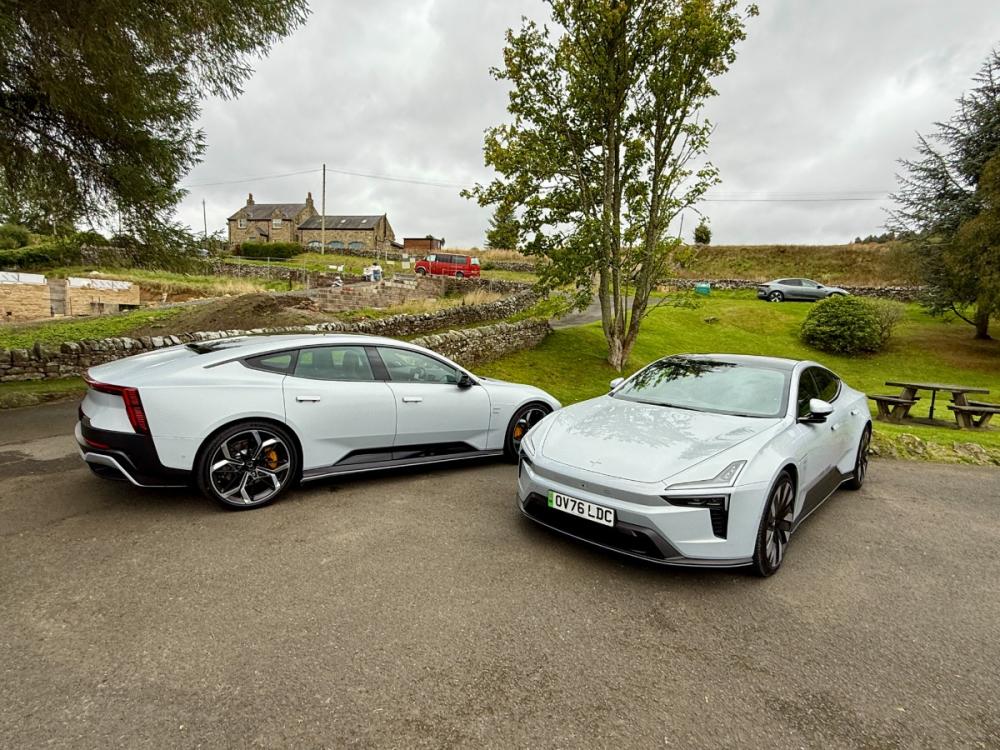
On an empty bit of road, I tried a standing start. The on-paper performance says a 0-62mph sprint time of 3.8 seconds should be possible and I’m sure that is the case. I felt no need to repeat the exercise, with time needed for my internal organs to return to their usual place.
Performance without handling finesse is of little use, and at dinner I was lucky enough to sit next to Joakim Rydholm, the grandly titled Senior Chassis Development Engineer. He is rightly proud of the work that has gone into making the Polestar 5 a driver’s car.
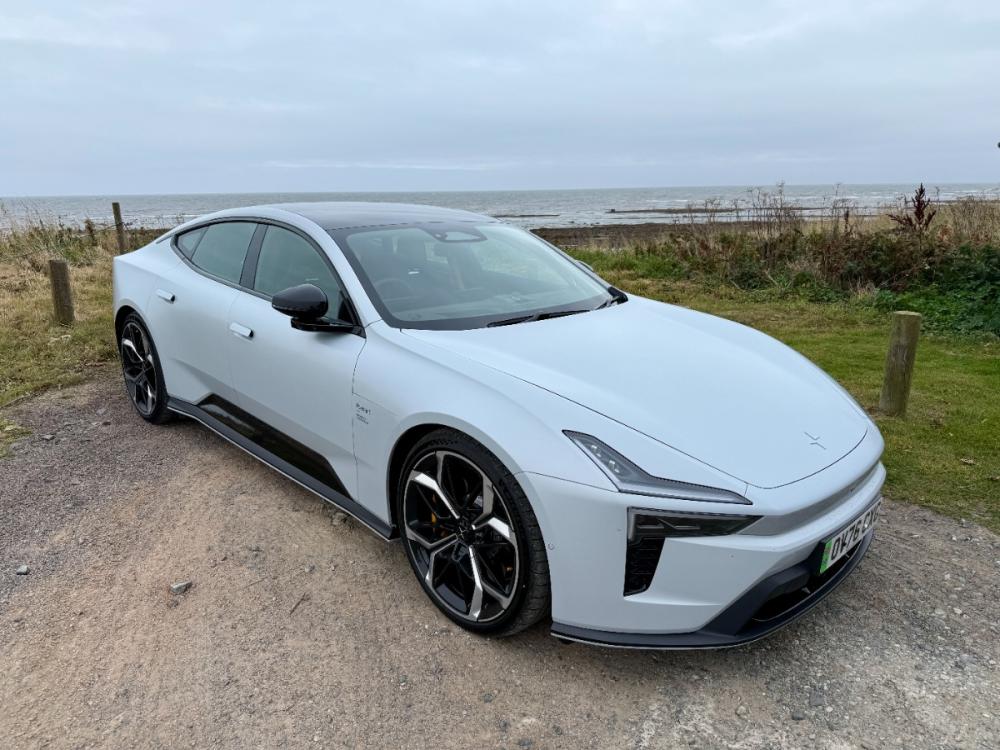
As my driving companion and I eased slowly out of Alnwick, in search of some better roads in the Kielder area, dampers in Standard mode, immediately apparent was the cosseting ride, easily dealing with areas of broken tarmac. It would be easy to stick with the default damper setting, but once we upped the pace we tried out the firmer settings. With each change, the body movements felt more controlled, but on 60mph roads, any setting would suit quite well.
Pushing the car harder on familiar roads was a joy, the steering being fast and accurate, the brakes powerful and well weighted. It all felt very easy and all too quickly the speedometer would flash into licence-losing territory. Slower cars were easily picked off, and even when the roads turned damp later in the day, putting all that mighty power down was never an issue.
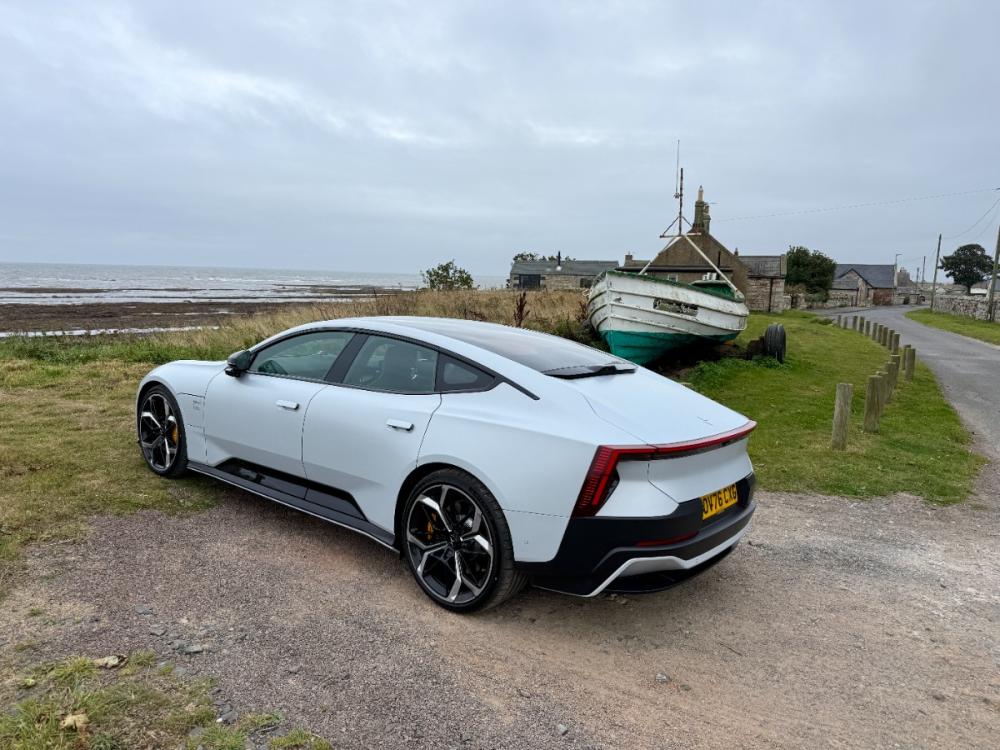
Public charging will be brisk, and if you can find a 350kW unit, a 10 to 80% top up will take a tad over 20 minutes. Plug in empty on a 7kW home charger, an overnight charge will replenish though not fill the battery completely.
The Polestar 5 interior will be familiar to existing owners. A raft of high-quality materials are used, all lovely to touch. The Recaro seats up front are extremely comfortable and grip in all the right places. They are clad in fine Bridge of Weir leather too – a nice touch. In the back, two adults will find room aplenty to stretch out. Polestar describe the car as a ‘4+1’, the fold down armrest in the middle can be folded away if a fifth person needs to be carried.
They will get the short straw.
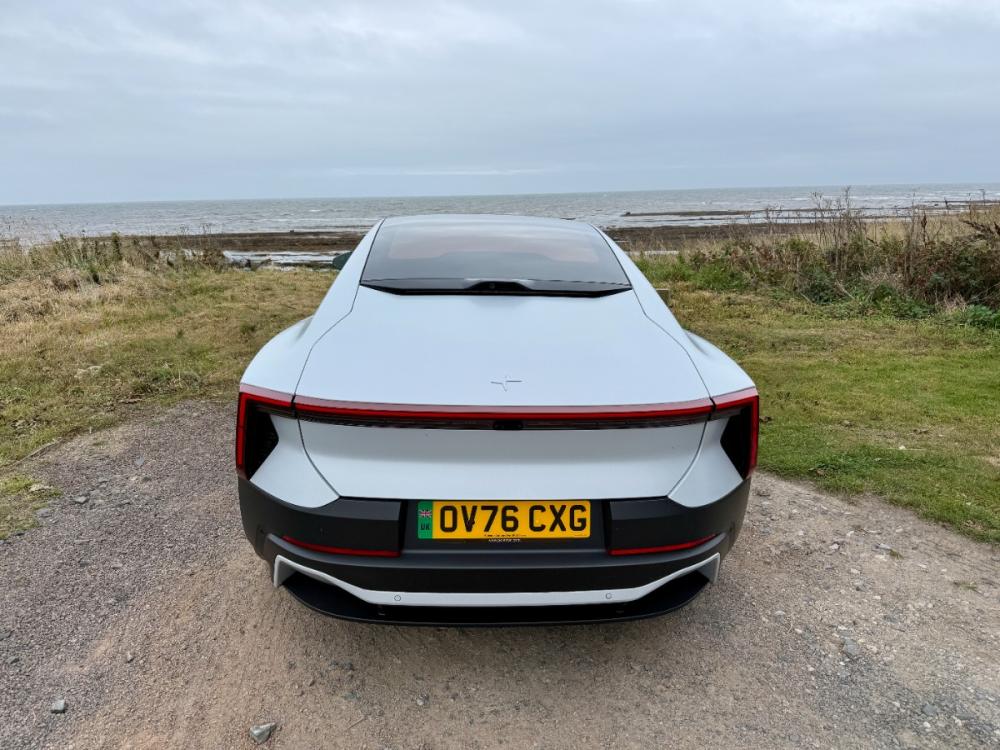
There’s no rear window, something we have seen before on Polestar 4, but the glass roof is one of the largest on any car so there’s plenty of natural light. My head was close to the roof, so those over six feet tall might be better accommodated up front. The boot is a decent size, with a 62-llitre frunk adding to the car’s carrying capacity.
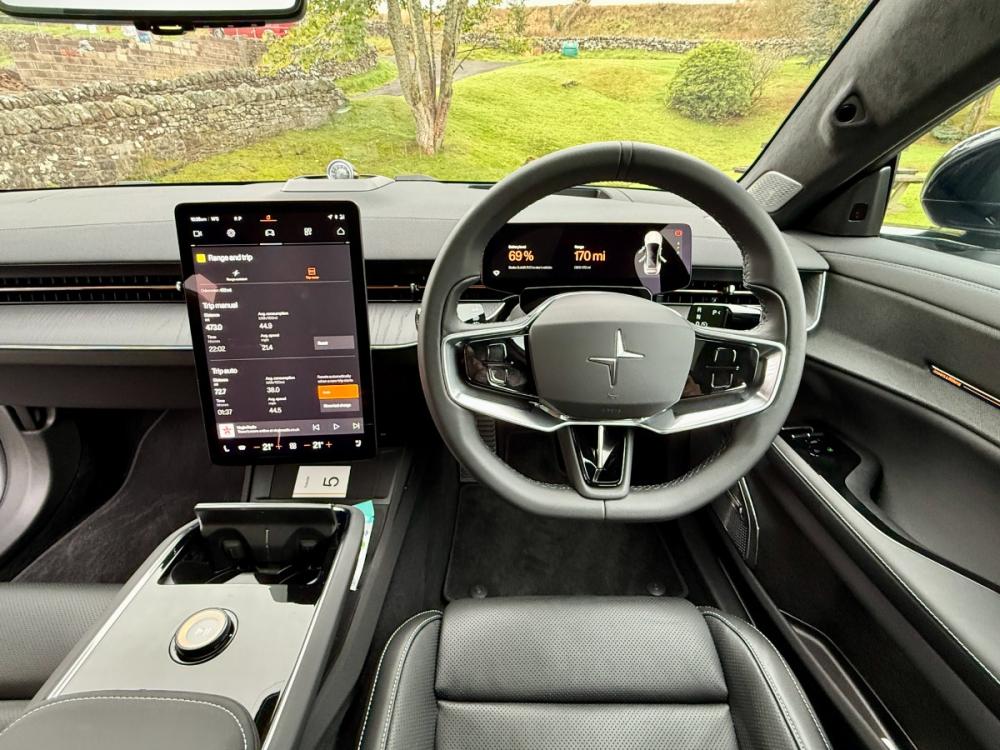
However, the minimalist look is what Polestar set out to achieve. Now, let’s get on to pricing. I accept that cars at this level of the market are likely to be leased or privately acquired on a PCP deal. The Dual-Motor starts from £89,500, whilst the Performance model ups this to £104,900. As driven, £117,700 with options of Matte paint (£4,300), 22-inch Performance Alloys (£3,200) and Charcoal extended leather (£5,300) bumping up the price. At the time of writing, a private customer deposit of £21,400 will see monthly payments from £799 (low APR of 1.9%).
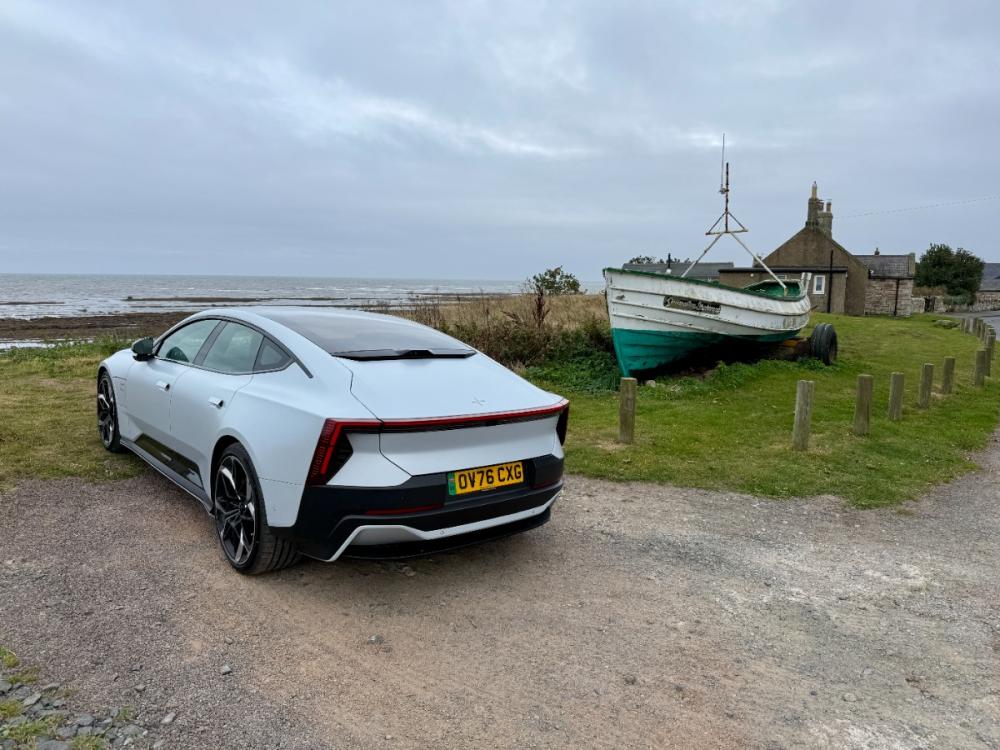
Stay tuned to find out.
Also by Andy Harris...
Paris Motor Show 2026 – Worth The Trip!Citroen's 2CV Concept Wows ParisElectric Versus Diesel – A KGM Musso ShootoutGeely's New Monjaro EM-i To Debut In ParisThe Farmer’s Dog – My Return VisitThe shortened address for this article is: newspub.uk/221ea