



search
date/time

Tue, 7:00AM
light rain
16.5°C
WSW 8mph
light rain
16.5°C
WSW 8mph
 | Sunrise | 5:43AM |
| Sunset | 6:29PM |  |
P.ublished 25th July 2026
nature
Asian Hornet Sightings Surge By 666% As Britain’s Bees Face Growing Threat
Sightings of Asian hornets across the UK have risen by 666% in a single year, prompting fresh warnings from beekeepers and pollinator experts that Britain's bee population faces a mounting and potentially permanent threat.
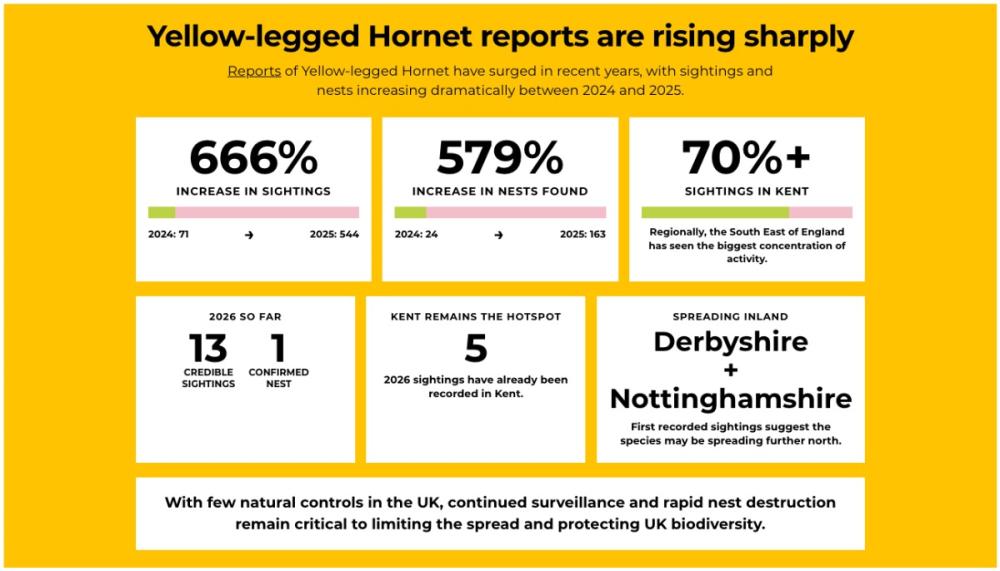
New research from Flying Flowers, drawn from BeeBase data as part of its Department for Pollination campaign, reveals the scale of the problem facing the nation's wild bees, honeybees and other pollinating insects. Credible sightings of the invasive species climbed from 71 in 2024 to 544 in 2025, with 163 nests discovered across the UK last year alone.
The figures are stark. A single Asian hornet can consume up to 50 bees a day, while a mature nest can house as many as 3,000 hornets — putting up to 150,000 bees at risk from just one colony. The threat comes as Britain's pollinators already contend with habitat loss, disappearing wildflower spaces and a changing climate: one in 20 wild bee species is now classified as endangered, and the UK lost 5.1% of inspected honeybee colonies in 2024, the highest annual loss since 2018.
"While it is encouraging to see that public awareness of Asian hornets is growing, with more people now able to recognise and quickly report sightings, the situation is reaching a critical turning point," she said. "The primary concern for beekeepers now isn't just dealing with isolated sightings, it is the very real threat of permanent establishment if these numbers continue to rise. Because these hornets target our pollinators so directly, stopping them from gaining a foothold here is essential for the future of our local ecosystems."
Eleanor Agnew, pollinator expert at Flying Flowers, said the rise of the species was a serious concern for the nation's ecosystems.
"The rise of the Asian hornet is a serious concern for Britain's pollinators," she said. "Bees play a vital role in our ecosystems, supporting the plants, crops and wildlife that depend on them."
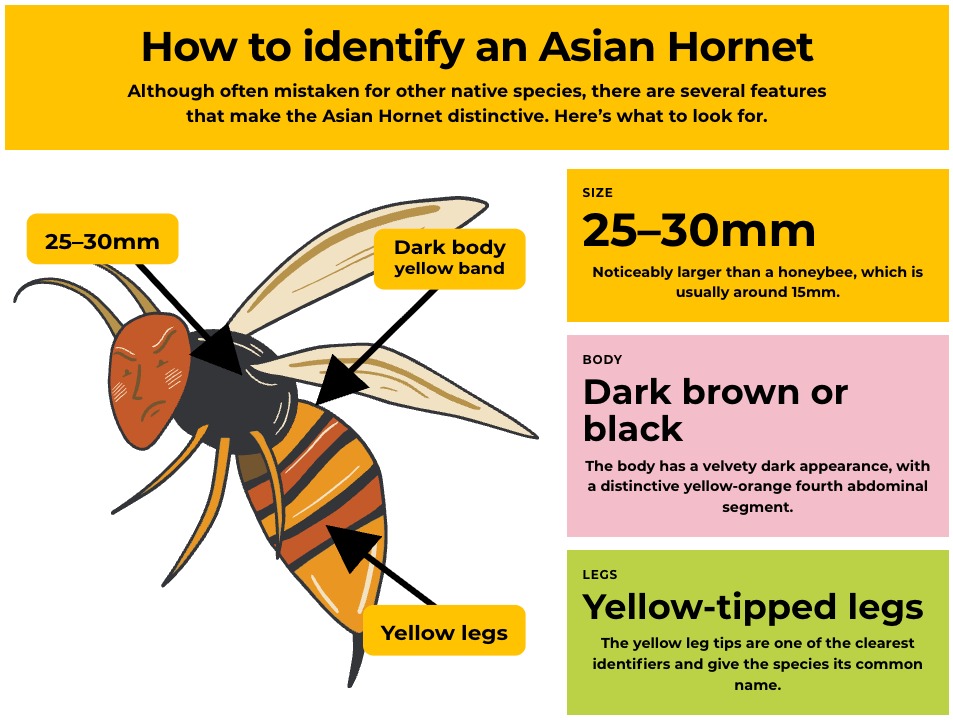
Agnew urged the public to familiarise themselves with the hornet's distinguishing features: a dark body with a yellow band, a length of around 25-30mm — noticeably larger than a honeybee — and yellow-tipped legs, which she described as one of the clearest identifiers of the species.
"While the challenge can feel overwhelming, there are simple ways people can help - from planting pollinator-friendly flowers and creating wild spaces in gardens to staying alert and immediately reporting sightings of Asian hornets."
As part of its response, Flying Flowers has launched the Wild Square Challenge through its Department for Pollination, encouraging households, gardeners and communities to create pollinator-friendly spaces while staying alert to hornet activity.
"One of the simplest ways people can help is by creating more pollinator-friendly habitats," Agnew concluded. "Through our Wild Square Challenge, we're encouraging people to leave just one square metre of their garden to grow naturally. Growing a small patch of pollinator-friendly flowers can also provide a vital source of food and shelter for bees and other pollinators."
The shortened address for this article is: newspub.uk/220a7
Search Results