



search
date/time

Fri, 10:00AM
light rain
12.0°C
S 16mph
light rain
12.0°C
S 16mph
 | Sunrise | 5:04AM |
| Sunset | 7:15PM |  |

Andrew Liddle
Guest Writer
P.ublished 28th February 2026
frontpage
The Eagle Of Vienna: Alfred Adler And The Psychology Of Belonging
Dr Andrew Liddle considers the impact of the people’s psychologist
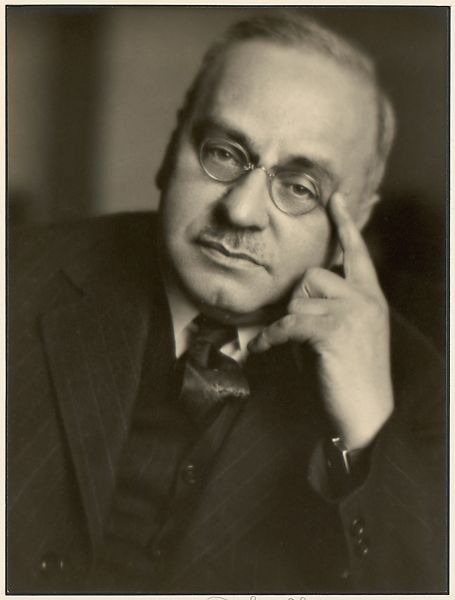
Adler from Metropolitan Museum of Art
Reproduced with permission
I was always suspicious of Freud’s preoccupation with exploring dreams, encouraging his ‘patients’ to relate theirs, and finding them a source of deep meaning. Personally, I can only ever remember the dream that is interrupted when I awake, and only the immediate circumstances.
I first took a keen interest in Adler while considering my own family dynamics. Both my parents were only children, I was the first of two, and I have three children of my own and five grandchildren. Patterns of personality, tendencies, and quirks seemed uncannily to line up with much of what Adler described over a century ago. The more I read, the more fascinated I became by this man whose insights could so clearly explain human behaviour without reducing it to drama or thetrauma, instinct or phobia.
His name, fittingly, means ‘eagle’ in German, and I imagined his mind circling above human life, spotting patterns others missed, and identifying mistaken beliefs with precision. I began to realise that evidence of the rightness of Adler’s psychology is everywhere. It’s in self-help books. It provides guidance on parenting, and his ideas appear at leadership seminars. There is something enduring in his insistence that people are not imperfect machines, but purposeful beings navigating life the best they can, that sits well with the modern world.
If Freud peered backward into childhood trauma like a forensic detective assuming guilt, Adler looked forward and asked a simpler, more practical question: what is this person trying to achieve, and how can they best achieve it?
Born in Vienna in 1870, Adler’s childhood was marked by illness and fragility. He suffered from rickets, nearly died of pneumonia, and watched his younger brother die in the bed next to him. These experiences informed his lifelong sensitivity to human vulnerability. Feeling small, weak, or inferior, he realised, is part of being human and the real question is how we respond. “No experience is a cause; it is only a stimulus to action,” he later wrote. Every adversity, he suggested, provides an opportunity to succeed despite it.
This insight became the cornerstone of his thinking and mine. As children, we are tiny, dependent, and painfully aware of our limitations. Overcoming them stimulates learning, develops skill, and fosters self-mastery. Some respond defensively, retreating from challenge or overcompensating in ways that harm themselves or others. Others channel that energy into creativity, service, and meaningful accomplishment. This is what Adler called striving for superiority - not over others, but over one’s own former self. Observing people I had grown up with, my pupils, my children, and their children, I saw this instinctual striving unfold repeatedly, sometimes subtly, sometimes unmistakably.
Adler trained as a physician and initially joined Freud’s inner circle, but the tension between them was inevitable. Freud believed the past, especially childhood trauma and unconscious drives, determined our lives in ways largely beyond our control. Adler profoundly disagreed. While the past matters, he argued, it matters only because of how we interpret it. Two children can have the same experiences and emerge as very different adults depending on their beliefs, coping strategies, and goals. By 1911, Adler had entirely separated from Freud to establish his own school of Individual Psychology, emphasising purpose, social embeddedness, and personal responsibility.

Perhaps Adler’s most distinctive contribution is the connection between personality and social interest, or Gemeinschaftsgefühl. This delicious German compound simply translates as feeling of community and its presence as a defining technical term is not something high sounding in the original. He was simply arguing that well-being and achievement are inseparable from a sense of belonging and contribution. Humans are social creatures and isolation or self-centred striving breeds psychological distress. Success at the expense of connection is hollow; personal growth depends on empathy, co-operation, and shared responsibility.
Adlerian therapy reflects this orientation. It is collaborative rather than authoritarian. Therapists do not dig endlessly into the past to expose hidden drives. Instead, they explore goals, habits, and mistaken beliefs while offering encouragement, a practical tool against discouragement. Symptoms, Adler argued, often serve as excuses to avoid life’s challenges. Therapy aims to strengthen the courage to act, contribute, and belong, despite uncertainty or imperfection. “It is easier to fight for one’s principles than to live up to them,” he noted.
Adler followed his own advice. Unlike Freud, who retreated to his study, he spent much of his later years lecturing widely, advising schools, working in child-guidance clinics, and promoting educational practices that prioritised co-operation over competition. He warned against authoritarian parenting and excessive pampering, instead advocating encouragement and responsibility. His psychology was meant to improve life, not merely explain it. It was psychology for the people, as much as the individual.
Even decades later, Adler’s influence is widely evident. Cognitive-behavioural therapy, humanistic approaches, positive psychology, and coaching all echo his themes: people are encouraged to be goal-directed, capable of change, and socially embedded. Modern education, with its focus on co-operative learning and its strengths-based approaches, owes a huge, largely unacknowledged debt to his insights. In a culture obsessed with performance and comparison, his message - if I read it correctly - remains clear: strive to achieve success in your own terms, but within your community.
We are not prisoners of our past, just authors of our responses, constantly writing and rewriting the story of who we want to become. “The only normal people are the ones you don’t know very well,” he once quipped, reminding us that struggle is universal - and, perhaps, that no eagle soars in perfect straight lines or too near the sun.
Adler’s central question resonates more than ever: “What are you trying to achieve?” He is not interested in what went wrong, nor what is broken, but what are you reaching for, and how can your life matter, to yourself and others? Forgive the glibness but I think almost everyone might benefit from ten minutes in Adler’s company. Personally, however, I would not recommend a session on Freud’s couch, the room darkened, the air heavy with cigar smoke, the tension palpable.
Adler may not have had Freud’s flair for self-promotion or Jung’s mystical vision, but he left something far more practical and humane: a way of seeing ourselves and each other. Humans, he insisted, are not problems to be solved by the psychotherapist: they are flesh and blood stories in progress, always striving, always connecting. Like the eagle whose name he bore, Adler observed keenly and, at the right moment, landed with insight precise enough to reshape lives.
In 1937, he collapsed at the podium in Aberdeen during a lecture tour of Scotland, ending a life dedicated to understanding and empowering people - but his ideas live on, in classrooms, clinics, communities, and in leadership coaching and self-help literature.
Adler never sought fame nor, even, to found a school of thought. He simply suggested ways we might think about ourselves. In a world dominated by psychobabble where it seems people are almost actively encouraged to look inwardly for personal problems, Adler provides a note of common sense. He is the plain-speaking man of the people among psychologists.