


search
date/time

Tue, 6:00AM
light rain
12.2°C
SW 19mph
light rain
12.2°C
SW 19mph
 | Sunrise | 7:02AM |
| Sunset | 4:47PM |  |
P.ublished 27th October 2026
business
UK Welder Shortage Threatens National Ambitions, Warns Tadweld MD As Government Confirms Skills Gap
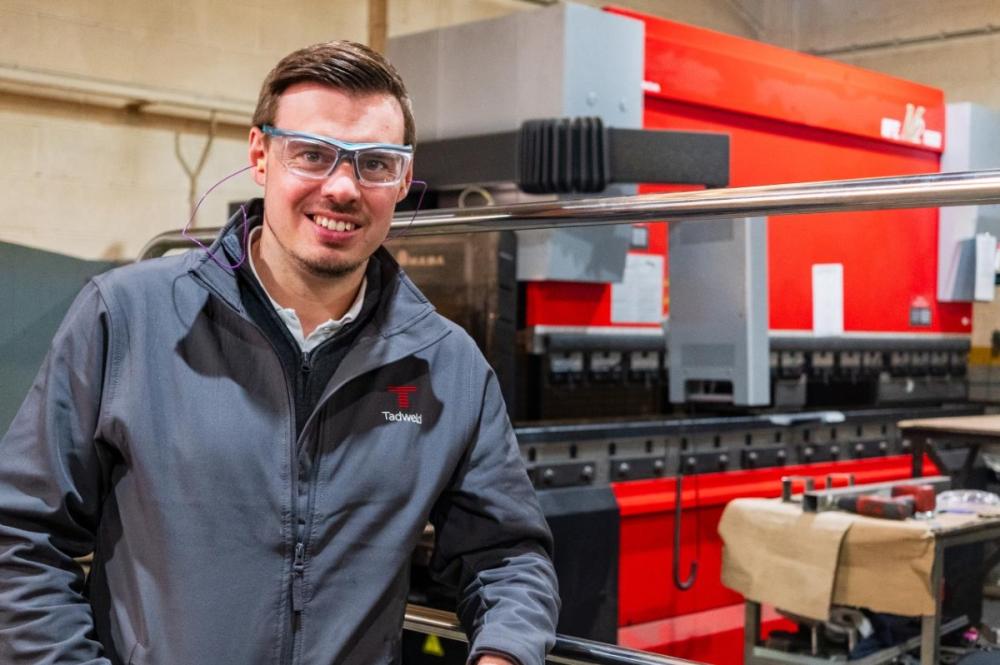
Chris Houston
The Migration Advisory Committee (MAC), in its July 2026 review for the Government, found that the quantitative evidence for welding trades showed a shortage, with earnings and job-advertising data generally above wider UK trends. The MAC classified Welding Trades as a “stronger case” for temporary shortage treatment and recommended 18-month access to the Temporary Shortage List.
Chris Houston, Managing Director of Tadweld, a leading steel fabrication company, says the findings should be a wake-up call for UK industry, government and education providers.
“The welding trade has been the backbone of British industry for generations, and we now have Government confirmation that there is a genuine shortage of skilled people in the profession,” said Houston.
“This is no longer simply an industry warning. The evidence is there. We have a shortage of welders at a time when the UK is simultaneously trying to expand manufacturing, strengthen defence, deliver new infrastructure and accelerate the transition to clean energy.”
The Government's findings come as Skills England identifies welding trades as a priority occupation within advanced manufacturing. Its 2026 assessment shows that welding is a priority occupation across three sectors, while 71% of advanced manufacturing's priority occupations are currently experiencing either critical or elevated demand.
Skills England and the Department for Business and Trade also estimate that priority occupations within advanced manufacturing will require around 47,000 additional workers between 2025 and 2035. A further 101,000 workers are expected to be needed over the same period simply to replace people leaving those occupations, creating an estimated total requirement of around 148,000 workers.
For Houston, welding sits at the heart of this challenge because it is a foundational skill across multiple industries.
“Welding is one of those skills that can easily be overlooked until you need it. But whether we're talking about structural steel, energy infrastructure, defence, marine engineering, construction or advanced manufacturing, somebody has to have the skills to actually fabricate and join those components.
“You can have the investment, the designs and the technology, but without skilled people on the shop floor, those projects cannot become reality.”
The Government's own occupational profile for welders highlights the breadth of the profession. Welders work across aerospace, construction, defence, mining, marine and structural engineering, using both manual and mechanised arc-welding processes to produce engineered goods and maintain critical assets.
The demand for welding skills is also increasingly linked to the UK's clean-energy ambitions. As major infrastructure and energy projects develop, the need for workers capable of fabricating, maintaining and repairing complex steel and engineered structures is expected to remain significant.
Houston believes this makes the recruitment and training of the next generation of welders an urgent national issue.
“We need to stop thinking of welding as an old-fashioned trade. It is a highly skilled engineering profession, and it is going to be essential to some of the UK's biggest economic and infrastructure projects over the next decade.
“The question isn't whether we will need welders. The Government's own evidence makes clear that we already do. The question is whether we can train enough people quickly enough.”
The Government has already begun introducing measures aimed at addressing the skills gap. In March 2026, Skills England approved a new Level 2 Welding (mechanised) apprenticeship unit, specifically designed to help employers upskill existing welders in mechanised welding. The unit requires a minimum of 90 hours of training and is publicly funded.
The new unit reflects the changing nature of the profession, with training covering mechanised welding processes including submerged arc welding, mechanised MIG and MAG, FCAW, orbital TIG and plasma arc welding.
Houston welcomes the investment but says the industry needs to go further by building a stronger pipeline of new entrants.
“Upskilling the existing workforce is important, but it cannot be the whole solution. We need to bring new people into welding and show them what the profession looks like today.
“Modern welding is clean, precise and technologically advanced. Welders are working with sophisticated equipment, mechanisation and automation, and they need technical knowledge, judgement and problem-solving skills.
“Technology isn't making the welder obsolete. It is changing what a modern welder needs to know.”
Skills England's updated occupational standard reflects that evolution, describing welders as skilled professionals responsible for producing welds to sector standards using manual and mechanised processes across a wide range of industries.
Houston also believes the industry needs to widen its recruitment pool.
“We need to make sure welding is seen as a career for everyone. That means reaching young people before they make their career choices, encouraging more women into the profession and making the industry accessible to people looking for a career change.
“There is a huge amount of technical skill and career opportunity in welding, but we have to do a better job of explaining that to the next generation.”
Tadweld is supporting initiatives aimed at developing the next generation of skilled workers, including apprenticeship and training opportunities.
The shortened address for this article is: newspub.uk/221gf