



search
date/time

Sun, 1:00AM
clear sky
5.7°C
4mph
clear sky
5.7°C
4mph
 | Sunrise | 6:42AM |
| Sunset | 5:09PM |  |
P.ublished 17th October 2026
lifestyle
Why Eye Protection Matters In Winter
Zachary Smith, Optometrist, Midland Eye

Photo: Төгөлдөр Ө on Pexels
When UV damage happens fast
Acute UV damage to the eye goes by several names depending on the context. The technical name is photokeratitis – you may know it as snow blindness, but it can also affect anglers (from glare off open water), and welders can get an industrial version of it from arc light.
It is essentially sunburn for the cornea, and just like sunburn, it does not announce itself immediately. Symptoms usually build over several hours after exposure, so you might feel perfectly fine on the slopes and then find yourself in real discomfort that evening with red, watery and painful eyes, and often a gritty, sandy sensation, as though something is stuck under the eyelid.
The good news is that photokeratitis tends to resolve within 24 to 48 hours as the cornea heals itself. In the meantime, a trip to the pharmacist to get some preservative-free lubricating drops (aka, artificial tears), a cold compress, and over-the-counter painkillers such as ibuprofen can make things considerably more comfortable.
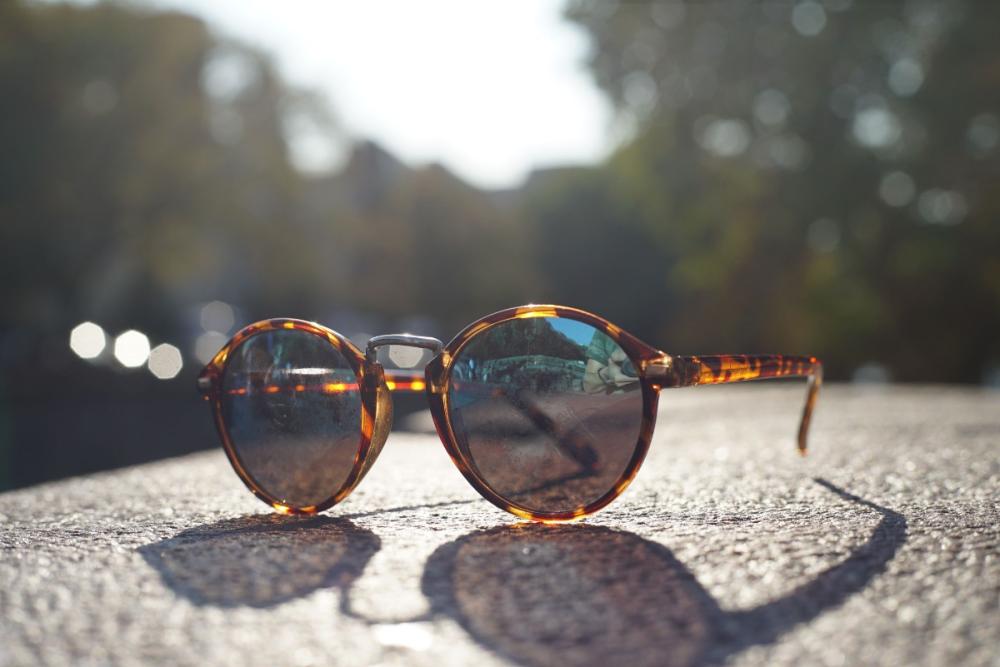
Photo: Justin L U C K on Pexels
Chronic UV exposure is where things get more serious, largely because the conditions it contributes to develop gradually and often without obvious symptoms until they are fairly advanced. This is precisely why regular eye examinations matter so much: many of these changes are far easier for an optometrist to spot during a routine check than for a patient to notice unprompted.
UV exposure is linked to earlier cataract development, clouding the eye's natural lens sooner than would otherwise happen. Cataracts are treatable, of course, but earlier onset means earlier disruption to your vision and, potentially, earlier surgery.
Macular degeneration is a more serious condition that leads to a loss of vision and currently has no known cure. UV exposure has been linked to earlier onset of the condition, which affects central vision and tends to be more common among people with lighter skin and eye colouring. UV is not the only factor at play here, genetics and smoking matter too, but protecting your eyes from a young age can help reduce your risk and age of onset.
Then there is pterygium and pinguecula, a pair of terms that sound complex but describe something fairly straightforward: a growth of tissue on the conjunctiva, the clear membrane covering the white of the eye, usually on the side nearest the nose. These are more common in people with a lot of cumulative sun exposure, which is why pterygium is sometimes nicknamed, only half-jokingly, "surfer's eye."
While they can be removed surgically, they do have a habit of returning, which makes prevention the better approach. Wraparound sunglasses are particularly useful here, because UV light does not only arrive from directly ahead; it bounces off the bridge of the nose and enters from the side, which standard frames leave exposed.
Finally, and most seriously, there is conjunctival melanoma, a cancer of the eye's surface caused by UV damage, and basal cell carcinoma, a form of skin cancer, developing on the eyelids. Both are rare, but both are good reasons why sun protection around the eyes deserves the same seriousness as sun protection anywhere else on the body.
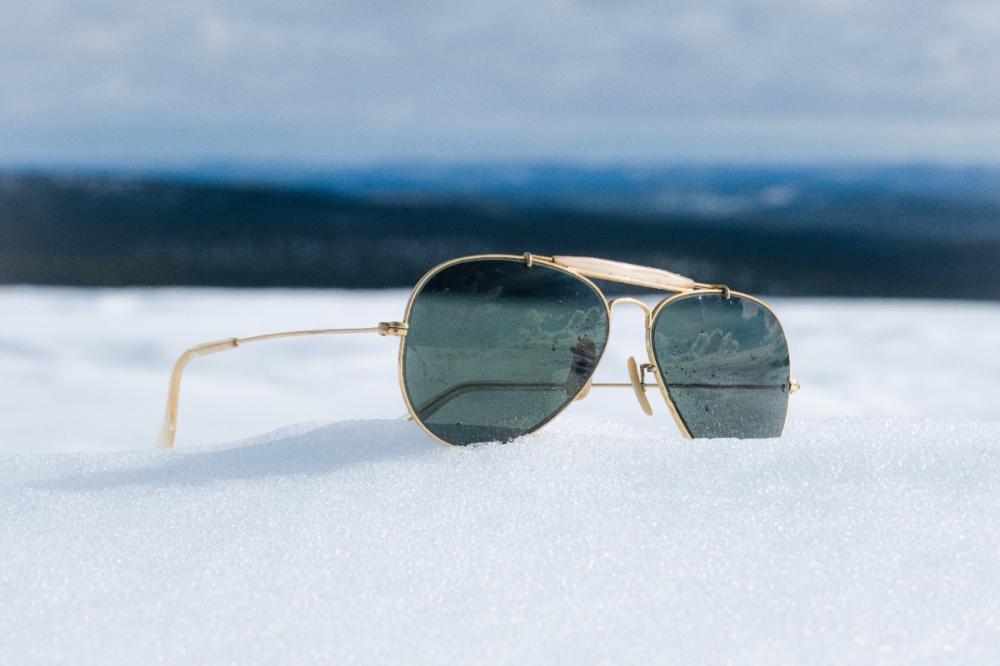
Image by Topi Puolakangas from Pixabay
A few factors make some people more vulnerable to UV damage than others. Lighter-coloured irises absorb less UV radiation than a darker one, meaning more penetrates deeper into the eye. It is the ocular equivalent of fair skin burning faster than olive skin, and worth bearing in mind if you or your children have blue or green eyes.
Certain medications can also increase your risk of sun damage. Some common drugs increase photosensitivity, meaning skin, and more rarely eyes, react more strongly to UV exposure. Doxycycline, often prescribed for skin conditions like rosacea, is one example, as are some contraceptive pills.
This can show up as a phototoxic reaction, essentially a faster, more severe burn than usual, or as a photoallergic reaction, where UV exposure alters the drug within the body and triggers an allergic response, sometimes with a delayed onset. These reactions usually affect the skin rather than the eyes, but it is worth checking the patient information leaflet before a sunny trip if you are starting a new medication.
And if you have had cataract surgery, it is worth knowing that not every replacement lens filters UV light to the same degree. Most modern lenses do, but it is a reasonable question to put to your surgeon or optometrist if you are unsure which type you have.
Your sunglasses should be more than a fashion accessory
Sunglasses are by far the best way of protecting your eyes from harmful UV exposure. However, dark lenses and UV protection are not the same thing, and assuming otherwise is one of the more common, and more consequential, mistakes people make.
In fact, dark, unprotected lenses can arguably be worse than no sunglasses at all. Darkness makes your pupils dilate, since less visible light is reaching the eye, but if that darkness is not paired with proper UV filtering, you have simply let more UV radiation into an eye that is now wide open to receive it.
What actually matters is the label. Look for lenses marked UV400, meaning they block essentially all UVA and UVB radiation up to 400 nanometres, or a CE mark confirming they meet the relevant safety standard. Reputable sunglasses come with a card or leaflet explaining exactly what protection they offer; if a pair does not have one, or that protection is not clearly stated anywhere, it is worth treating that as a red flag rather than an oversight. As a rule of thumb: if you cannot find the UV rating, do not rely on the glasses to provide it.
Photo: Justin L U C K on Pexels
Sunglasses are your main defence, but consider adding a broad-brimmed hat to shade eyes from above in a way sunglasses alone cannot manage.
Timing matters too. UV intensity peaks roughly between midday and 4pm, particularly in warmer climates, so if you are going to be less careful about protection at any point in the day, that is not the window to do it in. That said, UV easily penetrates cloud cover, so a grey, overcast day offers far less protection than it feels like it should
If you must use a tanning bed, remember that UV exposure from a sunbed is intense and direct, and eye protection—meaning proper UV-blocking goggles rather than just closed eyelids—is essential.
Knowing when to get checked
The tricky thing about chronic UV damage is that it is largely invisible from the inside. You will not necessarily notice your risk of cataracts creeping up, or a very early pterygium forming, in the way you would notice sunburnt skin. That is precisely why regular eye examinations matter so much, even if you don’t think your prescription needs to change. An optometrist can spot the early signs of UV-related damage well before it would cause you any noticeable trouble and may be able to help prevent the issue from getting worse.
Ultimately, protecting your eyes from winter UV is not too complicated: decent sunglasses with proper UV filtering, a hat when you can manage it, some awareness of peak hours and reflective surfaces, and regular check-ups to catch anything a lifetime of exposure might be building up. None of it is difficult; you just need to understand the risks and build appropriate new habits.

Zachary Smith
The shortened address for this article is: newspub.uk/221bb