



search
date/time

Sun, 7:00PM
scattered clouds
15.9°C
W 9mph
scattered clouds
15.9°C
W 9mph
 | Sunrise | 6:05AM |
| Sunset | 5:58PM |  |
Andrew Palmer
Group Editor
P.ublished 11th February 2023
arts
Review
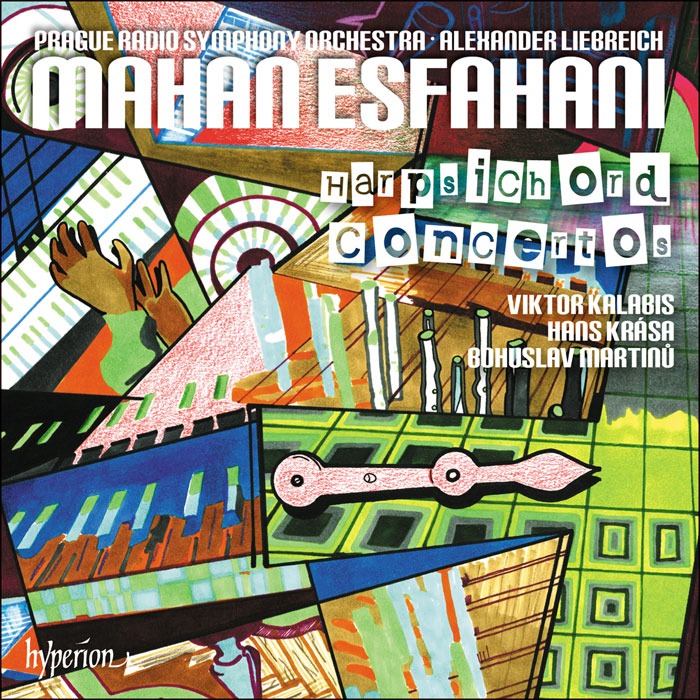
Classical Music: Mahan Esfahani Plays Czech Harpsichord Concertos
Mahan Esfahani
Harpsichord Concertos: Bohuslav Martinů’, Hans Krása and Viktor Kalabis
Prague Radio Symphony Orchestra
Conductor: Alexander Liebreich
Mahan Esfahani plays a George Zahl Instrument built in Dachau 1971/2.
Hyperion CDA68397
https://www.hyperion-records.co.uk/
Harpsichord Concertos: Bohuslav Martinů’, Hans Krása and Viktor Kalabis
Prague Radio Symphony Orchestra
Conductor: Alexander Liebreich
Mahan Esfahani plays a George Zahl Instrument built in Dachau 1971/2.
Hyperion CDA68397
https://www.hyperion-records.co.uk/
It is a joyful and vibrant celebration of the harpsichord with three concertos written by Czech composers and they might not be what you imagined but they are sensational.
Mahan Esfahani’s insightful notes begin with a story of how he arrived for a performance of a concerto and was annoyed to read an asinine dictum: ‘composers do not voluntarily write concertos for the harpsichord’. Although, he does acknowledge that there is something in the statement 'in that it does take a rather unique figure to write a concerto for an instrument that, in spite of some good efforts, is still somewhat of an outsider.'
Esfahani takes us from any preconceived idea we have about the harpsichord and shines a 20th century modern light on the instrument with lively and colourful compositions superbly complemented by the Prague Radio Symphony Orchestra, an apt choice as the musicians understand their fellow nationals’ intentions with a sensitive and empathetic accompaniment.
The opening of the Martinů’s 1935 Concerto for Harpsichord and Small Orchestra is spirited full of fun and exceptionally well-balanced. The orchestration is scored for eight strings, flute, bassoon and piano (played by acclaimed Czech pianist Ivo Kahánek), it is however, rich, warm and edgy. Both harpsichord and piano interact well and the playing has a rhythmic sprightliness that draws one into fine Czech music.
Hans Krása’s Kammermusik (chamber music) of 1936 was written when he was at the height of his public reputation. Scored for seven instruments: cello, double bass, clarinet, E flat clarinet, bass clarinet, alto saxophone and trumpet this is quite a sparky discovery; I can imagine it being used as a soundtrack to a film such as Psycho. The third movement’s orchestration is lovely marked sehr ruhig (very calm) with a lovely peaceful end as the last note dissipates into the ether.
Esfahani ends his Czech infused album with Viktor Kalabis’ 1975 concerto for small string orchestra composed for his wife, Zuzana Růžičková, who was Esfahani’s teacher and her last student. Kalabis creates interesting soundscapes from the Gothic sounding first movement to the intensity and starkness created by the slowly moving strings in the second and a third that brings this splendind concerto to an end with controlled playing - clear pizzicato - and Esfahani’s outstanding flair with a not too dissimilar ending to Krása’s concerto.
A disc that will surprise, astound and delight through rhythmical precision and playing bursting with energy.
Also by Andrew Palmer...
North Basks In 'Painted Lady Summer' – But Butterfly Experts Fear A Crash Next YearClassical Music: Bruch Violin Concerto No 1Classical Music: Neeme Järvi Conducts ShostakovichClassical Music: Mentor And Muse: Songs By Vaughan Williams And The Women Around HimClassical Music: KinThe shortened address for this article is: newspub.uk/21j6l