



search
date/time

Fri, 1:00AM
light rain
10.9°C
W 2mph
light rain
10.9°C
W 2mph
 | Sunrise | 6:40AM |
| Sunset | 5:12PM |  |

Andrew Palmer
Group Editor
P.ublished 15th October 2026
family
Fresher Fraud: Northern Students In The Scammers’ Sights
Students could lose £20m to fraud this academic year

New research from Mastercard and NatWest Group suggests that 76 per cent of students in Yorkshire and the Humber have encountered a scam, more than double the 36 per cent recorded among people not in higher education. Of those who spotted one, 77 per cent said it happened within three months of arriving on campus.
The picture is much the same across the rest of the North. In the North East, 69 per cent of students have come across a scam, with 85 per cent saying it occurred in their first three months. In the North West the figure is 67 per cent, with 82 per cent caught early in their university career.
Nationally, 69 per cent of students have encountered a scam, and NatWest estimates that students could lose around £20 million to fraud over the coming academic year. With two million people starting or returning to higher education this autumn, including some half a million freshers handling their own money for the first time, the scale of the risk is plain.
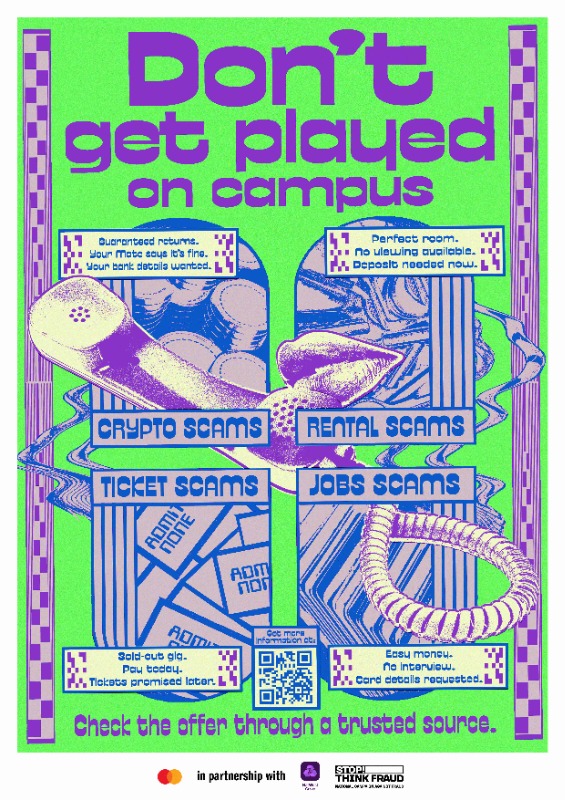
The most common traps are fake job adverts and get-rich-quick schemes run through investment platforms that appear legitimate or come recommended (37 per cent), bogus listings on online marketplaces (36 per cent), and banking and cryptocurrency scams (32 per cent).
In response, NatWest, Mastercard and the Home Office have launched Stop! Think Fraud, a campaign offering practical advice alongside a series of eye-catching warning posters by UK designers Luke Insect, Gavin Connell and Samuel Tomson. The artwork is free to universities and students’ unions, and is intended to sit as comfortably on a halls noticeboard as on a bedroom wall.
Fraud Minister Lord Hanson said criminals were deliberately targeting freshers with bogus jobs, fake flats and scam investments. “I urge every student to Stop! Think Fraud,” he said. “Taking a moment to check could stop fraudsters from emptying your accounts at the start of a new term.”
According to James Holian, Chief Customer and Operations Officer at NatWest Group, many scams begin on social media. “Understanding the warning signs and taking a moment to pause before acting can make a real difference,” he said.
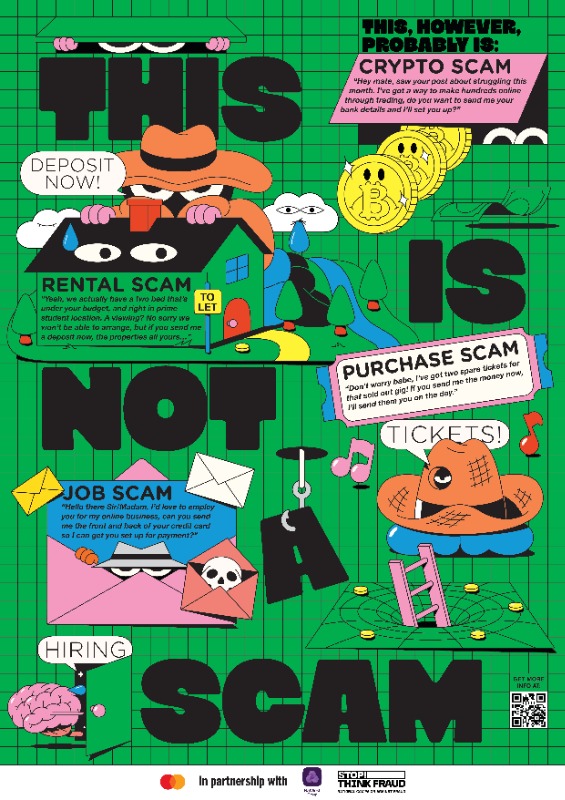
The campaign’s advice is refreshingly simple. Check an investment firm is authorised using the Financial Conduct Authority’s Firm Checker before parting with any money. Look up seller reviews on trusted sites before snapping up a bargain. Walk away from any job that promises easy money, asks you to pay before you are paid, or offers cash for the use of your bank account. And never transfer a deposit on a flat you have not viewed in person with the letting agency.
It is advice that costs nothing to follow. Ignoring it, as thousands of students are discovering, can cost a great deal.
Also by Andrew Palmer...
Economy Edges Forward As Business Groups Press Chancellor For Budget ReliefHarrogate’s Vp On Track As Water And Power Work Picks UpClassical Music: Softest ThunderClassical Music: Sol Gabetta Saint-Saëns & Lalo Cello ConcertosClassical Music: The Beethoven Connection Volume 2The shortened address for this article is: newspub.uk/221b0