



search
date/time

Thu, 1:00PM
light rain
15.9°C
WSW 15mph
light rain
15.9°C
WSW 15mph
 | Sunrise | 5:47AM |
| Sunset | 6:24PM |  |

Andrew Palmer
Group Editor
P.ublished 21st February 2026
travel
Bucket List Destinations: Do They Live Up To Expectations?
India: A Land That Stops You in Your Tracks
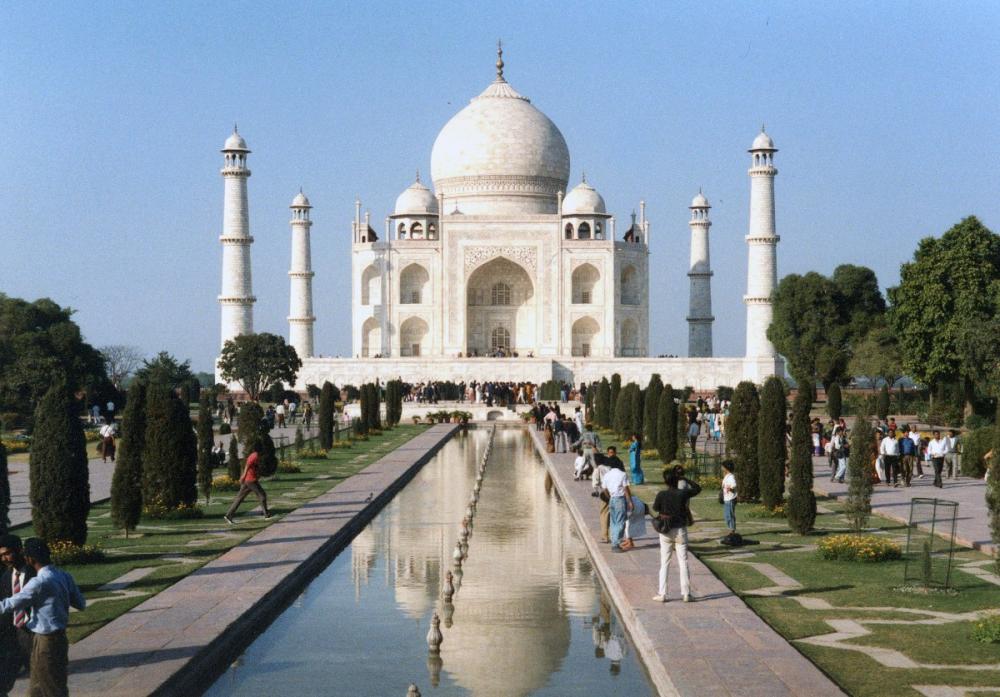
The Taj Mahal
All photos: Andrew Palmer
Backpacking with my friend Peter, we were lucky, however, to catch the airport bus into the heart of the city in the dead of night. It was a scene from a film — one that changes in my imagination every time I recall it. Bodies lay asleep, strewn wherever they had been fortunate enough to find space, with a blanket and a few personal items as their only worldly possessions. This was Delhi at its quietest. In a few hours we would witness the full, extraordinary hustle and bustle of one of the world’s great cities beginning to stir. As dawn broke, we both quietly acknowledged that the jabs had been a very good insurance policy indeed.
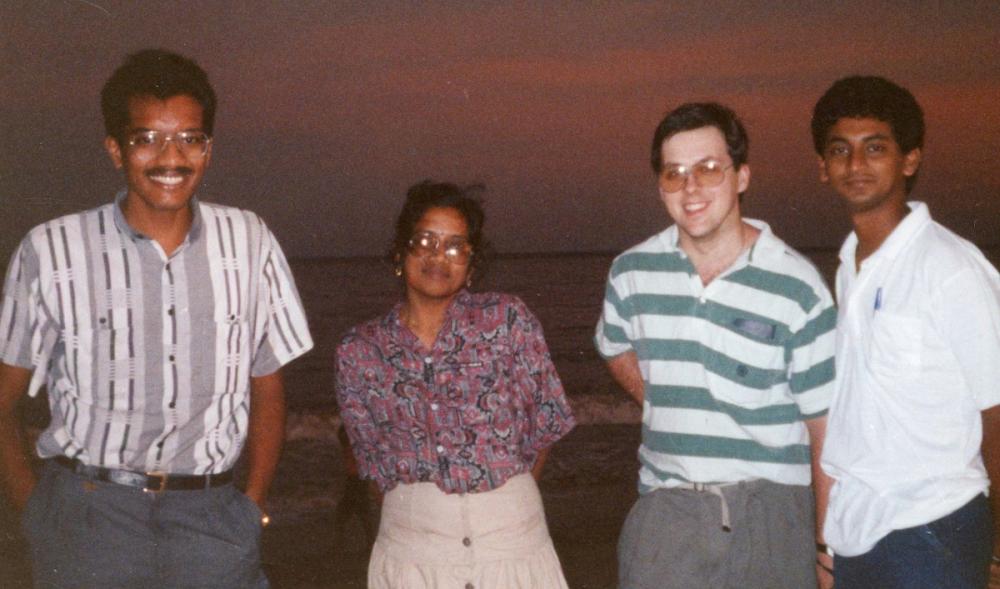
Making friends in Madras
India, for all its dirt, noise, overcrowding and ferocious heat, proved to be an extraordinary place. The sights were breathtaking, the culture utterly captivating, and the whole country possessed of a quality that I can only call magical. It was not, however, for the faint-hearted. No amount of preparation, we quickly discovered, is adequate for the initial culture shock.
Surprises came wherever we found ourselves. The service on the Rajdhani Express was a delight—efficient, attentive and entirely at odds with our preconceptions. It put British Rail (as it was then) firmly to shame, both in cleanliness and in running on time, as did the Calcutta Underground. And Mysore, with its immaculate streets, stood out like a fragrant oasis amid the exhilarating chaos.
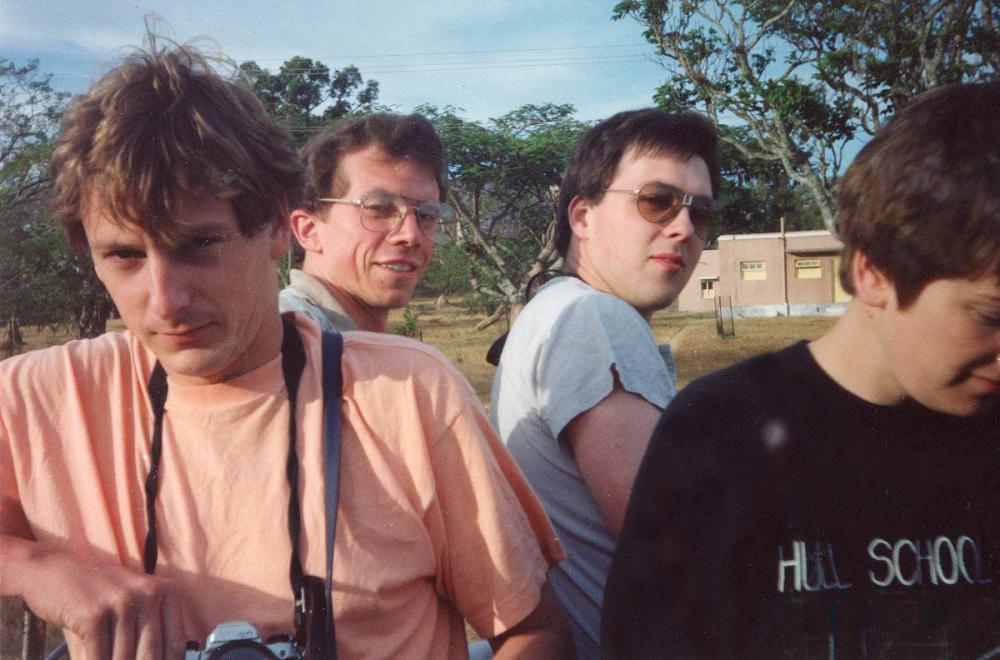
An aspiring young travel journalist on safari
Travelling by Train
Transport, however, was a revelation. Despite the vast distances involved, trains rarely ran late and more often than not proceeded with impressive smoothness. As Westerners we had no difficulty amusing ourselves for hours: there was always someone wanting to know everything about us, willing to share food and offer a game of cards. They were, in late 1990, particularly captivated by the recent resignation of Mrs Thatcher as Prime Minister and wanted to discuss her legacy endlessly. India by train was wonderful—the hours flew by as the landscape rolled past, and we caught up on another great pastime of travellers: reading. India is, for the record, an excellent place to buy and read books.
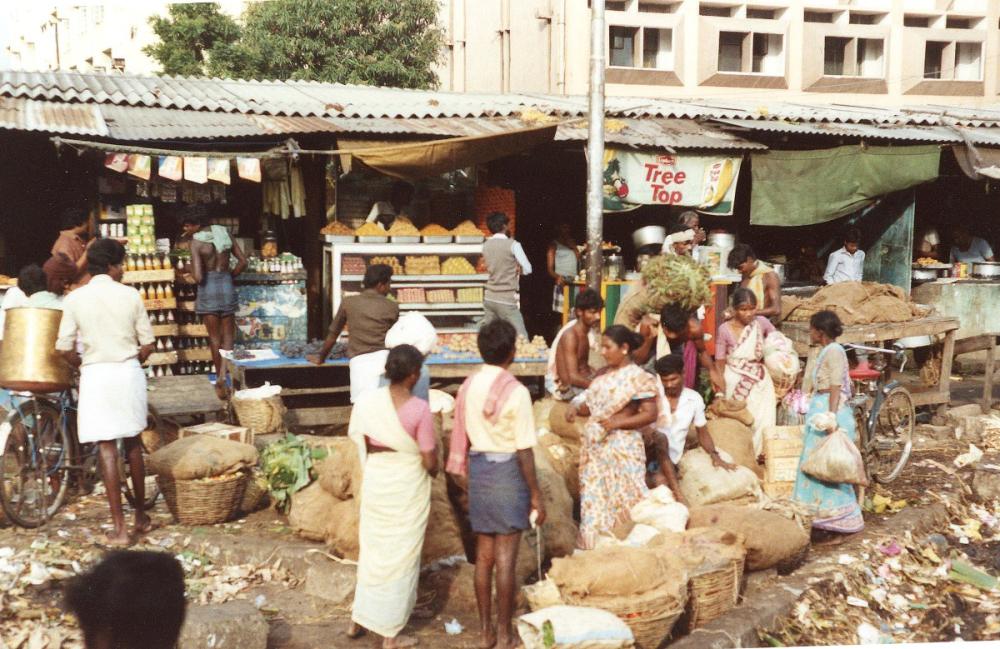
Street life
Entertainment never needed to be sought. Walking through the streets, a cacophony of voices would echo around us: “Hash, hash, very good hash!” If ignored, the cry shifted seamlessly to “Money change, money change, very good rate!” At every railway station came the rhythmic chant of “Chai, chai, coffee, coffee", all served in small clay cups. We had been warned to drink only hot drinks for the first week, and so, faced with such cheerful persistence, we reasoned: if you can’t beat them, join them.
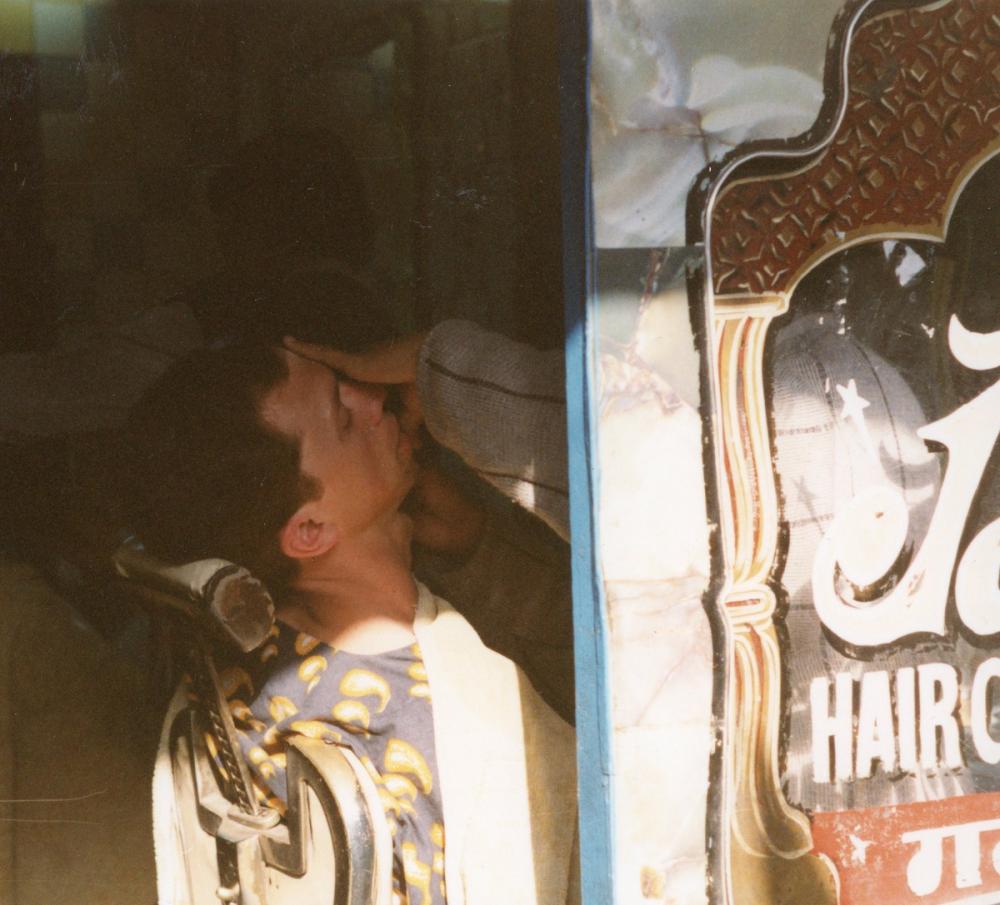
Peter getting a close shave.
One of the finest entertainments was the ritual of an Indian haircut. The barber ran his hands through the hair as though preparing dough, performing for an imaginary audience; then came the elaborate business of rubbing and spitting on the hands to tease out stray ends; and finally, the shave — a blade of genuinely alarming dimensions, glistening as it was swept across the face with extraordinary deftness. The fear, I should say, was entirely in the eyes of the barber. We were then treated to what I can only describe as a Henry Cooper moment, as Gaylord aftershave was enthusiastically splashed everywhere.
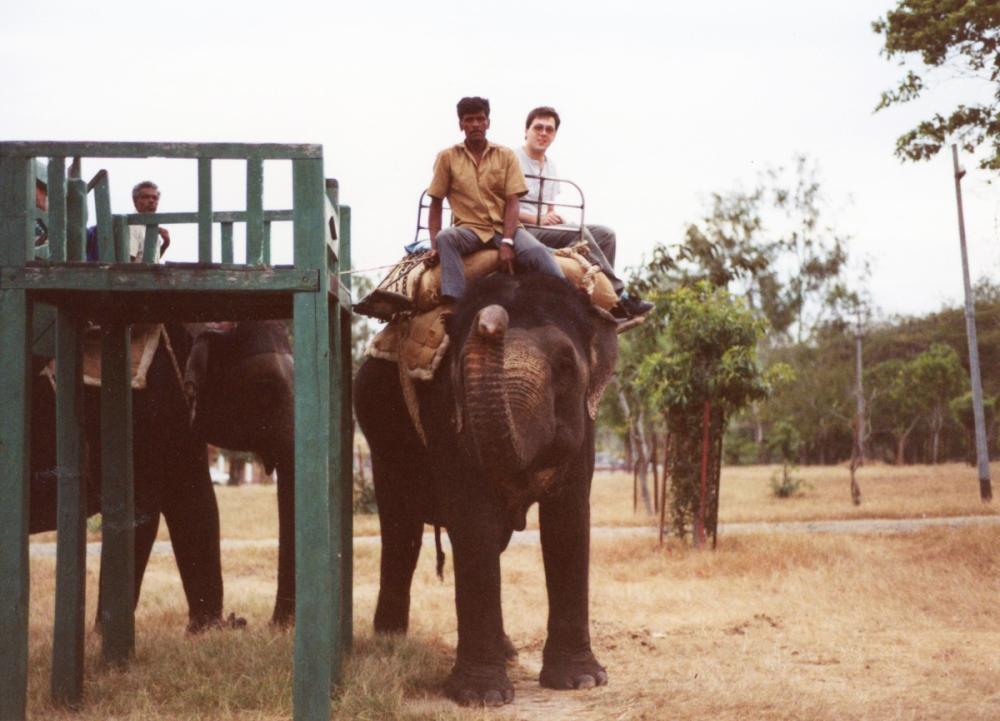
Slow pace. Enjoying an elephant ride
There are, of course, thousands of temples, numerous mosques and many fine museums. During the seven weeks we spent there, we learnt quickly not to visit on a Sunday, when it seemed the entire population of India had precisely the same idea. We also learnt to carry a pair of socks at all times, since the marble floors of temples could be icy cold.
In Visakhapatnam, a friend of my travelling companion's father—a millionaire in a country that had more millionaires than America at the time—invited us to a banquet of extraordinary generosity. He clapped his hands, and the room in which we had been staying was quietly transformed into an Indian restaurant serving the finest seafood platters either of us had ever experienced.
Then there was the rickshaw driver in Pune who refused to accept the fare because, as a Hindu, he had just become a father — a foreigner’s money would be bad luck, he explained with serene confidence. He was visibly delighted when we gave the money for his newborn instead.
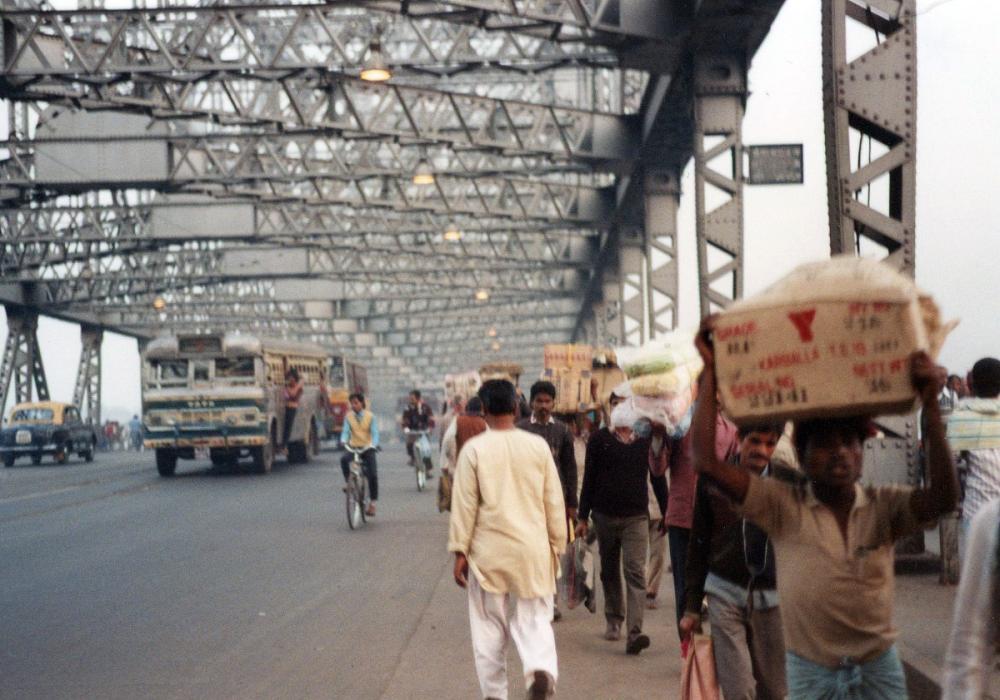
Crossing the Howrah Bridge
Staying with friends in Pune, we rose one morning and walked with the household down a steep hill to the local market, everyone carrying lanterns in the early dark. Once there, our host pointed to a glass cabinet and asked which piece of chicken we would like for dinner. Unable to identify any pink meat, we pointed at random. As the butcher reached in, hundreds of flies rose into the air. Our faces must have been a picture because our host — who had studied in England — understood immediately. “My wife will clean it and prepare it very well,” he said. She did. It was delicious.
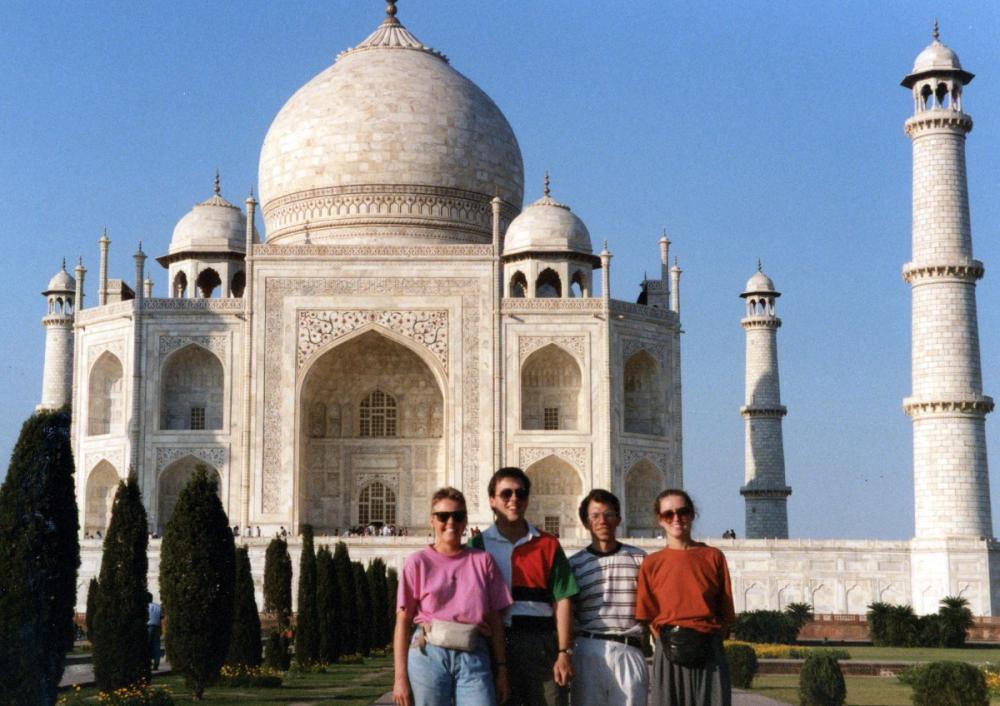
A moment to gaze on beauty
The chaotic streets, the rickshaws and colourful bazaars, the spectacular buildings, a ride on an elephant, the assault on the senses at every turn, the glorious unpredictability, the dust — this journey met every expectation on my bucket list and exceeded most of them. But it was the Taj Mahal that stopped me entirely in my tracks.
I have visited many extraordinary places in my life, but I can count on one hand those that have produced a physical response — a catch in the breath, a welling of something deep and involuntary. Agra was one of them. We had that first keyhole glimpse through the great gateway, teasing and incomplete, and then turned the corner to stand before this most perfect of temples to love. I wept. There is no other honest way to describe it.
A couple of years after my return, I was in a second-hand bookshop in Carnforth, Cumbria, when I picked up Bernard Levin’s Enthusiasms. It fell open at a page that made me buy the book without hesitation, and to this day, whenever I read the following passage, I get goosebumps and am instantly back in Agra. Only Levin could have written it so perfectly:
“…my first visit to the Taj Mahal, and the effect it had upon me. The effect was the most intense experience of the catch in the breath I had had until then. On a visit to India a year or two ago, I met two of my friends from England, a mother and daughter. The mother was returning to this country, the girl staying for an extended period, possibly a couple of months. I urged her—we were in Bombay—to find time to see the Taj Mahal, but she explained that she was going south to stay with friends until it was time to come home. I pressed my appeal more strongly, trying as I did so to convey some of the literally celestial pleasure I had got from it on my very first pilgrimage and assuring her she would feel it too. Very doubtfully, she said she would try to fit in a visit to Agra if her timetable could be changed, but when we parted I felt sure she would not get there and would never know what a profound experience of a pleasure, not of this world, she had missed. Some weeks after I returned home, I received a postcard from Agra; the spell of the unimaginable symmetry that the Taj possesses had drawn her there after all, and her card spoke of the joy, the peace, and the serenity she had felt sitting at its feet. She, too, had known that catch in the breath.”
I still have the book. I still get the goosebumps. India was everything I had hoped for and something I had not dared imagine.
Andrew Palmer adapted this article from one he wrote shortly after returning from his 1990 backpacking adventure.
Also by Andrew Palmer...
Classical Albums: Quartetto Gelato FlightEnescu: String Octet, Piano Quintet ReferenceClassical Music: HeartstringsClassical Music: Notes From The Living RoomClassical Music: Beethoven For Three Series Symphony No. 3 ‘Eroica'The shortened address for this article is: newspub.uk/21yep
More in this series...
Bucket List: Japan — Where the Trains Run on Time, the Sumo Runs Fast and the Wasabi Runs HotBucket List: Rio de Janeiro — Where 007 Pointed, and I FollowedLa Dolce Strada: Memories Of Italy In A Vintage RollsBucket List: Not A Destination, But An ExperienceOktoberfest: The Dream, The Drench, And The DetourSearch Results