



search
date/time

Sat, 12:00PM
light rain
5.8°C
WSW 5mph
light rain
5.8°C
WSW 5mph
 | Sunrise | 7:02AM |
| Sunset | 5:44PM |  |

Andrew Palmer
Group Editor
P.ublished 21st February 2026
arts
Review
Classical Music: Harbingers Of Exile: Songs From The In-Between
Honeyed intensity: Störtz and Myslek reveal a lost Romantic master
Schumann: 12 Gedichte, Op. 35: No. 10, Stille Tränen; Kahn Elf Lieder, Op. 61: No. 10, Es war der Tag der weißen Chrysanthemen; Zehn Lieder, Op. 65: No. 5, Das Glück; Sieben Lieder, Op. 57: No. 1, Am Schlehdorn; No. 2, O weht nicht, ihr Stürme; Neun Lieder nach Gedichten von Johann Wolfgang von Goethe, Op. 55: No. 4, Der Liebe Macht; Liebesfrühling, Op. 34: No. 8, Scheuche doch mit deinem Pfeile; Acht Lieder, Op. 22; Seliges Vergessen; Auf ein schlummerndes Kind;Zwei Lieder, Op. 9: No. 2, Wie doch so still; Zwei Lieder nach Gedichten Friedrich Schillers, Op. 44: No. 1, Nänie; Acht Gesänge und Lieder, Op. 16: No. 8, Herbstgefühl; Zehn Lieder, Op. 42: No. 4, Sehnsucht; Korngold Abschiedslieder, Op. 14: No. 3, Mond, so gehst du wieder auf; ; Hindemith Drei Hymnen von Walt Whitman, Op. 14.
Florian Störtz bass-baritone & Aleksandra Myslek piano
Delphian DCD34349
https://www.delphianrecords.com/
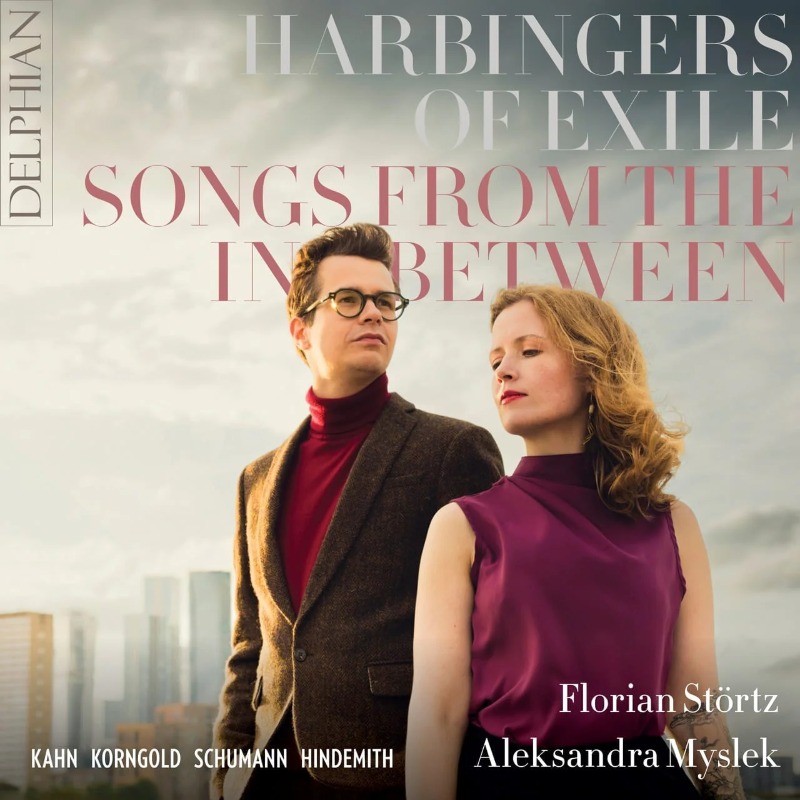
The centrepiece of the programme is a sequence of songs by Robert Kahn, a late-Romantic figure whose rich, colourful harmonic world deserves to be far better known. Remarkably, this is the first substantial Kahn recording by the voice for which he predominantly wrote, and it includes at least fifteen premieres. The duo excels in their performance, highlighting the complexities of Kahn's compositions with exquisite phrasing and carefully calibrated dynamics. Lovers of Lieder who find themselves thinking of Schumann will not be mistaken; the kinship is real, and here it is made audible with intelligence and grace.
From the opening—Schumann's Stille Tanzen setting the tone with effortless warmth—what strikes the listener is not merely the resonant beauty of Störtz's voice but the profound communion between singer and pianist. These are not accompanist and soloist but true partners, each attuned to the other's every inflection. In Auf ein schlummerndes Kind the tenderness is so complete that one might almost imagine oneself watching over a sleeping child; the chemistry is palpable, Störtz's articulation and diction crystal clear, and his hold on the listener at once gentle and unshakeable.
Before the second set of Kahn songs, the duo offer a wonderful account of Korngold's Mond, so gehst du wieder auf, which leads naturally into Nänie, where singer and pianist together capture the full drama of Kahn's response to Schiller's poetry and its paradox of mortality. Hindemith's Drei Hymnen—three settings of Walt Whitman in German translation —brings a welcome change of pace and colour. The second hymn, with its spare, minimalistic piano writing, allows the full resonance of Störtz's voice to bloom; the third, Beat! Beat! Drums! crackles with exactly the energy its title demands.
Stillness is beautifully restored thereafter, the programme moving with sure instinct towards its close. Kahn's Abendwolken is perhaps the album's most magical moment: two minutes of glowing, expressive music in which the composer captures perfectly the image of clouds drenched in the purest light, scudding westwards into the evening sky.
I would travel to hear these two perform. This is bliss: warm, sensitive, simply delectable, and a wonderful choice of repertoire recorded superbly. As that last song intimates, it is enduring.