



search
date/time

Thu, 1:00PM
light rain
15.9°C
WSW 15mph
light rain
15.9°C
WSW 15mph
 | Sunrise | 5:47AM |
| Sunset | 6:24PM |  |
Andrew Palmer
Group Editor
P.ublished 28th March 2026
travel
Bucket List: Not A Destination, But An Experience
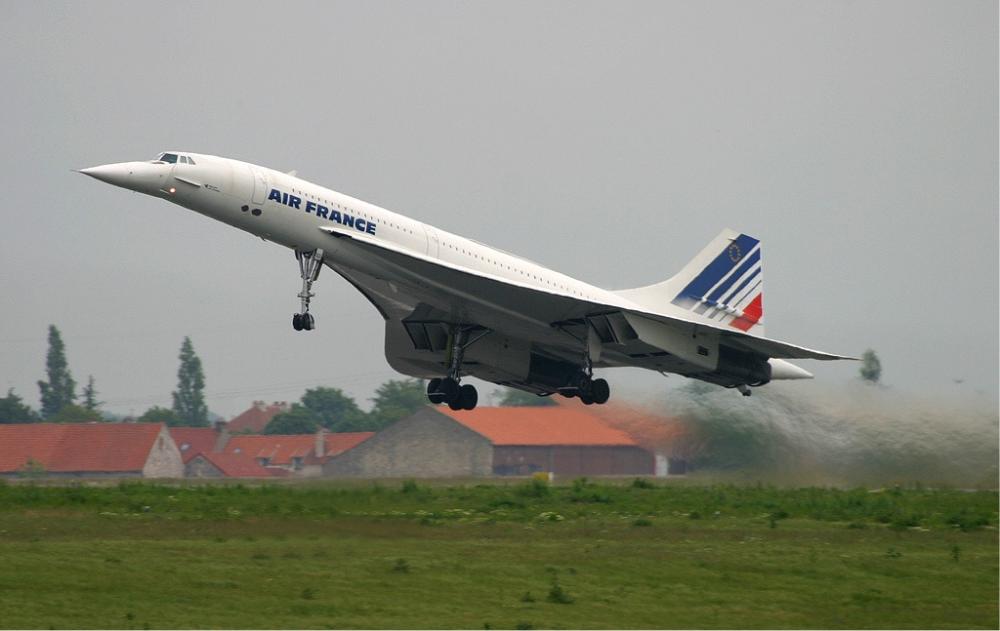
My obsession began long before I ever set foot on the aircraft. As a boy, Concorde was not merely a plane; it was a statement — angular, improbable, impossibly elegant. The droop-snoot nose, the vast delta wing, the sheer audacity of the thing. By the time I was old enough to do something about that obsession, I had resolved that I would fly supersonic myself, and so I booked one of the many excursion flights that departed from Heathrow, arcing out over the Bay of Biscay and back—a round trip to nowhere in particular that was, in every sense that mattered, the point.
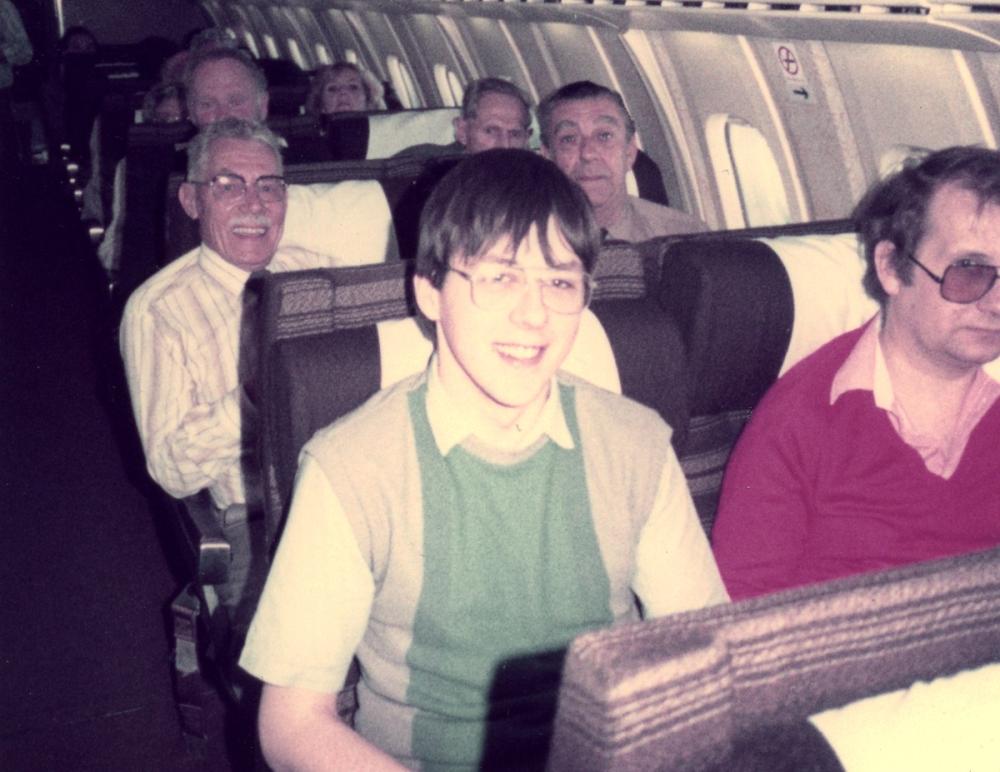
A 19 year old ready and waiting
The anticipation began on the ground. Concorde's fuselage is narrower than you expect — considerably narrower — and there is something almost intimate about stepping aboard, as though the aircraft is taking you into its confidence. You settle into your seat knowing that what is about to happen is not routine, that the world outside is shortly going to be rearranged.
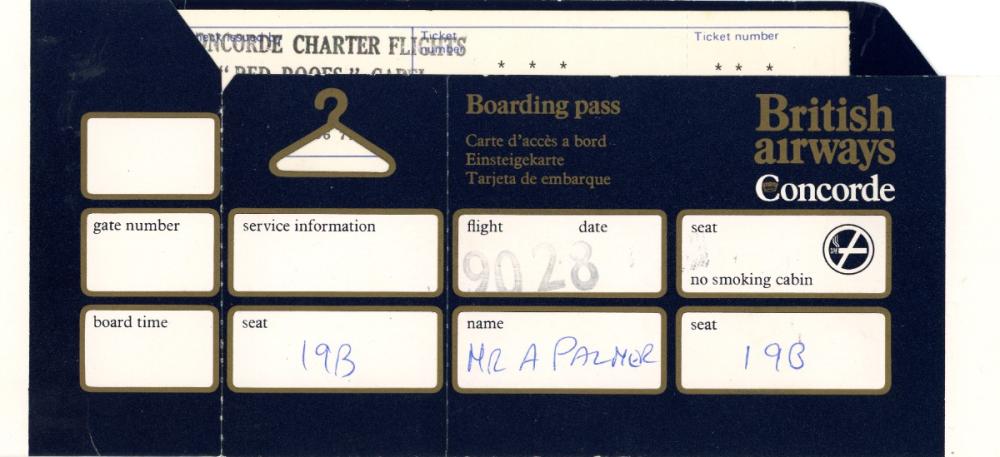
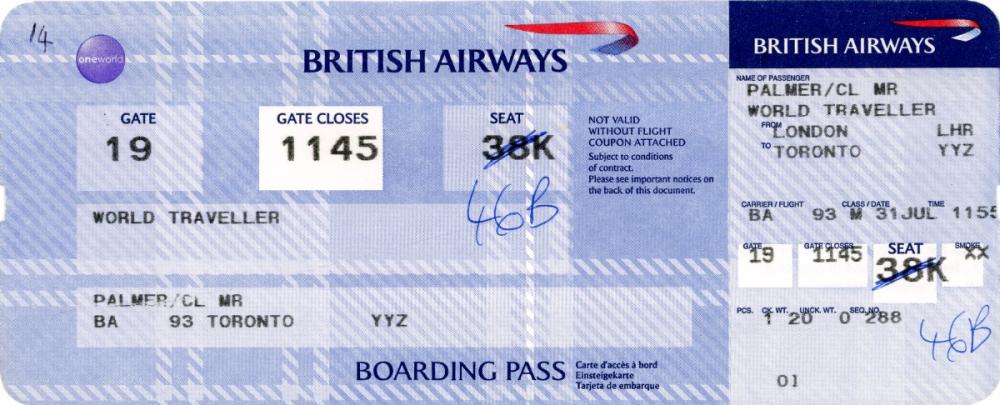
My boarding pass
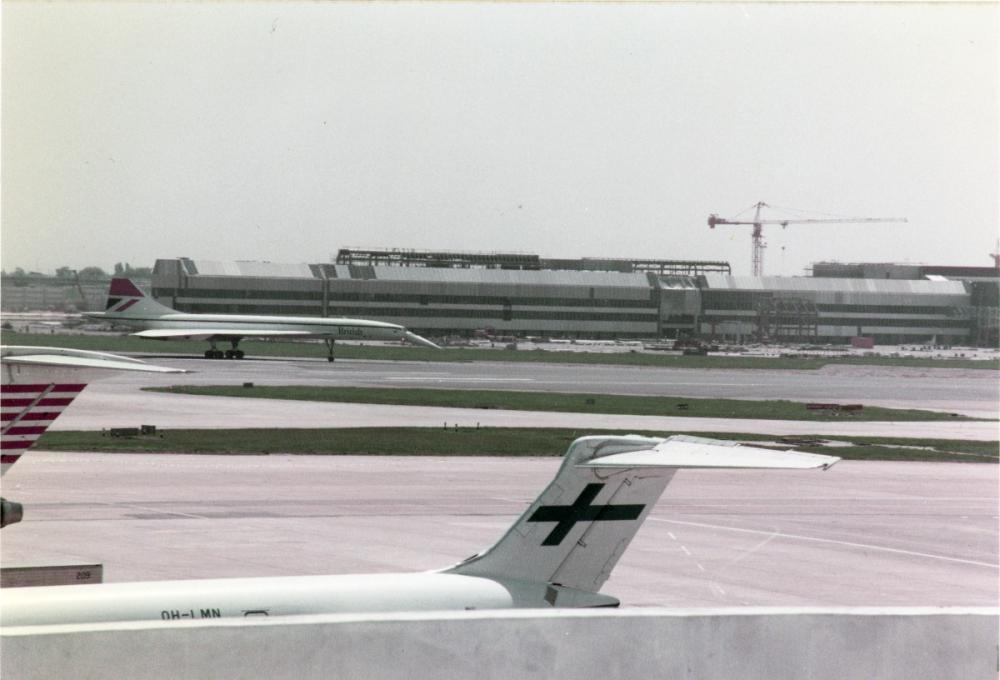
My plane waiting to take off
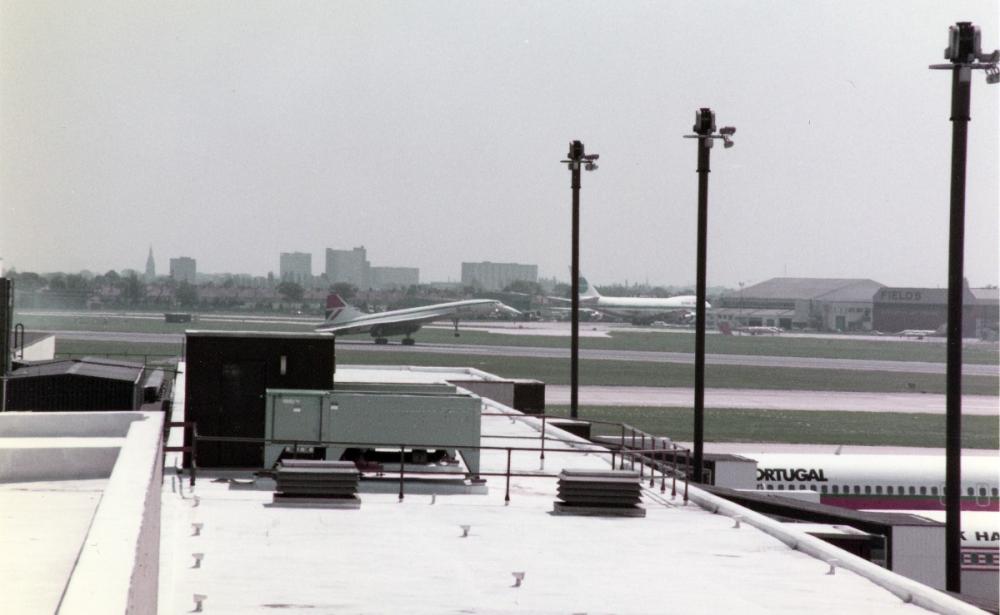
My plane taking off
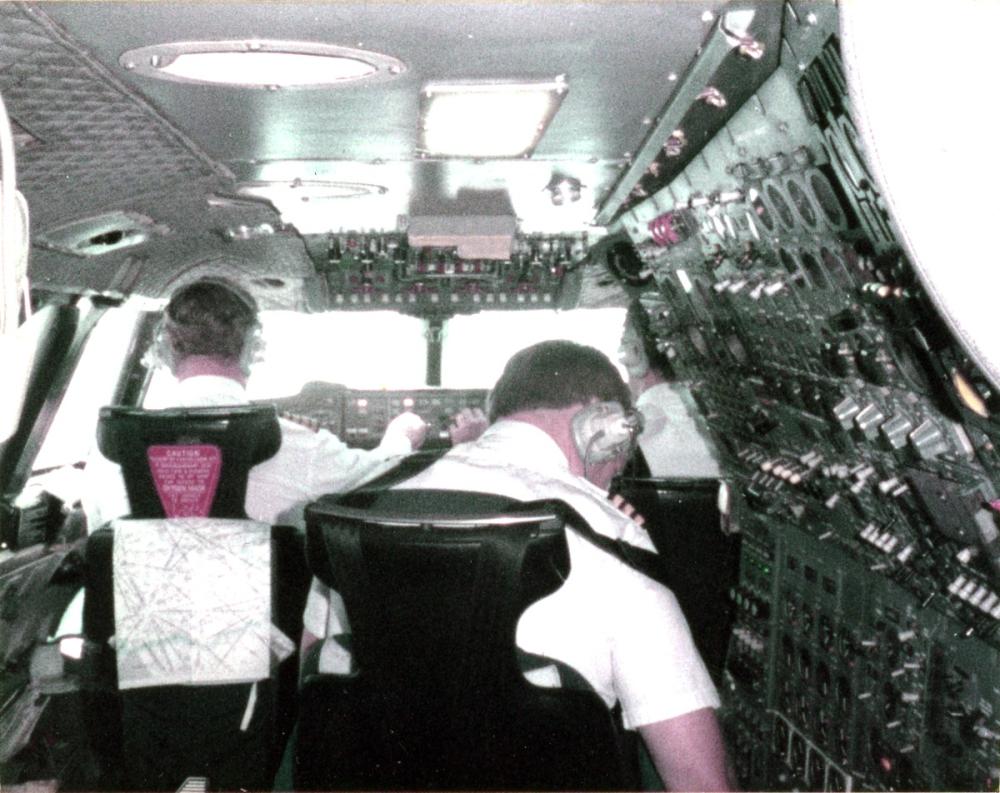
Inside the cockpit
Concorde's commercial story was both triumphant and brief. Built jointly by British and French manufacturers, it made its first transatlantic crossing in September 1973 and entered scheduled service in January 1976 — British Airways initially flying from London to Bahrain, Air France from Paris to Rio de Janeiro. New York followed in November 1977. Only fourteen aircraft ever entered service; noise restrictions and operating costs limited the routes ruthlessly, and eventually New York became the sole regular destination for both airlines. Air France retired its fleet in May 2003, and British Airways in October the same year. The era was over.
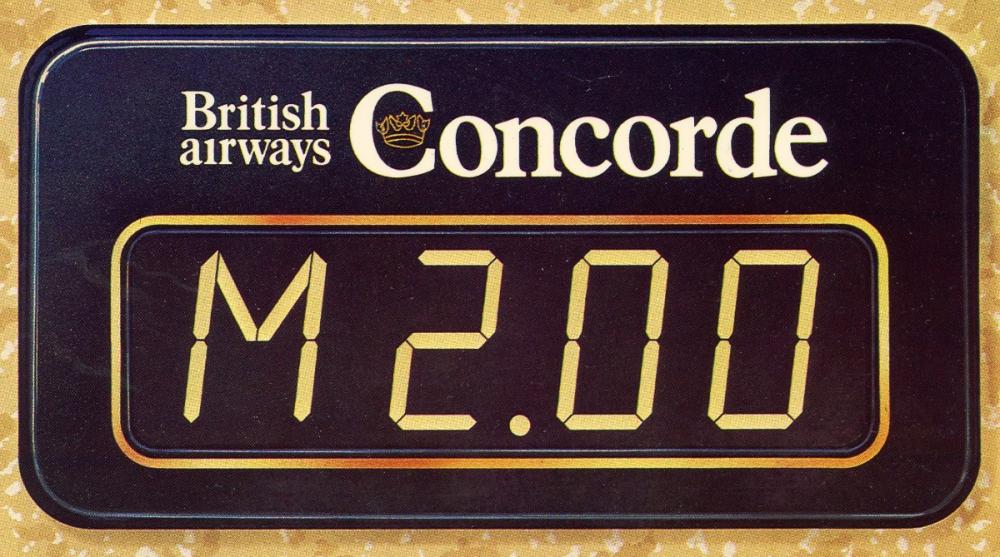
Supersonic
I had invited Barbara Harmer to speak at a CBI Yorkshire and Humber dinner—a venue that felt, in retrospect, entirely fitting—and collected her from the train myself. The forty-five minutes I spent driving her to the hotel were among the most absorbing I can recall. Barbara had begun her aviation career with a commuter airline called Genair before joining British Caledonian in 1984, flying BAC 1-11s on short-haul routes and then transitioning to the McDonnell Douglas DC-10 on long haul. When British Caledonian merged with British Airways in 1987, the door to Concorde opened — if only theoretically. Of British Airways' 3,000-plus pilots at the time, fewer than sixty were women, and the annual intake onto Concorde's rigorous six-month training programme was tiny. The odds, as Barbara acknowledged, were not encouraging.
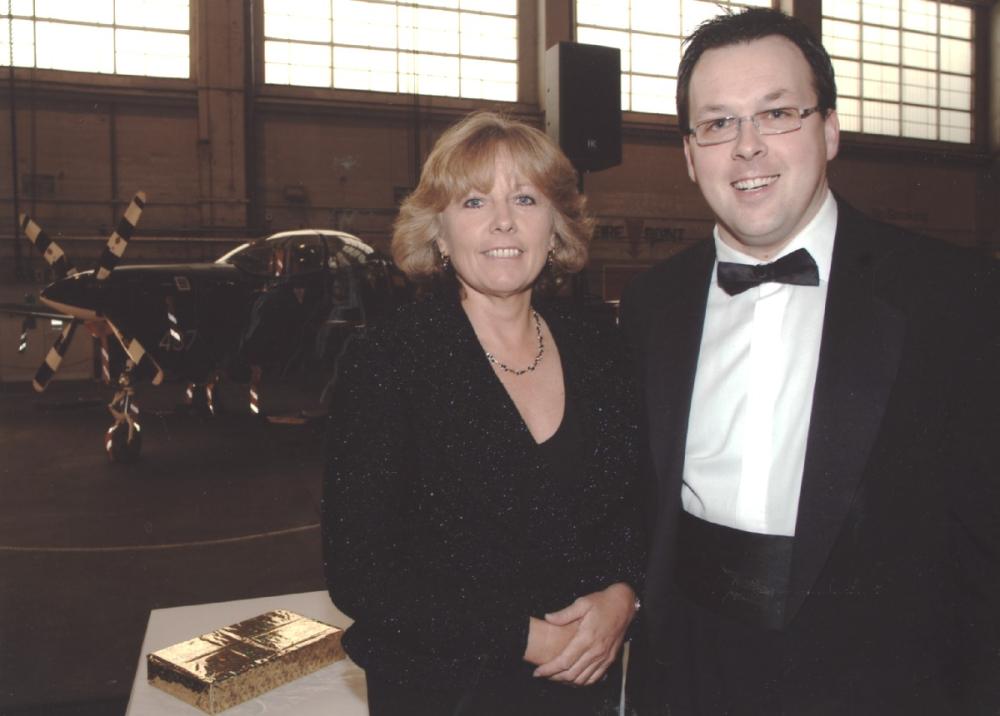
Barbara Harmer & Andrew Palmer
It was in the car, not at the lectern, that she spoke about the Paris disaster. The Air France Flight 4590 crash of July 2000—109 people on board, four more on the ground, the whole terrible sequence caught on camera as the stricken aircraft struggled away from Charles de Gaulle trailing fire—had ended Concorde as surely as it had ended those lives. The fleet was grounded, modifications were made, a brief return to service followed, and then in 2003 came the final retirement. Barbara, like every Concorde pilot, had to retrain on conventional jets to readjust to cruising at altitudes and speeds that must have felt, after the stratosphere, almost apologetic. She spoke of it quietly, and there was in her words a sense of grief that needed no elaboration — the grief of someone who had fought hard to reach something extraordinary, had lived inside it, and had then watched it taken away. Some things, once gone, simply cannot be reconstituted.
Concorde is gone now, reduced in most cases to museum pieces standing in silent hangars at Heathrow, Filton, and a handful of sites on both sides of the Atlantic, the paint fading slightly, the cabins preserved in amber. There are serious people who talk seriously about supersonic flight returning — about new aircraft, new technologies, and quieter engines — and perhaps they are right. Perhaps one day the sound barrier will again be broken commercially, and a new generation will press their faces to the windows at 60,000 feet and watch the earth curve away beneath them.
But it will not be Concorde. And Concorde, in the end, was never really about speed. It was about the feeling of being alive in a moment you knew wouldn't come again.
I am reminded of this two or three times a year. Landing at Paris Charles de Gaulle—the very airport from which Flight 4590 departed on that catastrophic July morning in 2000—I find myself doing the same thing every time as we taxi slowly towards the terminal: I look out of the window for her. There she stands, the surviving Air France Concorde, preserved on the ground at the airport, witnessing both her glory and her end— that elegant delta silhouette quite unmistakable even from a distance, even through the scratched oval of an economy-class window. I look, and I feel the familiar pull of something between pride and longing — the envy, perhaps, of my former self, the nineteen-year-old who pressed his face to a rather better window and watched the earth curve away at twice the speed of sound.
The Machmeter climbs, the champagne is poured, and somewhere far below, a crowd at an airshow looks up. Lucky them. Lucky us.
Also by Andrew Palmer...
Classical Albums: Quartetto Gelato FlightEnescu: String Octet, Piano Quintet ReferenceClassical Music: HeartstringsClassical Music: Notes From The Living RoomClassical Music: Beethoven For Three Series Symphony No. 3 ‘Eroica'The shortened address for this article is: newspub.uk/21yus
More in this series...
Bucket List: Japan — Where the Trains Run on Time, the Sumo Runs Fast and the Wasabi Runs HotBucket List: Rio de Janeiro — Where 007 Pointed, and I FollowedLa Dolce Strada: Memories Of Italy In A Vintage RollsOktoberfest: The Dream, The Drench, And The DetourBucket List Destinations: Do They Live Up To Expectations?Search Results