search
date/time
 | Cumbria Times Weekend Edition |

Andrew Palmer
Group Editor
P.ublished 10th January 2026
arts
Review
Classical Music: Dvořák Symphony No. 2 & No. 8
Dvořák's symphonic evolution captured with warmth and finesse
Symphony No. 2 in B-flat major, Op.4, B12; Symphony No. 8 in G major, Op.88, B163.
Melbourne Symphony Orchestra Conductor: Jaime Martín
rec. live, 25-29 June, 2024 (8), 31 March-5 April, 2025 (2), Hamer Hall, Arts Centre, Melbourne, Australia
Melbourne Symphony Orchestra MSO0004 SACD
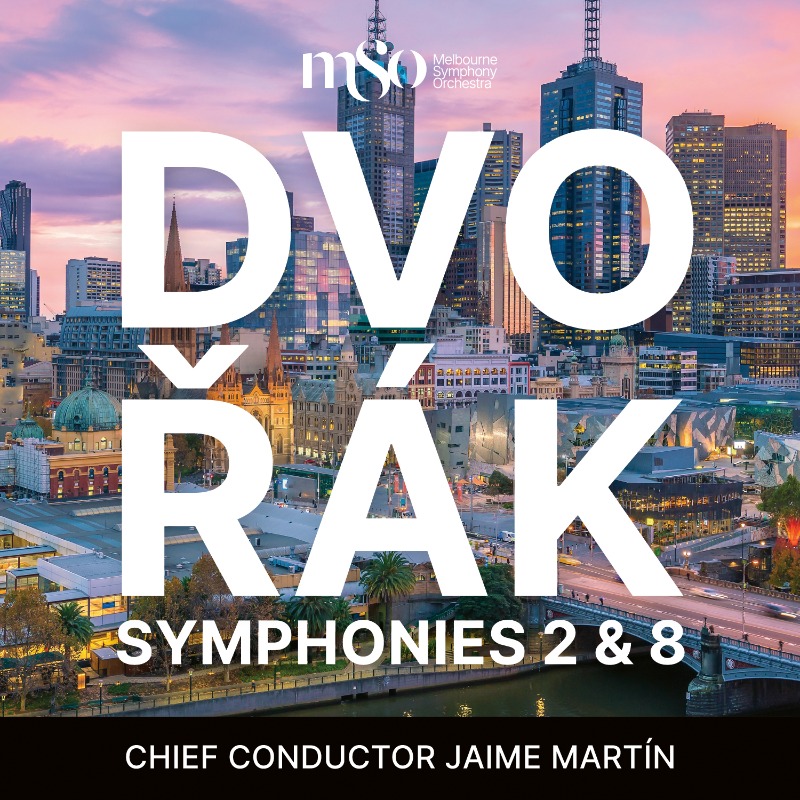
Martín's engagement with Dvořák stretches back to childhood encounters with the 'New World' Symphony, and his affinity for the Czech master's idiom has become a defining feature of his MSO tenure since 2022. The orchestra responds with a performance that honours the nationalist spirit and rich melodic inheritance of Dvořák's symphonic language. The release forms part of a handsomely presented series, with cover artwork celebrating Melbourne's cityscape and Victorian landmarks—this instalment features the skyline at dawn beneath a rose-tinted sunrise.
Benjamin Pesetsky's liner notes reveal that the Second Symphony was one of two symphonies Dvořák composed in 1865. The young composer considered burning it as juvenilia but was thwarted by his roommate, who had loaned the money to bind the score. The symphony is not often heard—perhaps because Dvořák's first two are the longest in duration—but it is nevertheless an attractive early composition, and the MSO bring out its delights with finesse and warmth, capturing the nuances with fine playing across all departments.
The popular Eighth Symphony was composed in 1889, and Pesetsky points to Otakar Šourek's observation that "with this Symphony, [Dvořák] wanted to produce a work that differed from his other symphonies and that elaborated the musical contents in a new way."
Pairing these two symphonies demonstrates the remarkable development of Dvořák's compositional skill over two decades.
Martín manages to bring spontaneity to this lovely symphony. The cello theme develops beautifully with lovely balance, while the second movement's adagio is sensitive and expressive; the MSO's communicative powers convey the exquisiteness of this movement.
The lilting third movement, Allegretto grazioso, is light and compelling as it leads towards the wonderful, joyous finale with its delightful themes, Martín ensuring that the closing moments make their proper impact.
Excellent recording engineers make this an outstanding instalment in what promises to be a cycle of real distinction.